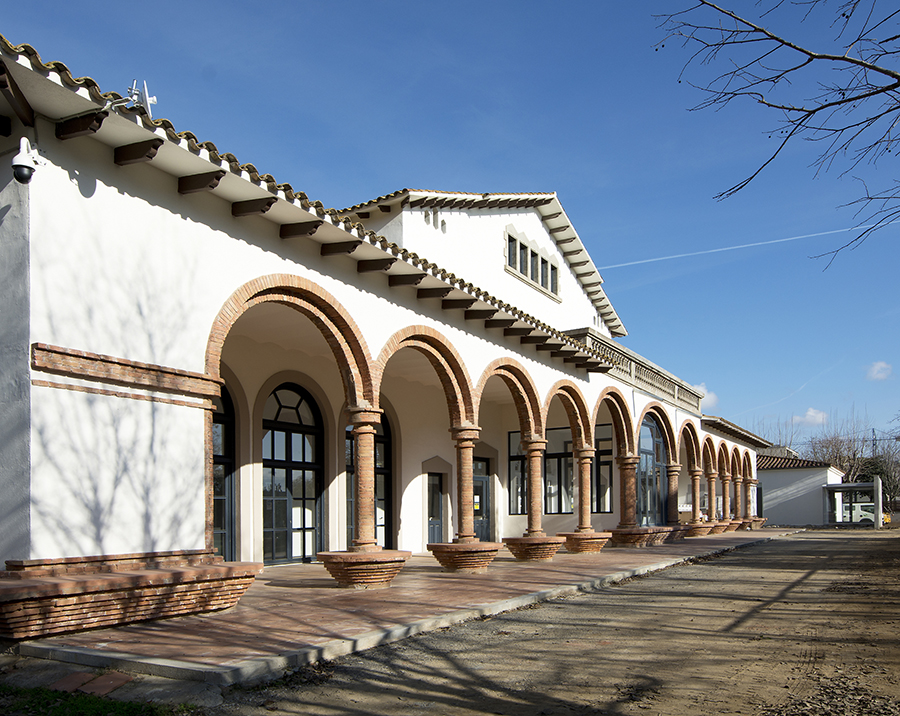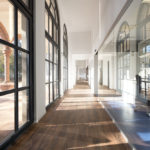
The work is performed on a Noucentista building by architect Joan Rubió i Bellver from 1921, which looks like a Catalan farmhouse and is of great architectural interest. It is located at the western end of the Parque Hospitalario Martí y Juliá Hospital Complex covering an area of over 100,000m2. The building was designed with a ground-floor porch, with vaults over tiled pillars and large windows on the southern façade. The building’s layout is symmetrical in a central volume and two side wings. The ground and second floor volume rise in the central part of the building, with a gabled tiled roof. An extension was made in the eastern area, which is where the new main entrance is suggested, with views of the main building with all of the more public and administrative part of the centre.
Adaptation to the environment // The project encompasses the interior renovation of a building listed under the Special Architectural Heritage Protection Plan. To preserve the historical identity and landscape character of the Hospital Park, facade interventions are kept to a strict minimum, demonstrating absolute respect for the existing structure.
Layout & Organization// The architectural program is distributed vertically to efficiently balance advanced research and administrative workflows:
-
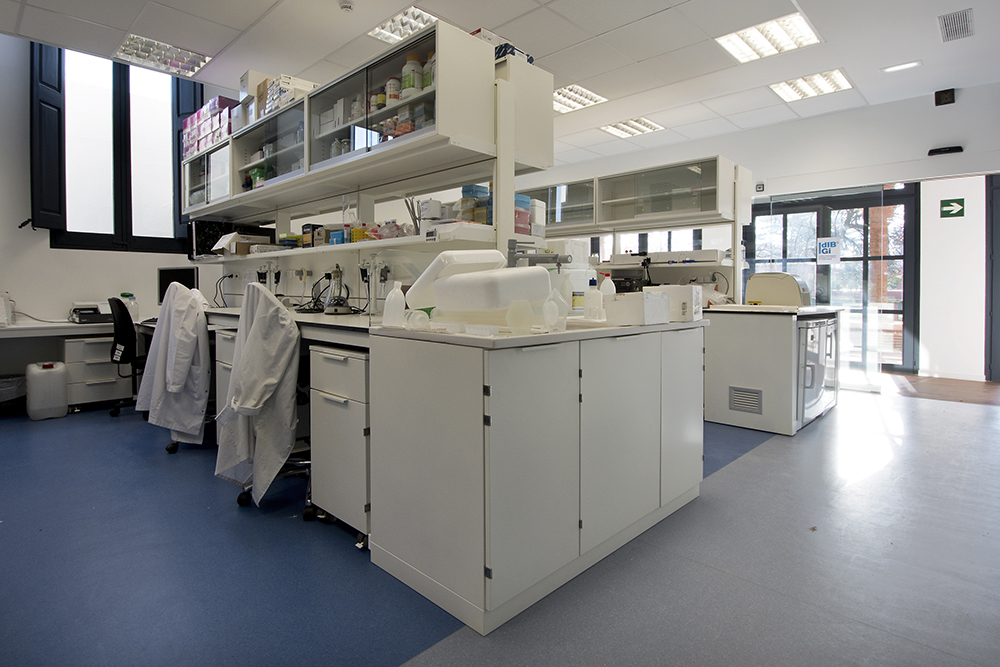
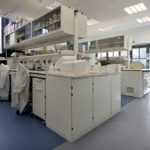
Ground Floor (Research & Management): The eastern sector houses the reception and administrative area, directly linked to the board room and restrooms. To the north, a corridor leads to the executive and management offices, which share a meeting room. The research laboratories integrate seamless administrative workspaces and are supported on their northern edge by highly specialized clean rooms (including PCR rooms, microscopy suites, freezer rooms, cold storage, and multifunctional spaces). The laboratory kitchen and direct access to the waste management facility are positioned at the deep end of the floor plate.
-
First Floor (Open-Plan Spaces & Outdoor Connection): This level is structured around a central east-west circulation axis. The southern strip accommodates the vertical circulation core and a generous open-plan workspace that opens onto a large south terrace. The northern zone functions as an environmental buffer, featuring two internal lightwells/courtyards onto which two private offices open. The central area provides access to a second open workspace linked to the north terrace, while the northeastern corner is reserved for the CEIC (Clinical Research Ethics Committee) offices. Dedicated MEP technical galleries and the general archive occupy the far eastern and western ends.
-
Second Floor & Attic (Administration & Building Services): The second floor features a dynamic operational workspace to the south and three independent offices to the north. The under-roof attic space is utilized entirely as a technical gallery to centralize the building’s main MEP infrastructure.
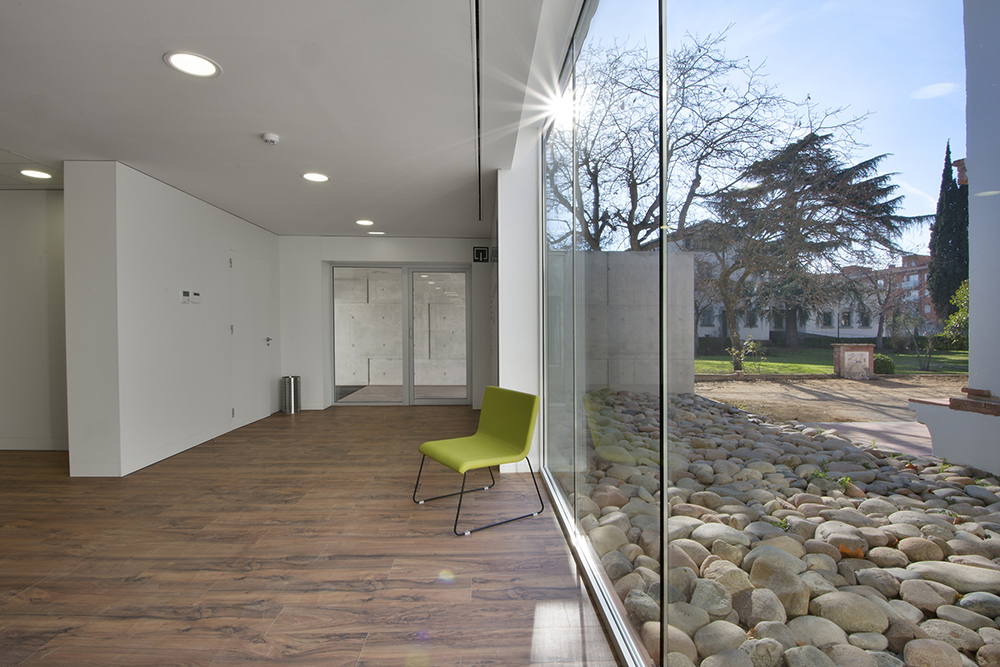
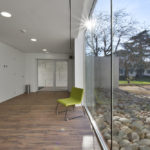
Singularity & Character // The uniqueness of the project lies in the sophisticated architectural dialogue and formal tension generated between the early 20th-century Noucentista building envelope and the contemporary interior intervention. This approach successfully transforms a heritage asset into a state-of-the-art scientific facility with a powerful institutional identity.
Sustainability criteria // Energy optimization is achieved through the complete replacement of the original joinery with high-performance frameworks offering enhanced thermal insulation. Furthermore, preserving the large historic windows allows abundant natural daylight to flood the floor plate, creating high-quality, luminous workspaces while drastically reducing reliance on artificial lighting.