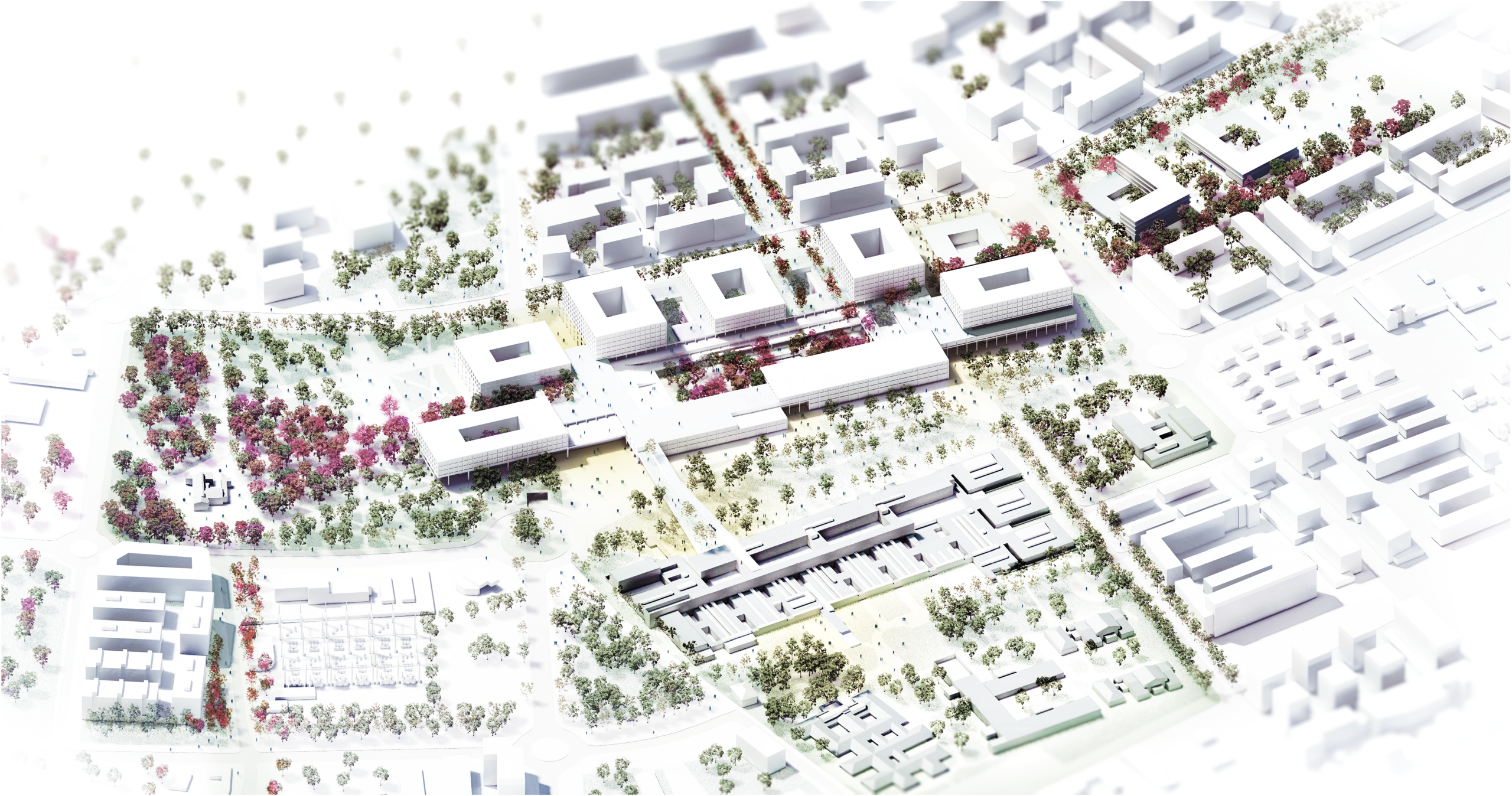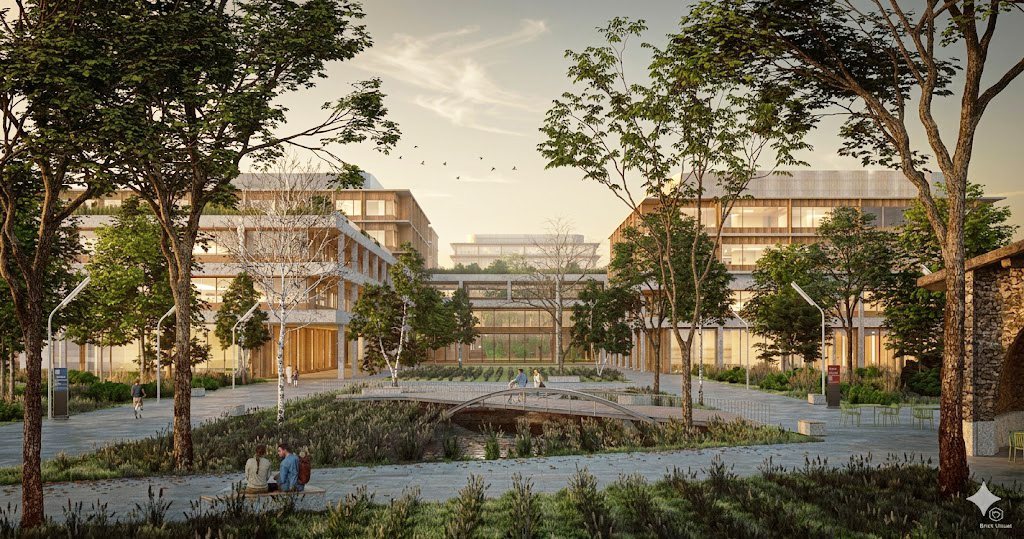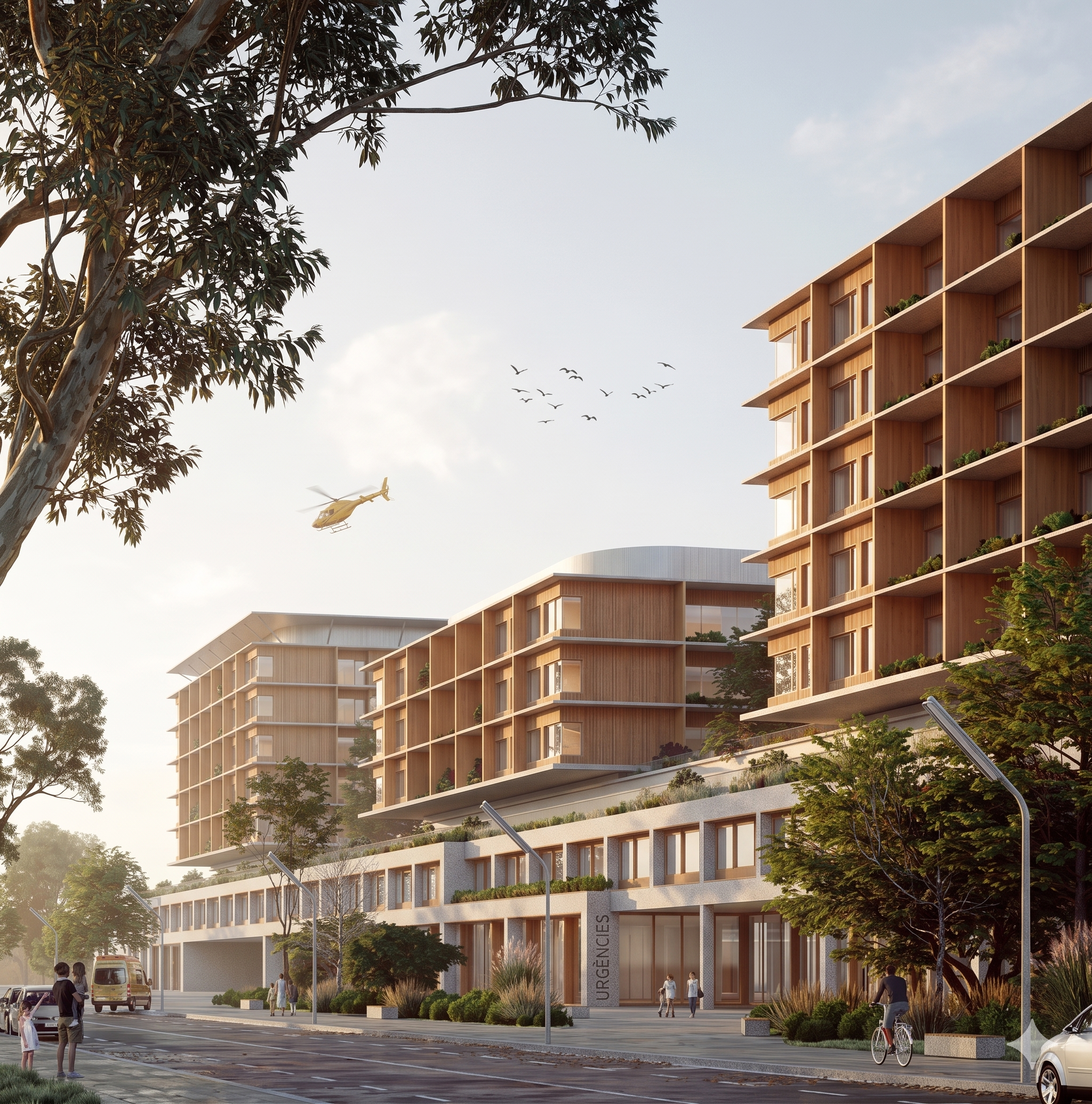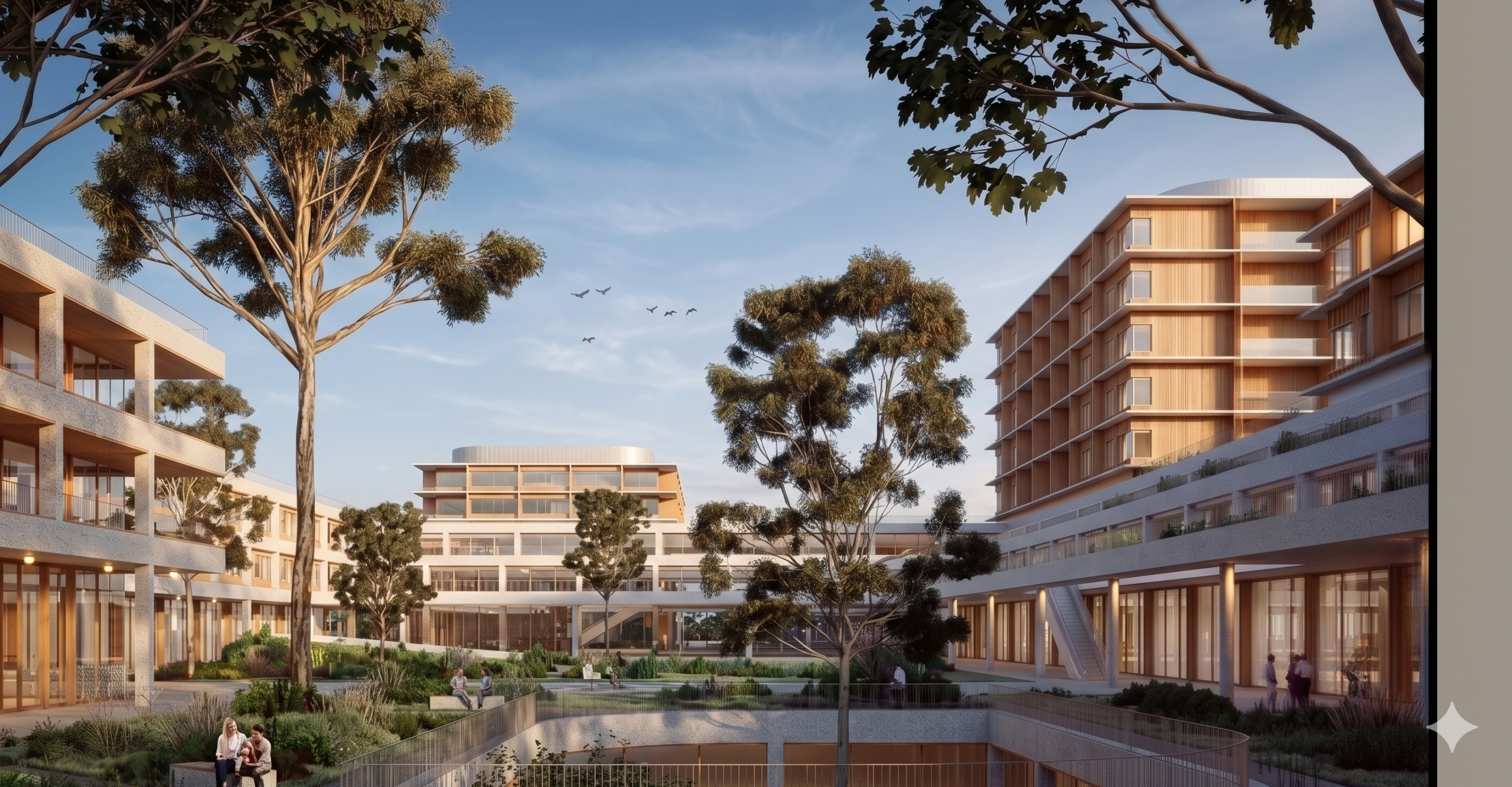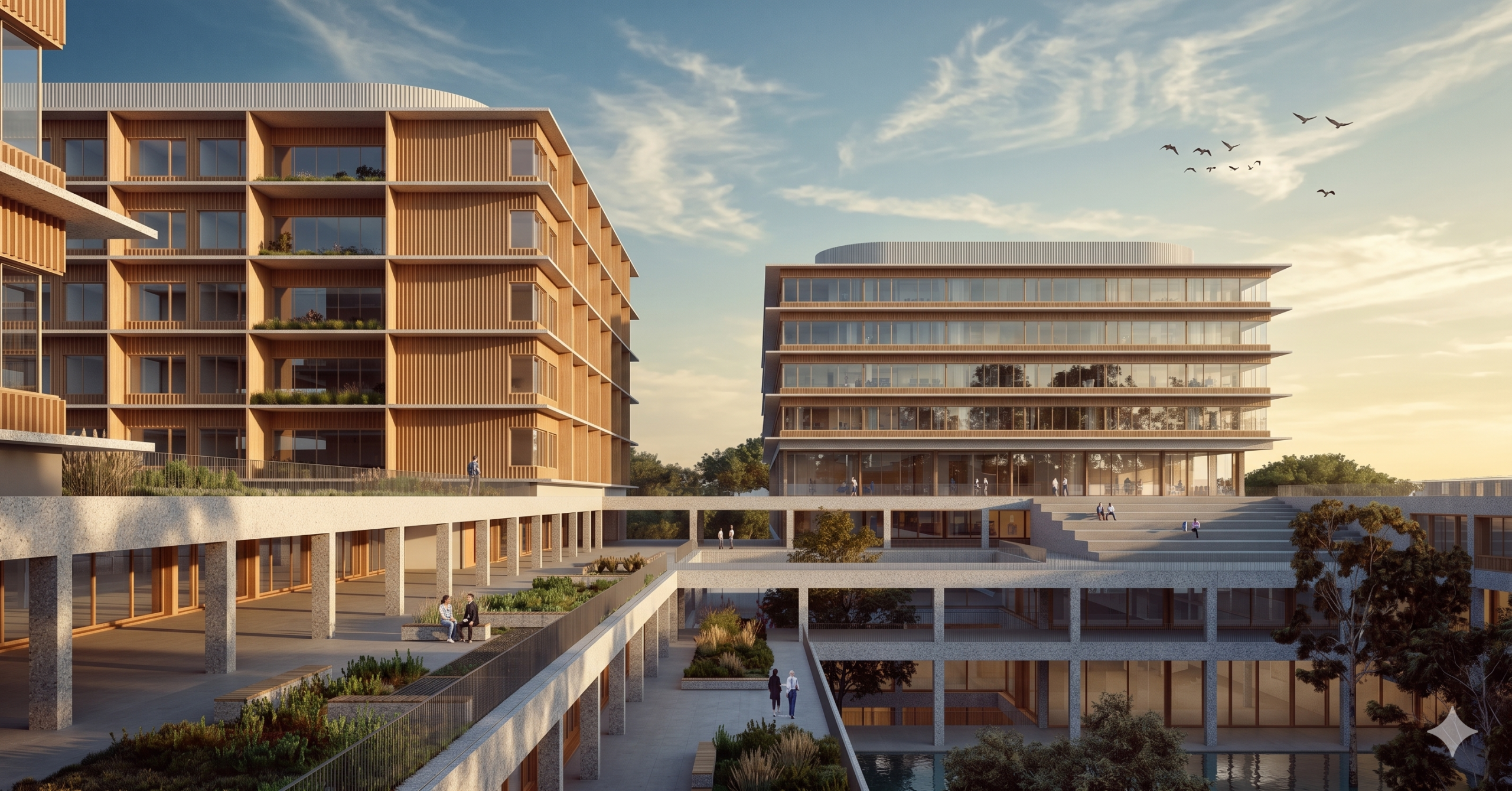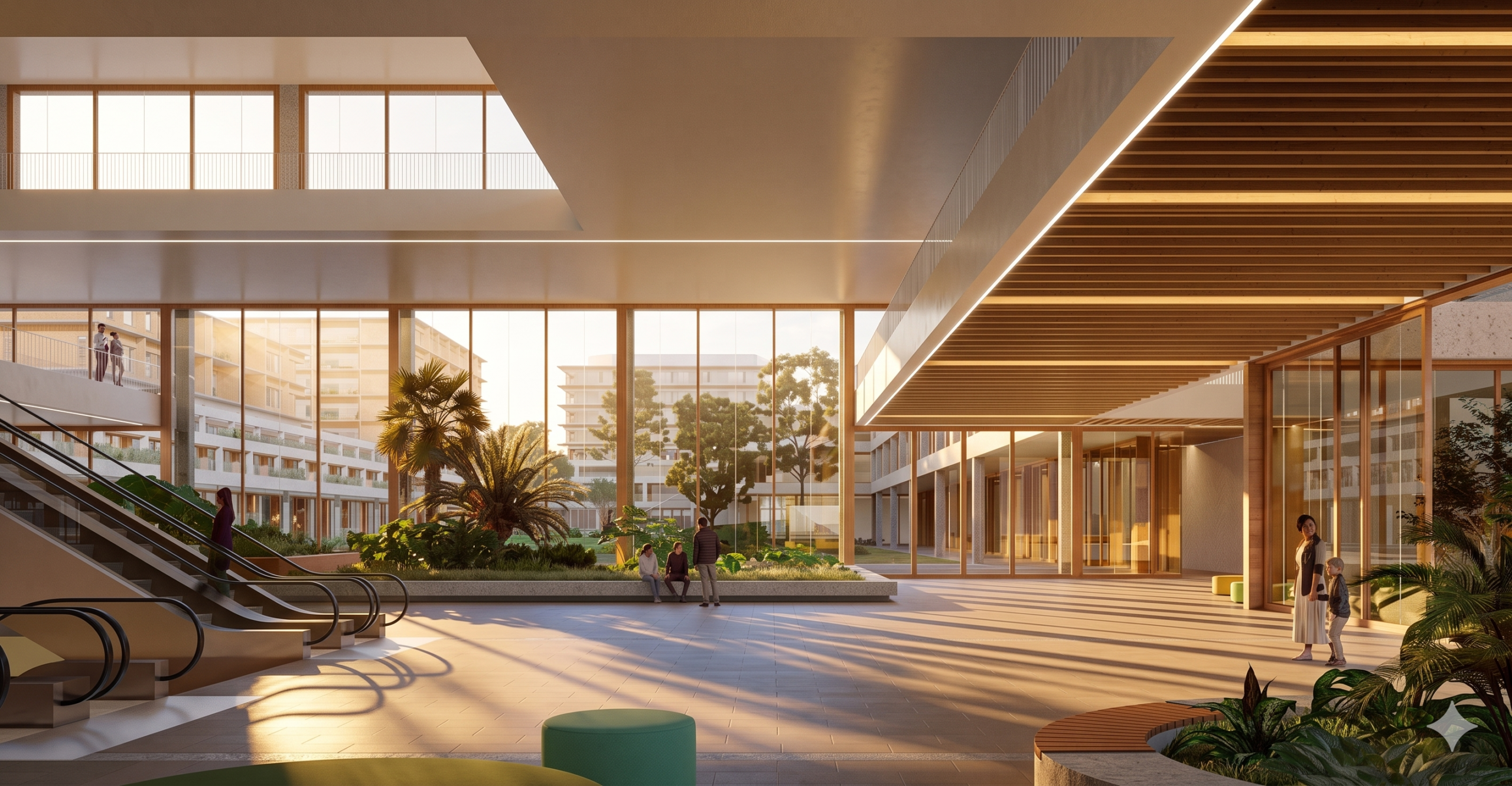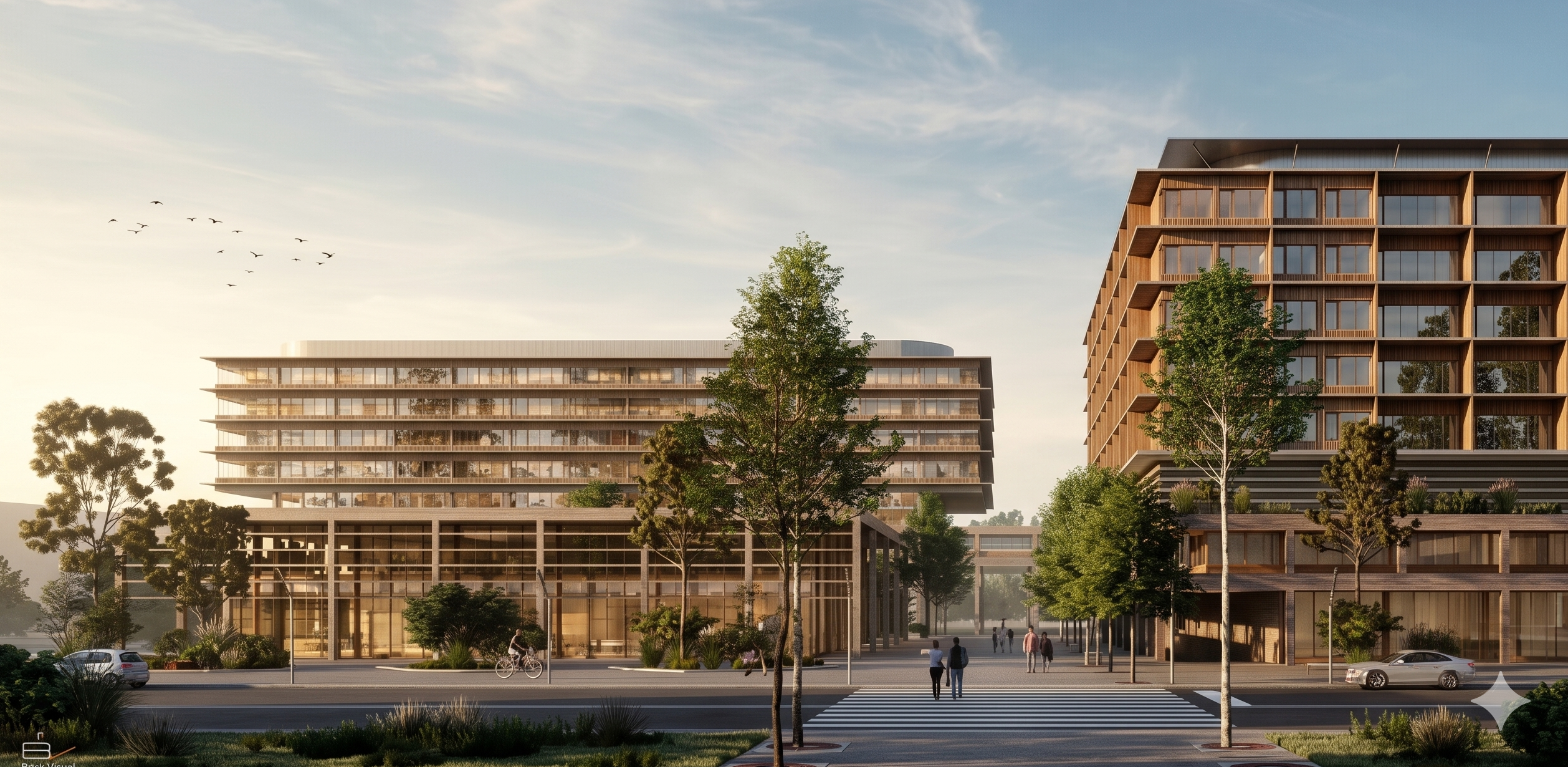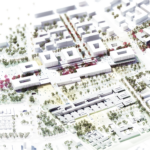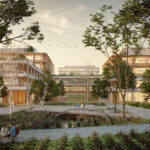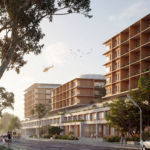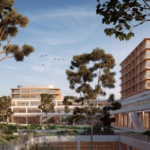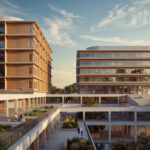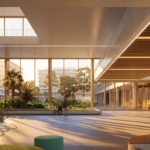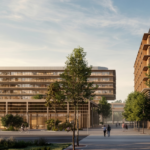
The competition for the New Girona Health Campus envisions the construction of a new 190,000 m² hospital, together with the integration of the Faculty of Medicine and Nursing of the University of Girona. Our proposal goes beyond the design of a new hospital: it creates an integrated ecosystem for healthcare, knowledge, and innovation, structured around a large central park that gives identity to the campus, organizes circulation, and seamlessly connects both the existing and the new buildings.
The New Girona Health Campus competition aims to deliver a new healthcare, academic, and research complex that will become the leading health hub for the Girona region. The project is developed on a site of approximately 180,000 m², strategically located between Girona and Salt, adjacent to the existing Santa Caterina Hospital.
Context & Integration// We envision the future Health Campus as a new urban center capable of connecting Girona and Salt, the healthcare facilities, the university, and the open spaces of the Pla de Salt. The project is not conceived as an isolated hospital, but as an integrating piece within a broader regional system. The layout reinforces urban connections and the continuity of pedestrian and bicycle pathways, while its relationship with the Santa Caterina Hospital consolidates the vision of a single campus for healthcare, education, and research. The massing adapts to the varying scales of the surroundings: it defines a prominent urban front along Avinguda de la Pau and progressively fragments toward the south to harmonize with the landscape. The central park becomes the backbone that connects all elements of the campus and structures the relationship between city and nature.
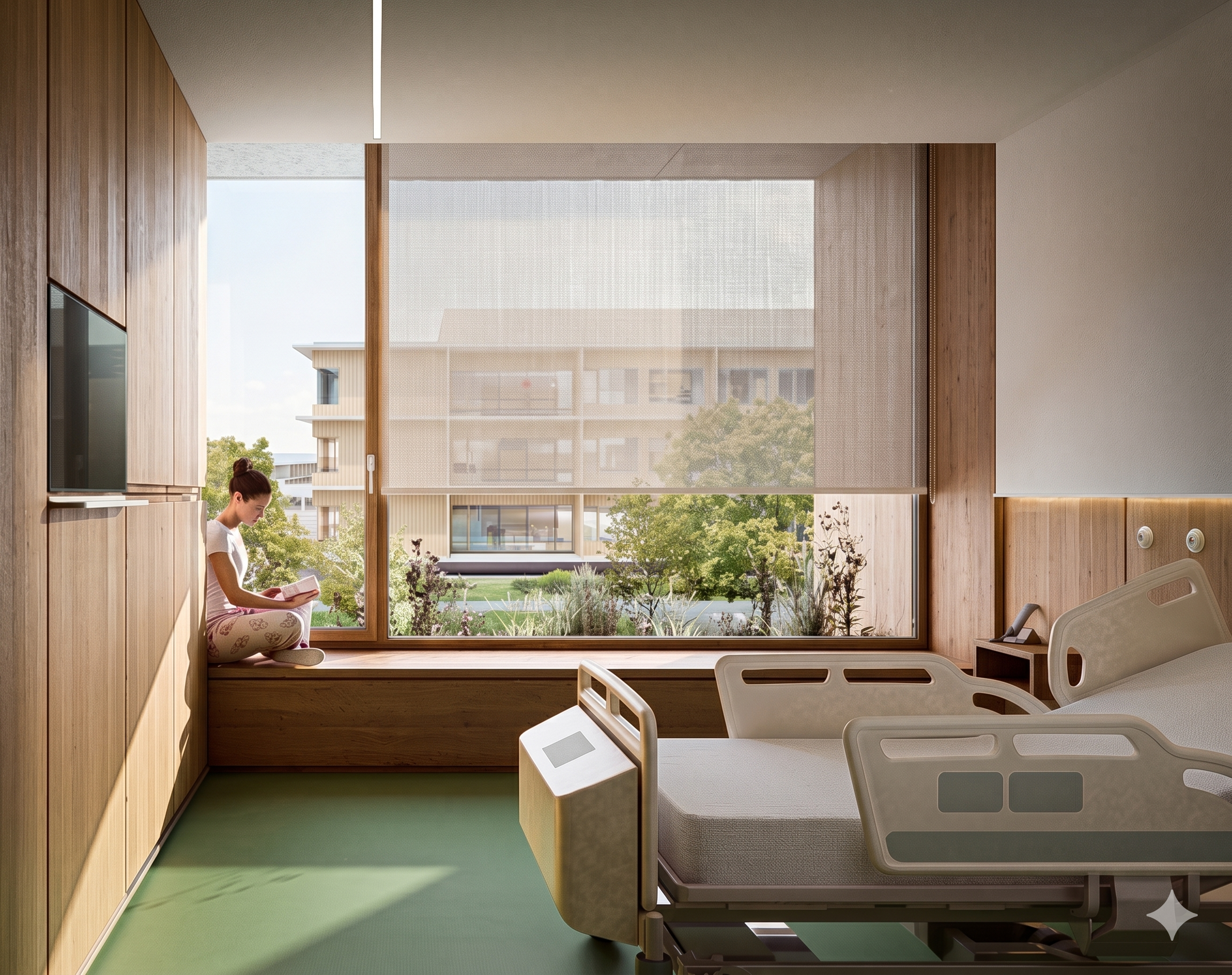
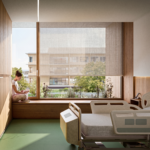
Layout & Organization// The organization of the Health Campus is built around a large central park that acts as the backbone for the entire complex. More than just an open space, this park constitutes the campus’s primary social hub, seamlessly bridging clinical care, education, research, and civic life within a unified and recognizable structure. The various components of the campus are arranged around its perimeter. The hospital, the university, the research spaces, and complementary facilities share a common urban framework, fostering synergies between institutions and facilitating future expansion. This organization allows the campus to be understood as a cohesive health and knowledge ecosystem, rather than a mere cluster of independent buildings. Functionally, the project is structured around a healthcare podium that concentrates the highest-intensity functional areas and ensures the efficiency of hospital workflows. Rising above this base are the inpatient volumes, positioned in constant dialogue with the park and open spaces, ensuring natural light, outward views, and intuitive orientation across all clinical areas. The subterranean level incorporates a perimeter technical loop that integrates logistics, infrastructure, and core mechanical systems. This strategy frees the surface from incompatible vehicular traffic, dedicating outdoor spaces exclusively to people and campus activities. The resulting scheme combines functional efficiency, flexibility, and environmental quality, turning the central park into the true heart of the proposal and the element that gives coherence to the entire Health Campus.
Uniqueness & Character// The uniqueness of the proposal lies in its capacity to position the landscape as the central element of the design. The hospital sheds the traditional image of a massive, compact building, transforming into a collection of volumes interconnected by open spaces, gardens, and shared pathways. The park ceases to be a residual space and becomes the true heart of campus life. An open and permeable ground floor reinforces this relationship between architecture and nature, creating a more human-centered, orienting, and healing experience. The proposal is not merely a hospital within a park; it is a park that structures health, knowledge, and innovation.
Sustainability Criteria// Sustainability is embedded in the DNA of the proposal. The compact footprint preserves extensive green areas, while internal courtyards and volumetric fragmentation maximize natural daylighting and reduce energy demand. The central park acts as a climate infrastructure that enhances environmental comfort and boosts biodiversity. Concurrently, structural flexibility, construction industrialization, and the subterranean technical ring guarantee the campus’s capacity to adapt to future healthcare and technological advancements. Sustainability is thus understood as the building’s capacity to evolve, remain highly functional, and generate environmental, social, and economic value throughout its entire lifecycle.