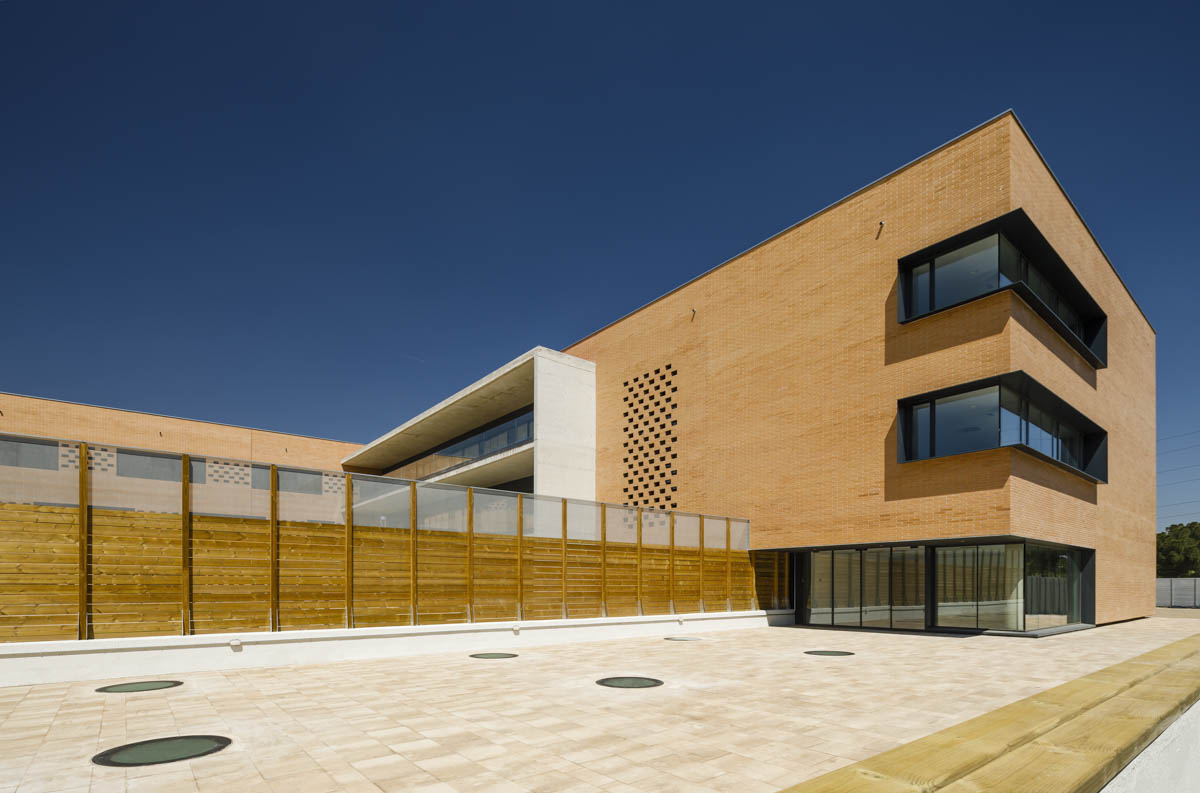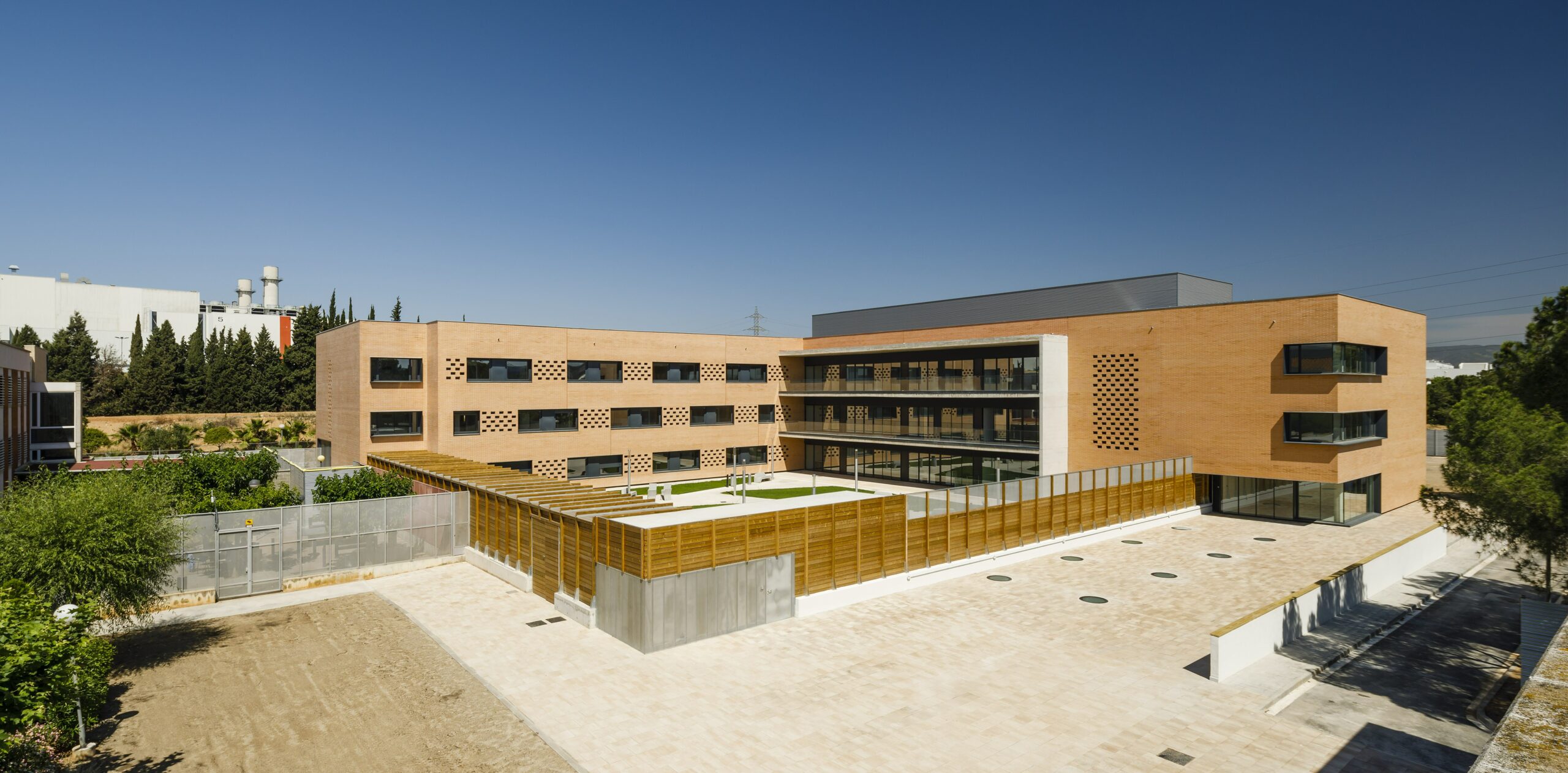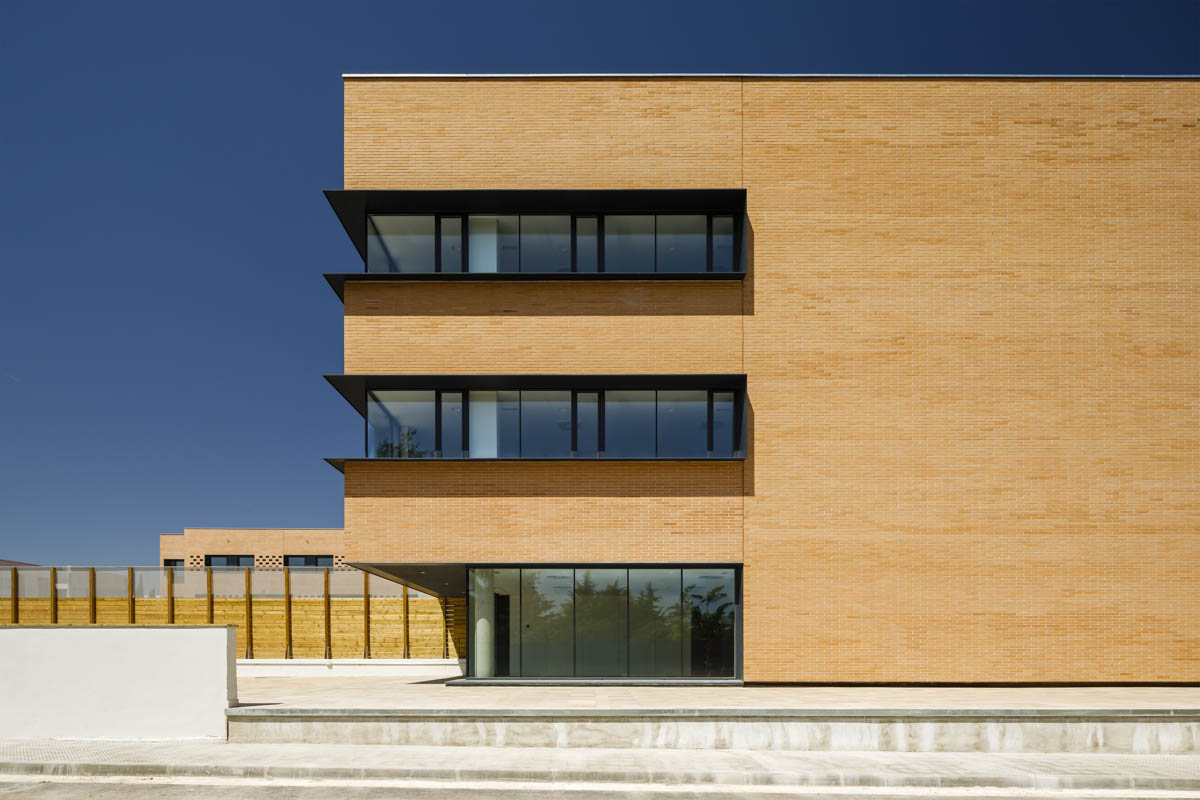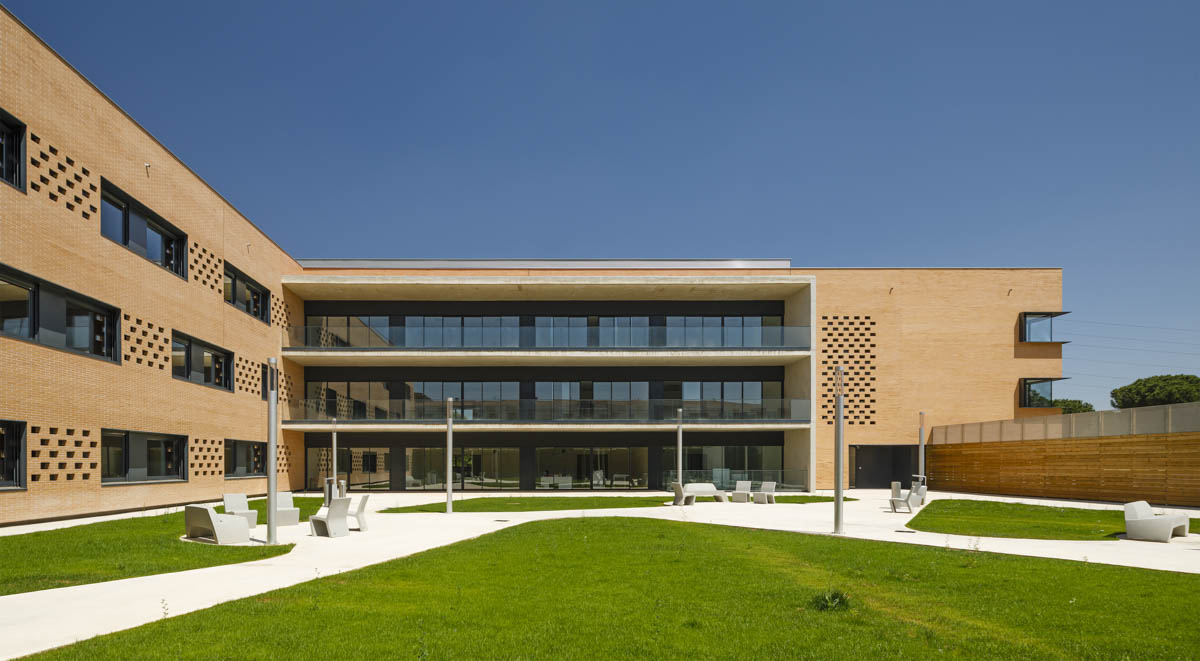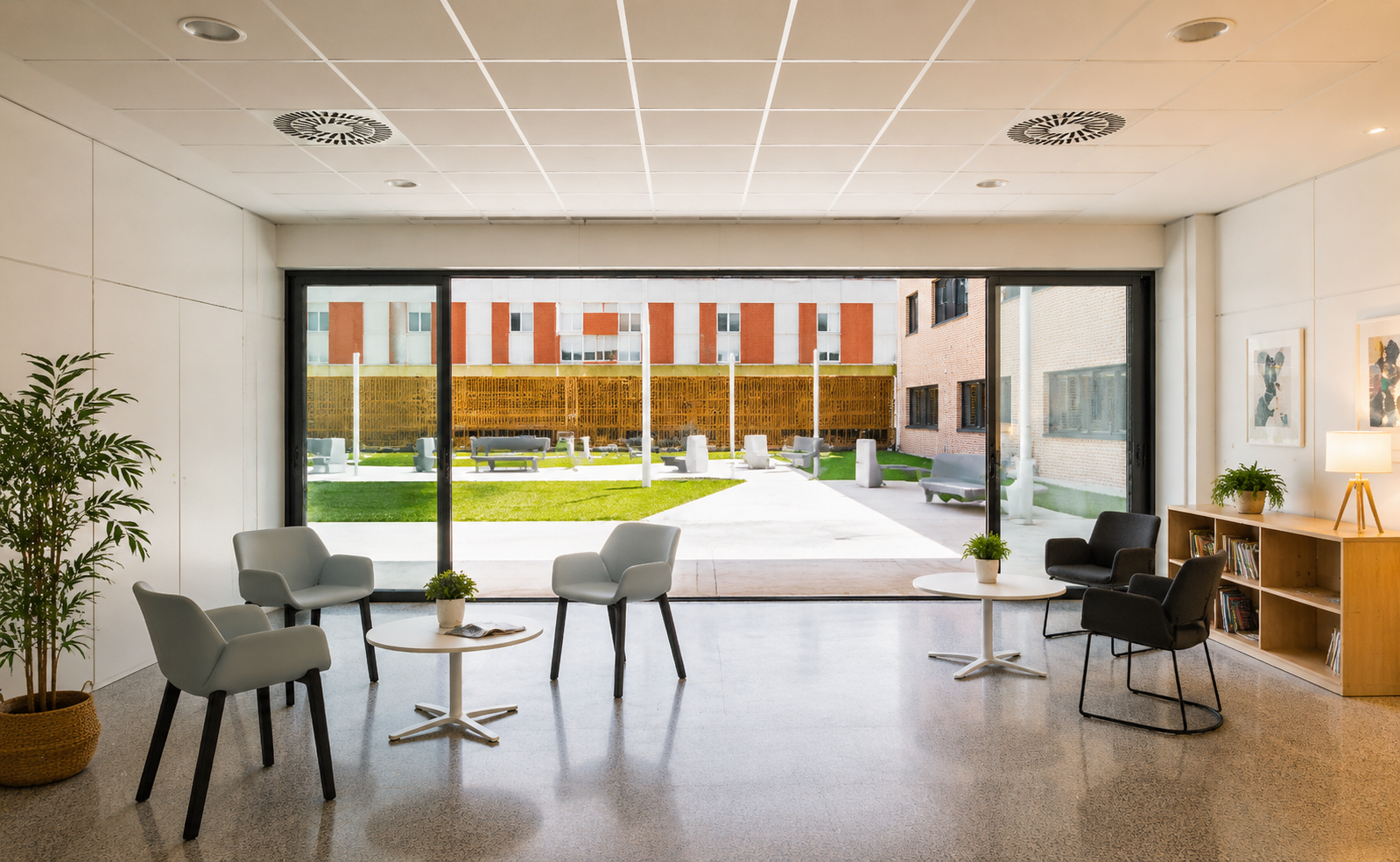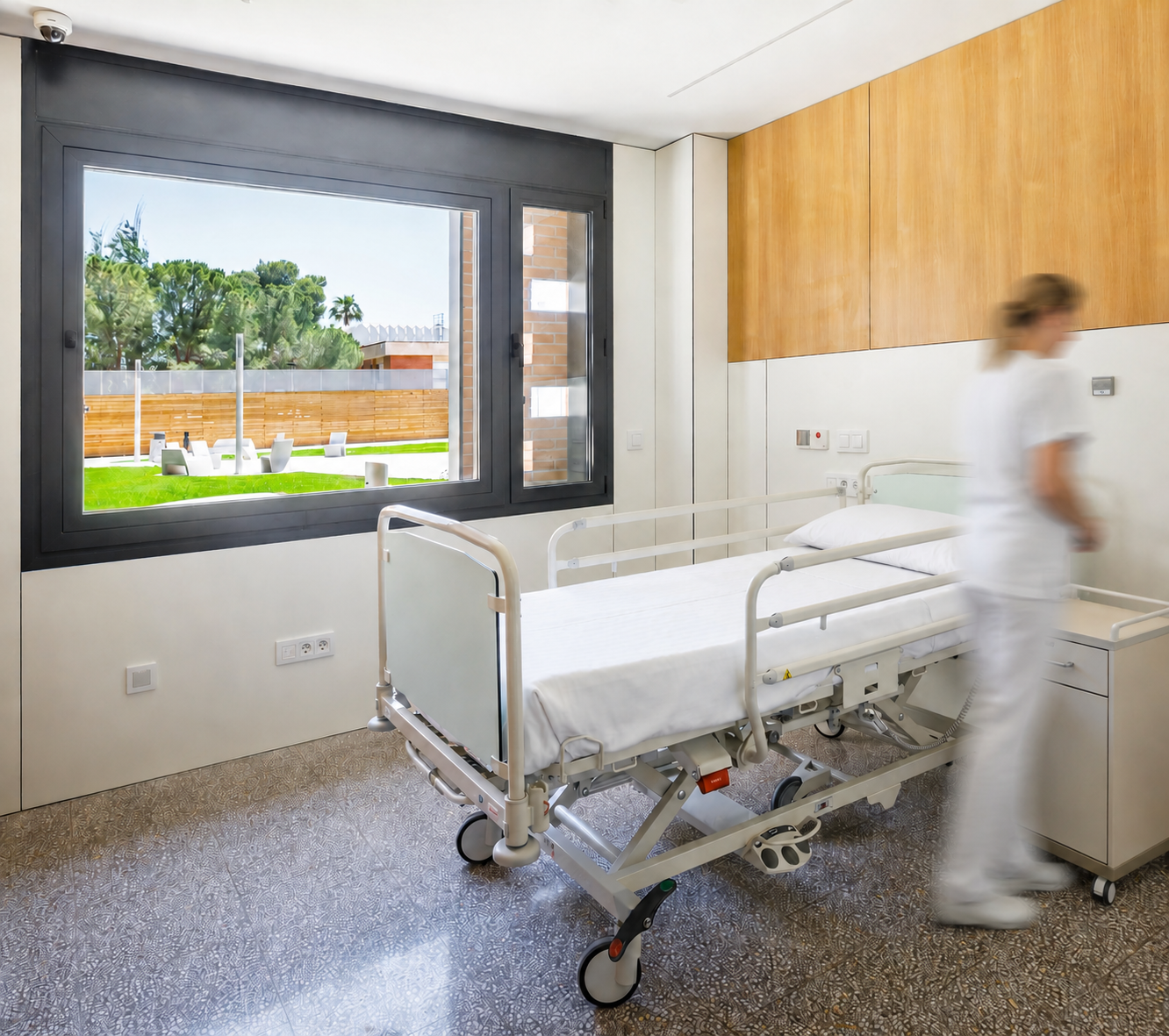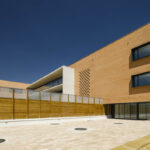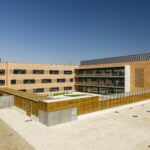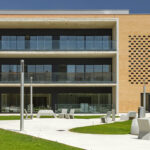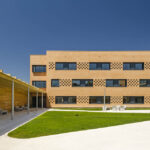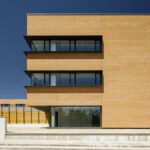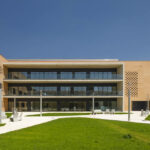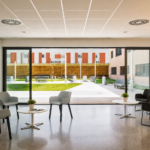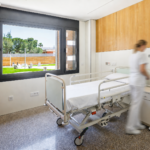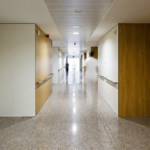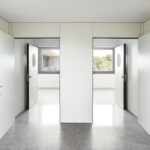
The new care building is located in the northern part of the plot, next to the current mental health hospital building.
Context & Integration// The new healthcare facility is situated on the northern portion of the plot, adjacent to the existing mental health inpatient building. Access is positioned at the eastern end, utilizing the current internal roadway that connects the campus. Through this master-planned integration, the project reinforces the existing urban fabric of the complex, where all healthcare blocks align linearly to form a cohesive medical spine. These buildings are interconnected externally by a primary pedestrian spine and sub-surfacely via the technical gallery expansion on the semi-basement level.
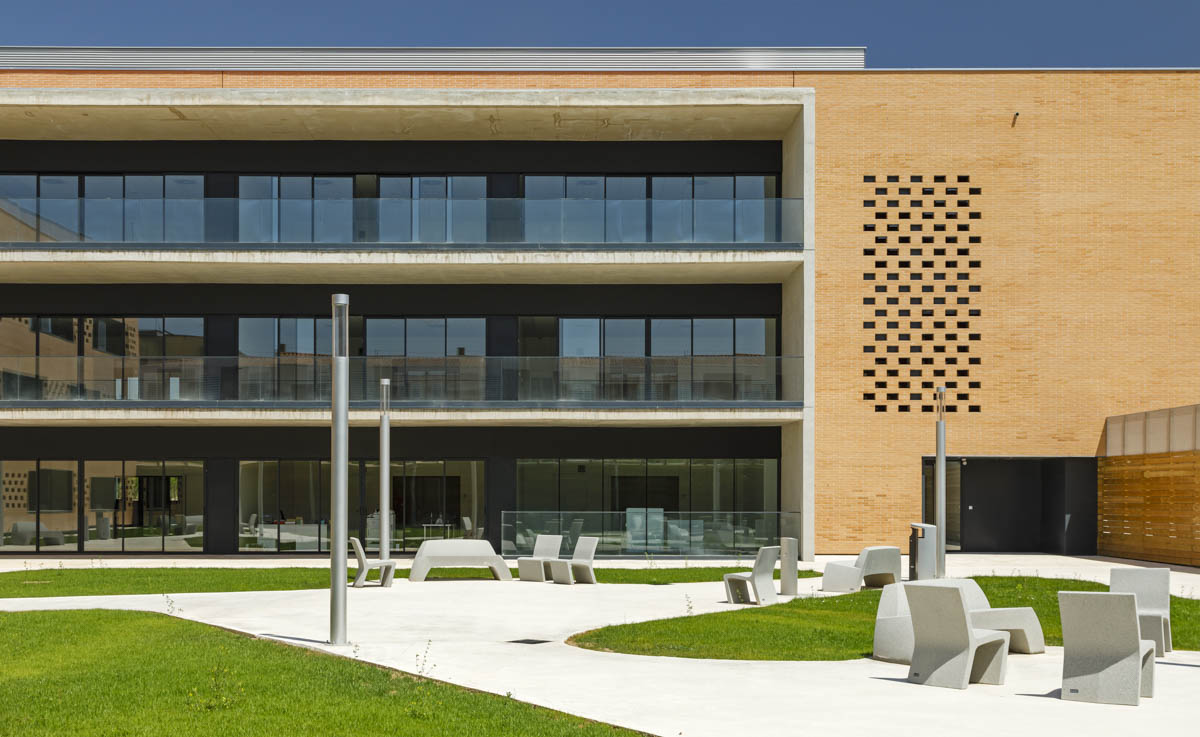
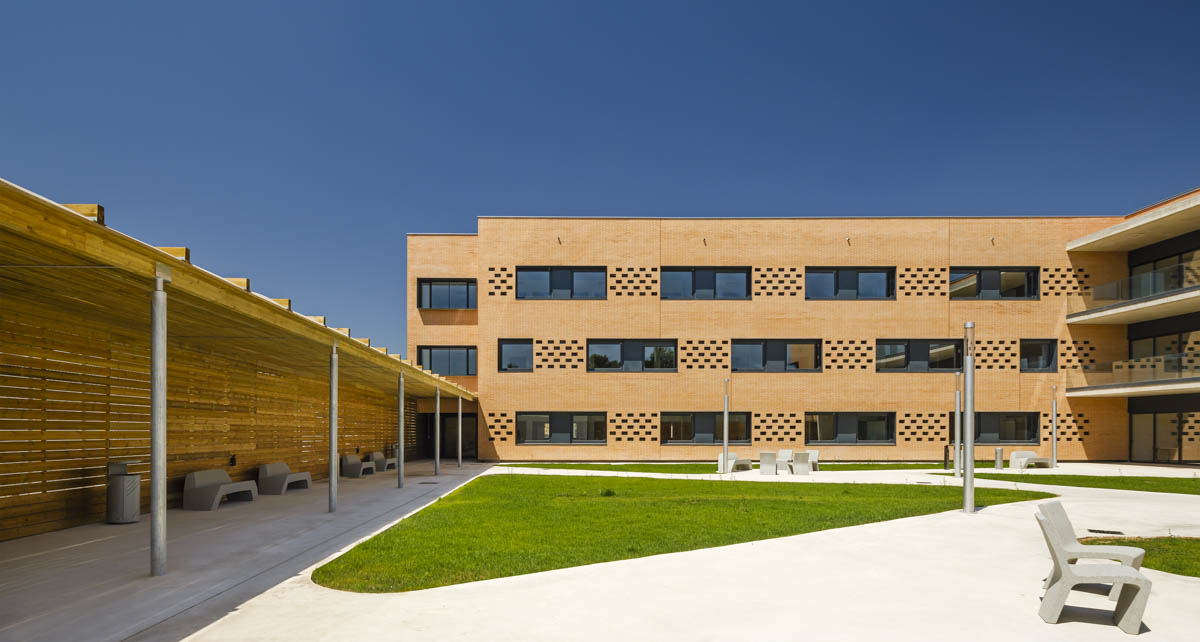
Layout & Organization// The building is organized across a ground floor, two upper residential levels, and a semi-basement floor. Its volumetry adopts an L-shaped geometry, strategically placed on the northern edge of the site to open up a generous landscaped courtyard to the south. This orientation guarantees optimal, all-day sun exposure for the residents’ outdoor recreation spaces.
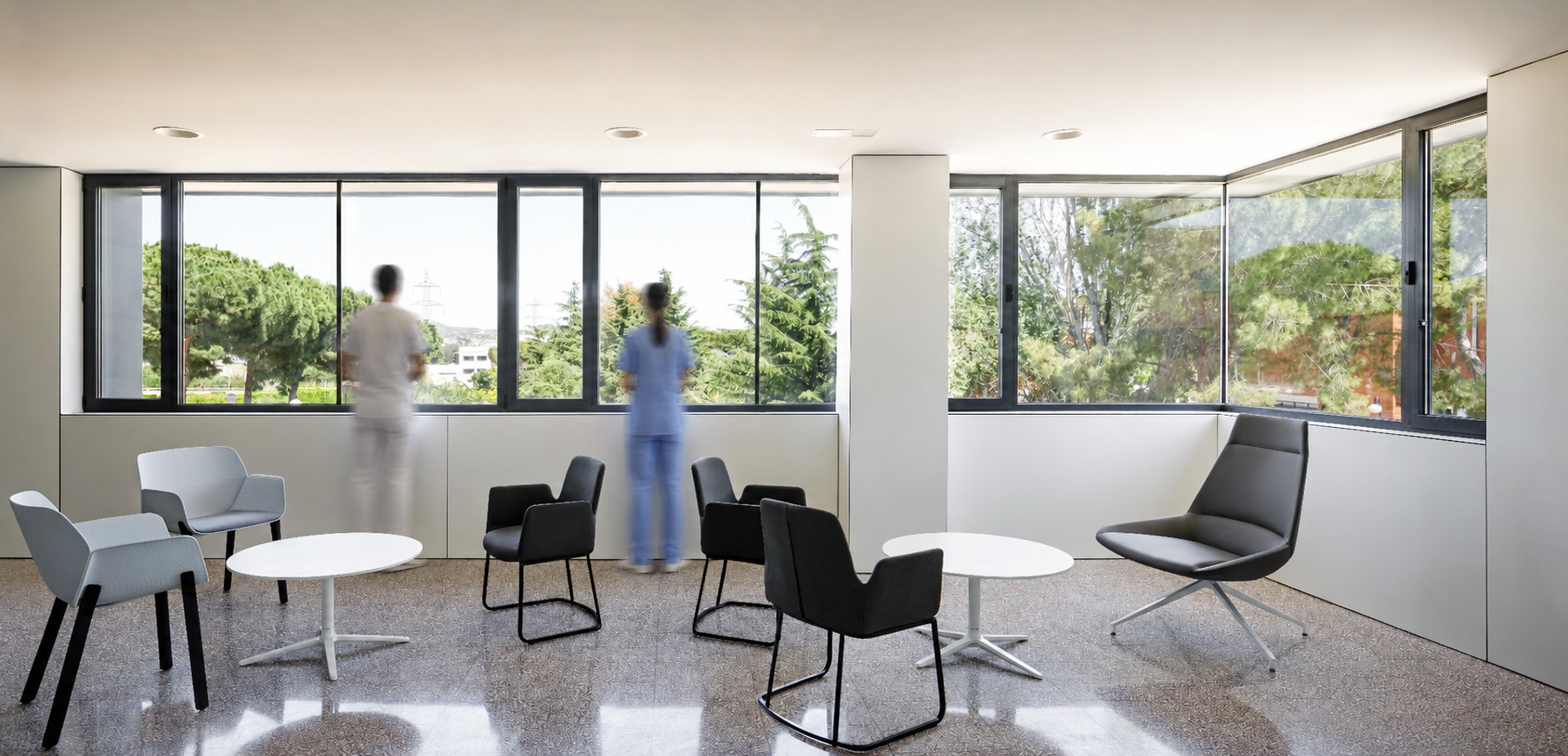
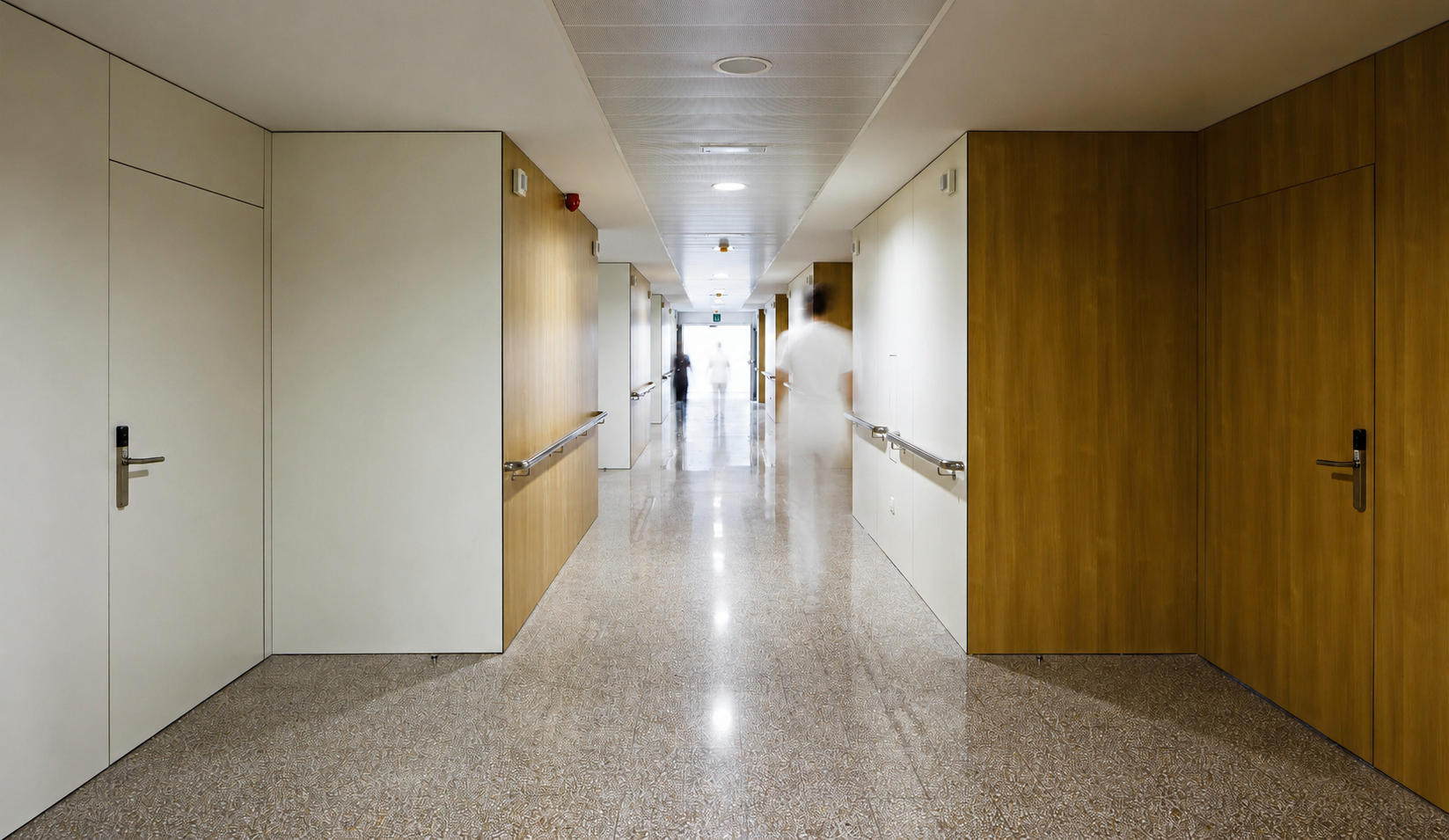
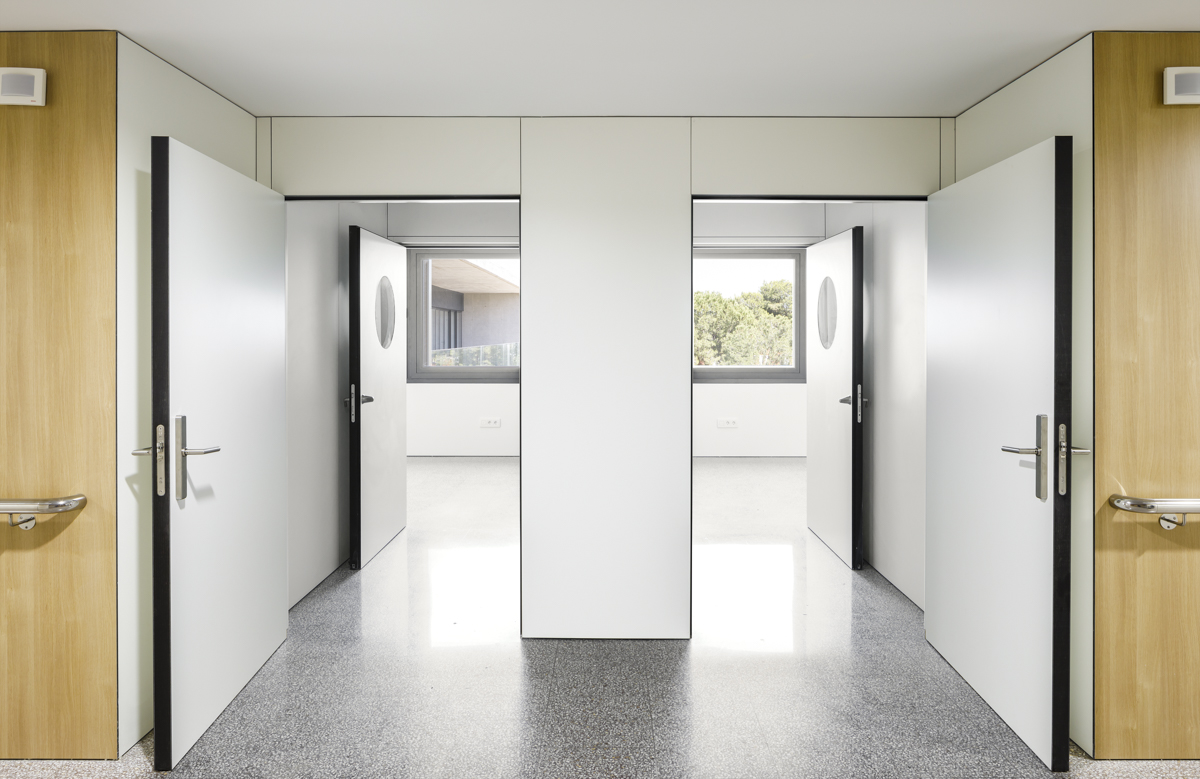
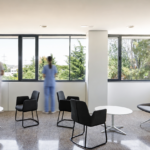
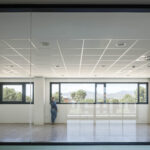
The interior layout of the inpatient floors features a central corridor distribution system that serves rooms on both sides, ensuring all spaces are flooded with natural daylight. The northeastern wing centralizes the access program, housing the main entrance lobby and visitor rooms, while directly linking to the administrative offices and communal spaces. Additionally, the facility incorporates a dedicated service and ambulance entrance on the semi-basement level by extending the existing mental health building’s access ramp. This generates a segregated logistical circuit, completely separated from public circulation paths.
Singularity & Character// Singularity and Character// Since the project falls within the Master Plan of the entire hospital complex, its implementation and relationship with the outside respond to two conceptual scales. On one hand, the building presents an urban and public dimension as it integrates and gives continuity to the pedestrian axis that structures the sequence of campus pavilions. On the other hand, the building maintains a private and human scale because the volume closes in on itself, creating an intimate and safe refuge around the courtyard exclusively for the residents.
Sustainability criteria// The architectural design addresses sustainability and environmental balance through a holistic approach. Most notably, the envelope features a high thermal inertia ventilated facade engineered with a dual heavy-leaf system. This technical solution successfully optimizes thermal insulation and building energy efficiency while seamlessly meeting the rigorous safety, security, and containment standards mandated by the clinical program and patient profile.