The project stems from Vall d'Hebron University Hospital's strategy to expand its Rehabilitation Department in response to growing healthcare demands. This spatial reconfiguration enabled the relocation of the chapel—originally situated adjacent to the gym—to the main building, freeing up a key area for physical therapy while creating a renewed, more intimate, and accessible religious space.
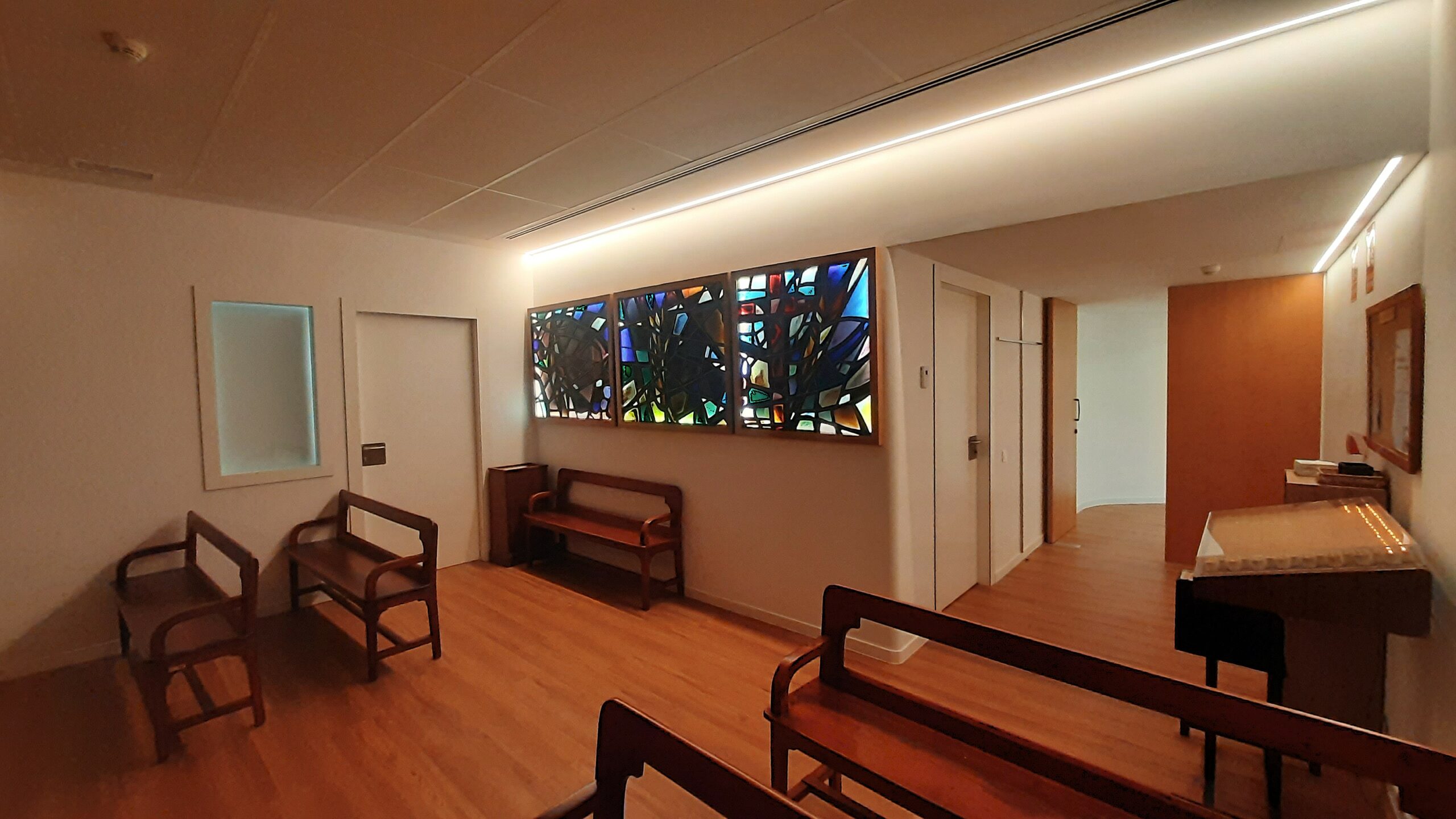
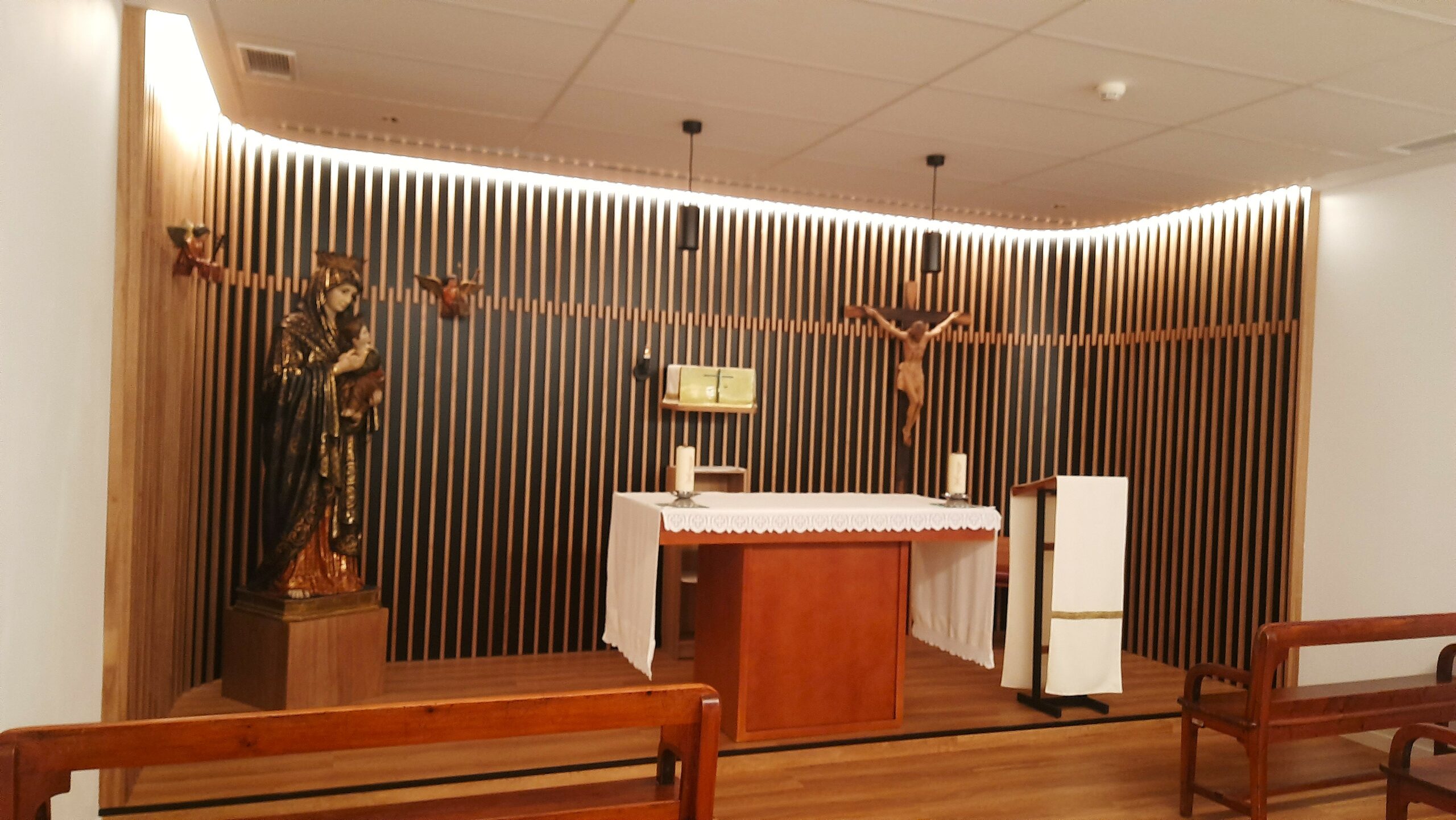
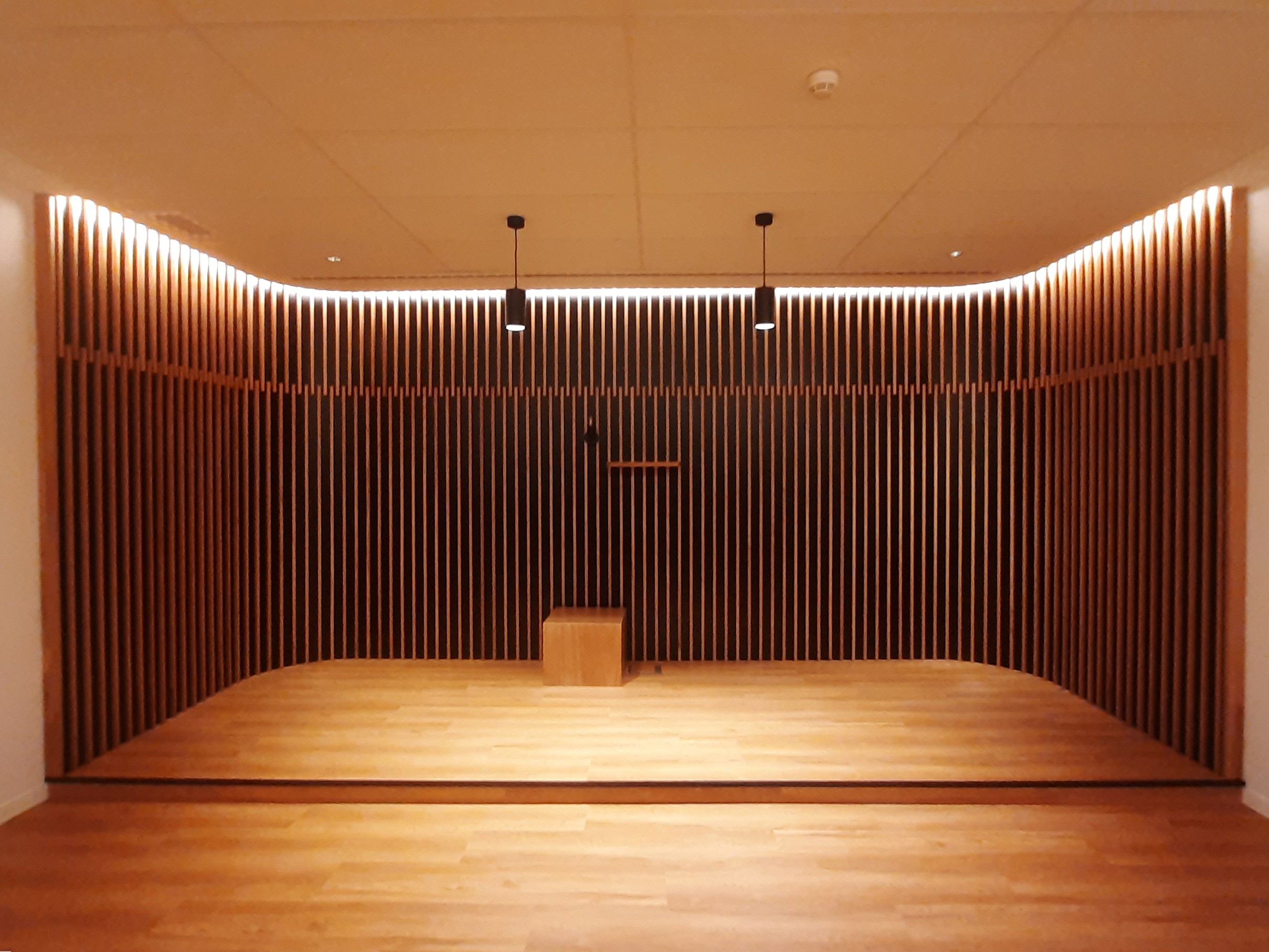
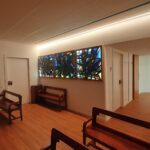
The new chapel// The chapel’s new location is articulated through a recessed entrance corridor that functions as an acoustic and visual buffer. This transition allows patients and visitors to progressively step away from the bustling main lobby and enter a peaceful environment designed for quiet reflection.
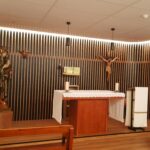
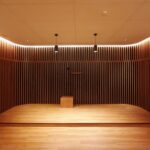
The interior design prioritizes spatial warmth through the use of natural wood and a curated lighting strategy: indirect wall-wash lighting frames the vertical surfaces, while targeted spotlights highlight liturgical elements such as the altar, creating a serene and welcoming atmosphere.
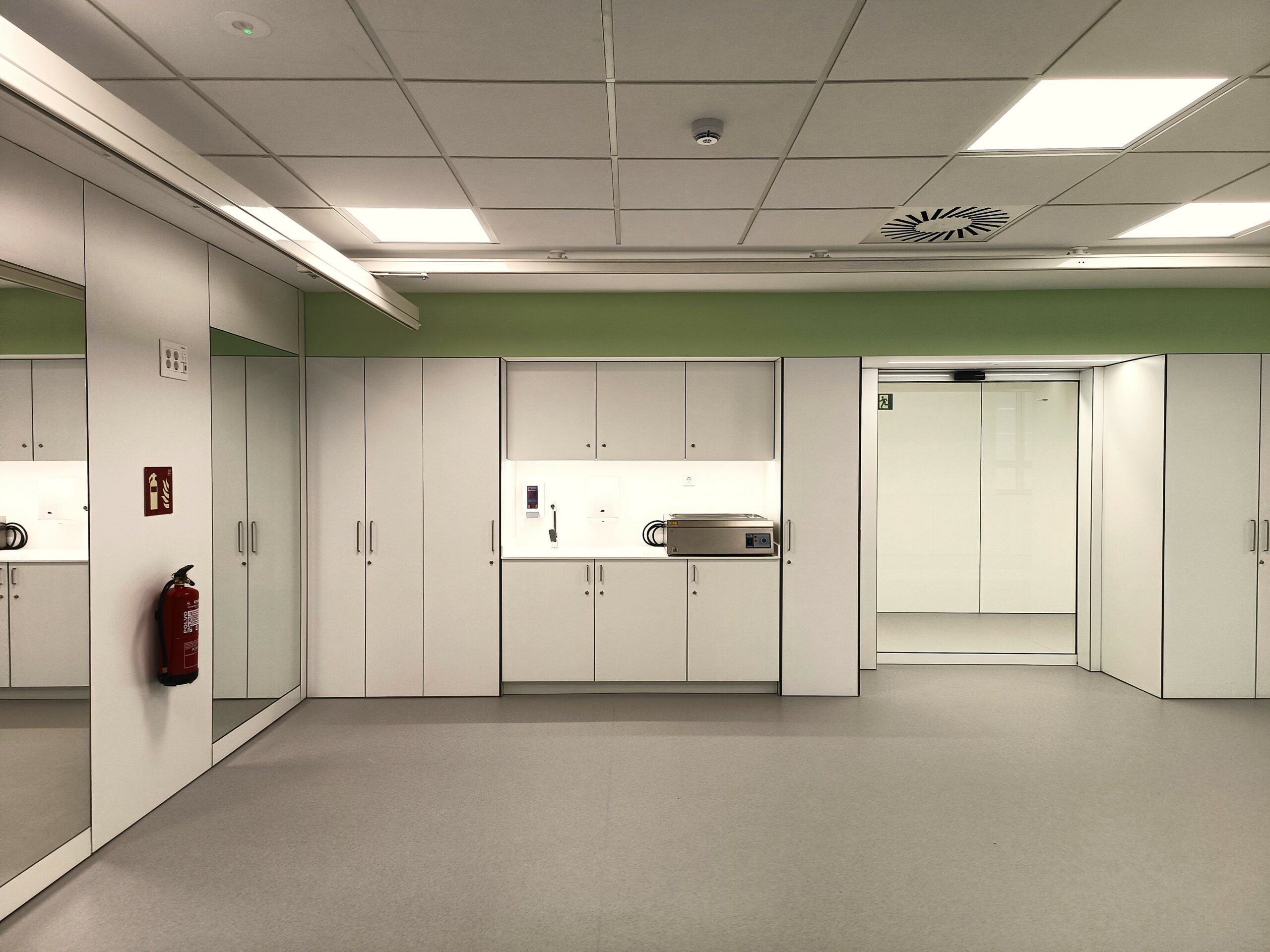
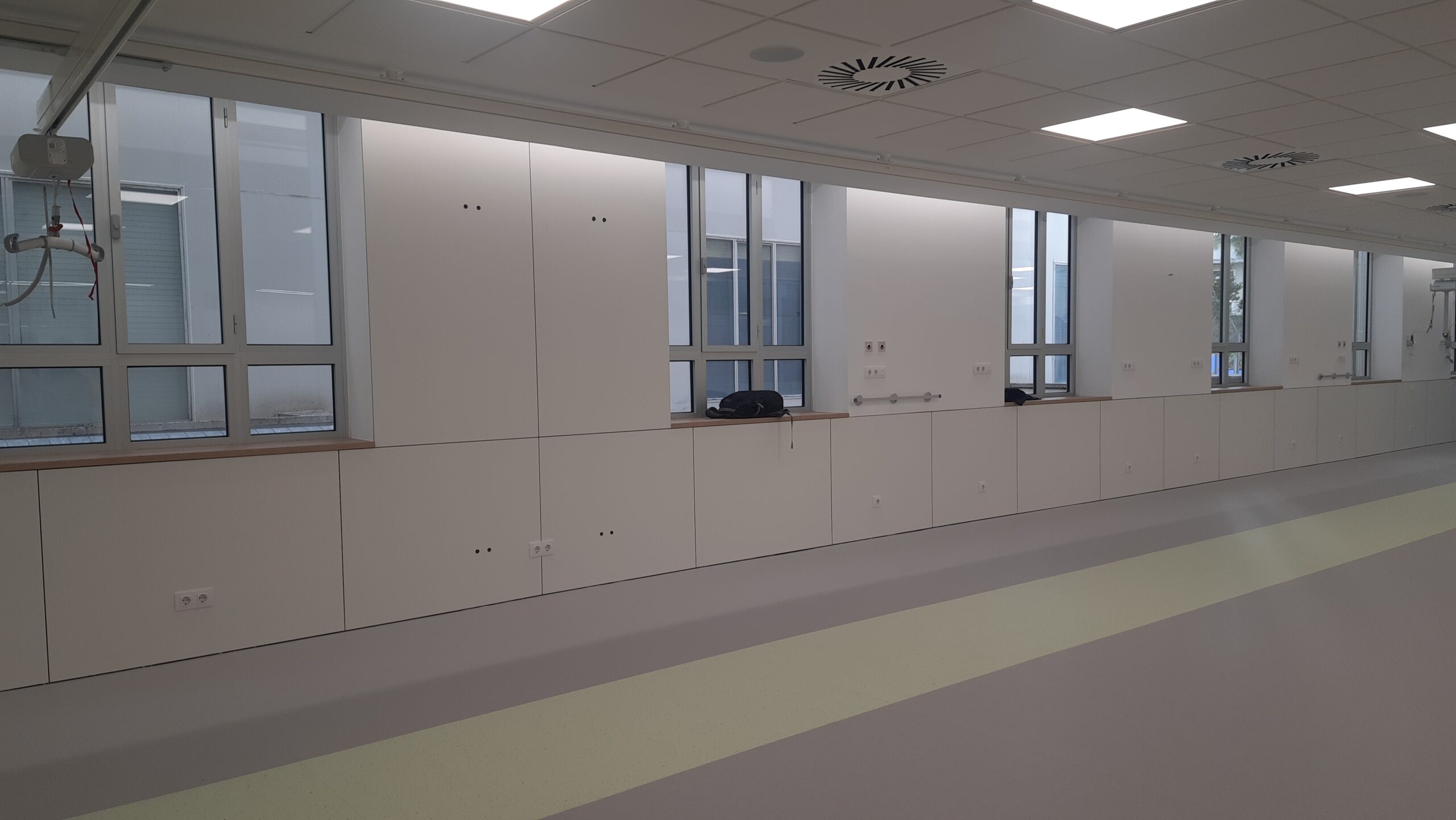
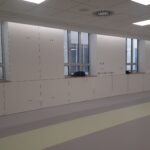
Rehabilitation Department// The new rehabilitation suite is organized around a generous, open-plan central hall that maximizes natural daylight intake. The boundary along the circulation corridor leverages the depth of structural columns and MEP risers to integrate built-in storage cabinetry, alongside a lower-ceiling reception threshold that introduces a human scale upon entry. At both ends of the hall lie the functions requiring greater clinical privacy: digital therapy areas and occupational therapy rooms, specifically engineered for training and relearning activities of daily living (ADL).
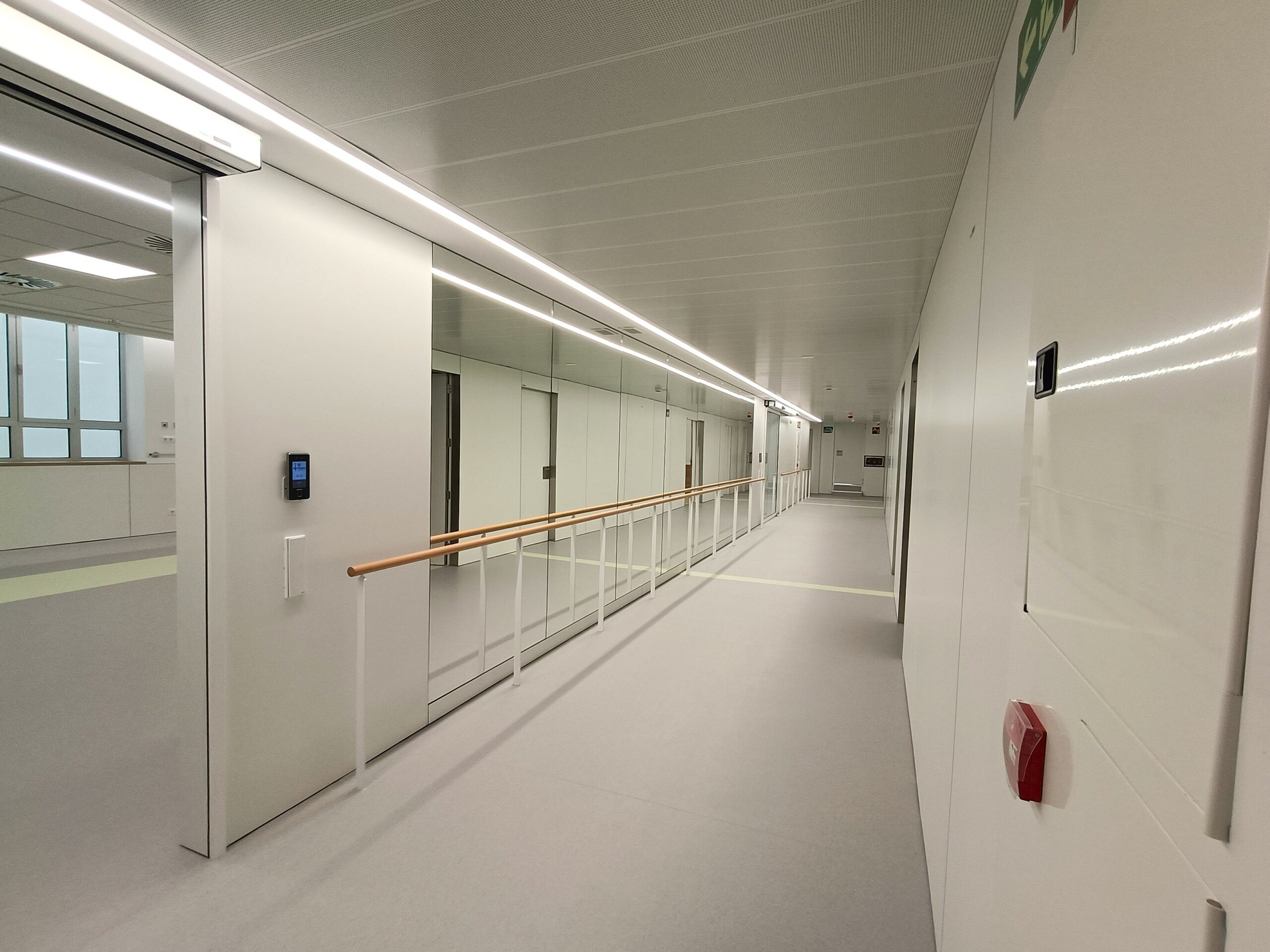
Furthermore, the corridor itself is designed as an active element of the therapeutic journey: fitted with continuous handrails and full-height mirrors that enhance perceived space, it allows patients to practice walking gait and posture correction independently.
Sustainability Criteria// The intervention prioritizes dry construction methodologies, drastically minimizing on-site waste generation. High-durability, low-maintenance materials tailored for clinical environments were specified throughout: resilient continuous flooring, impact-resistant wall claddings, and demountable ceiling systems that facilitate ongoing MEP maintenance and inspection.