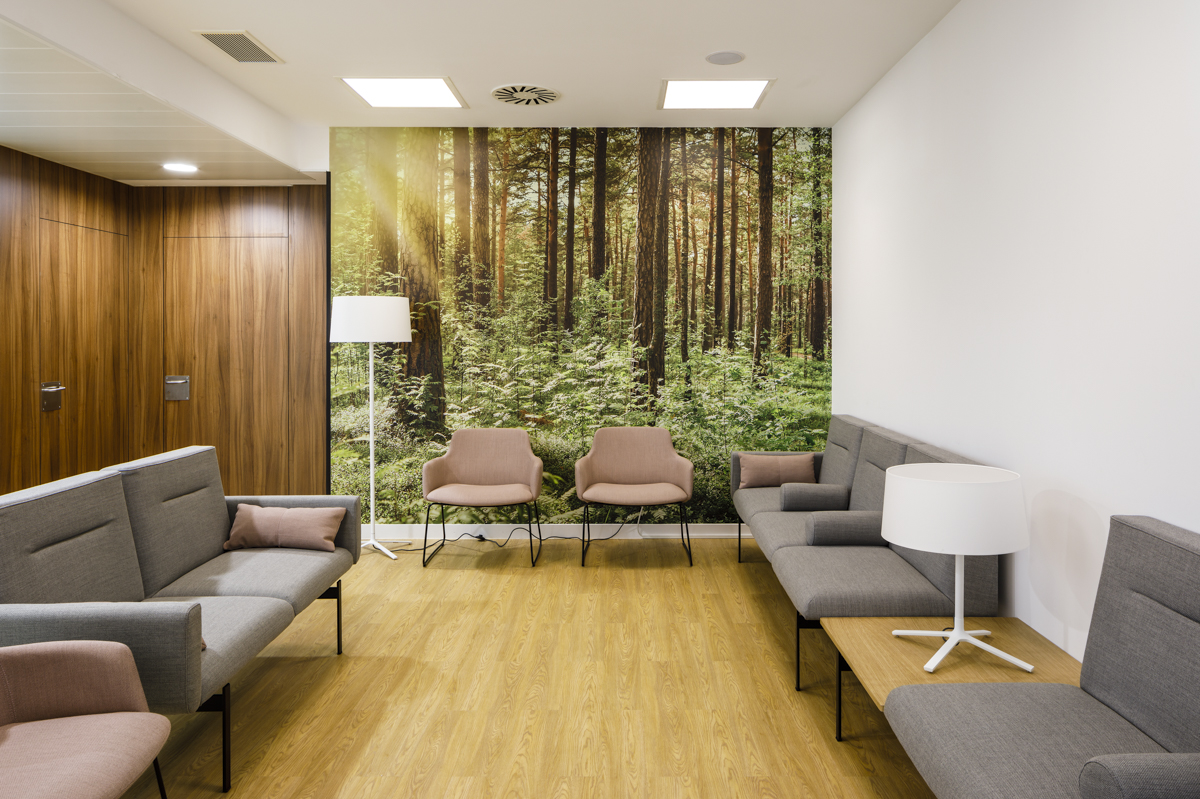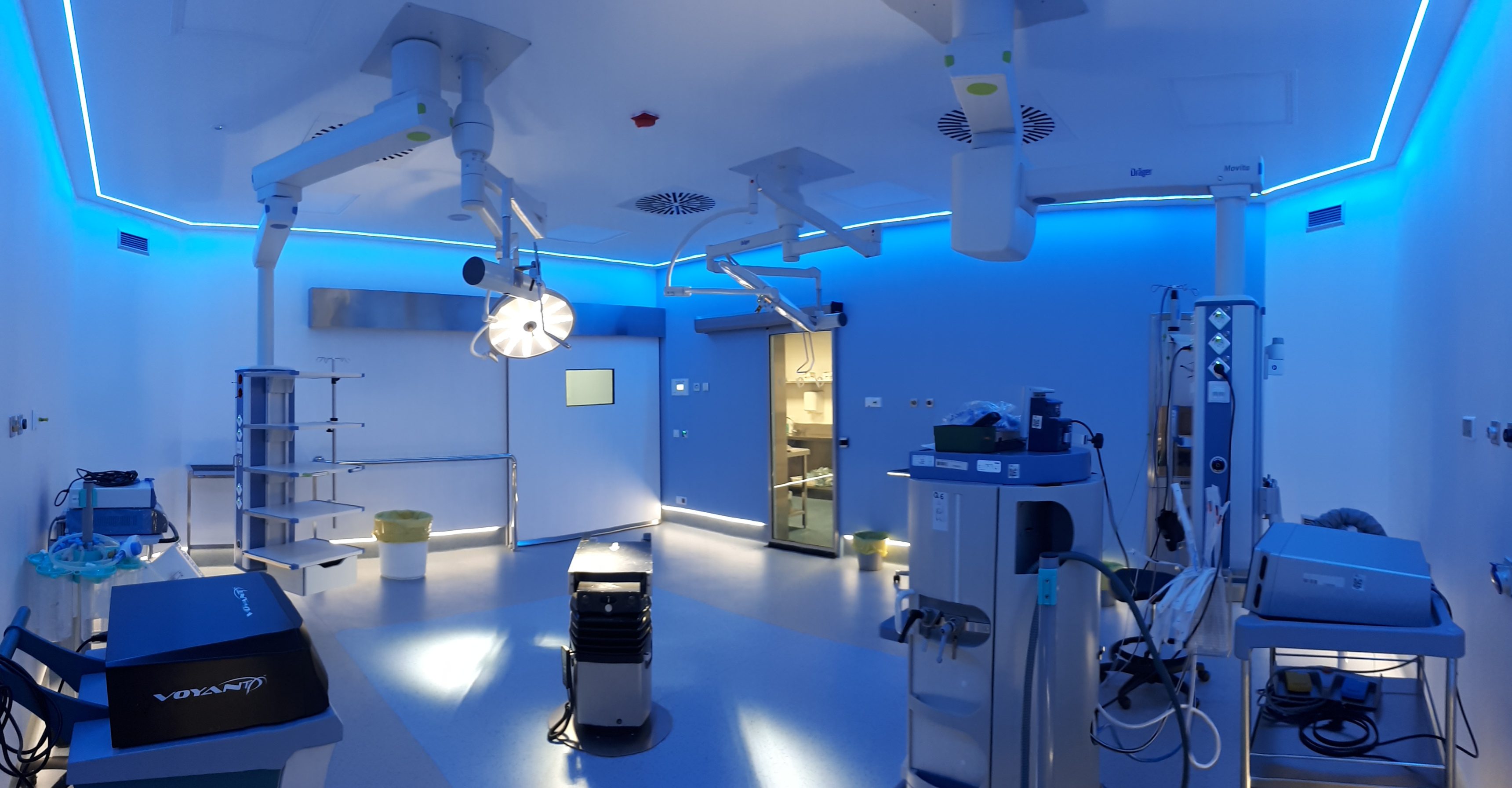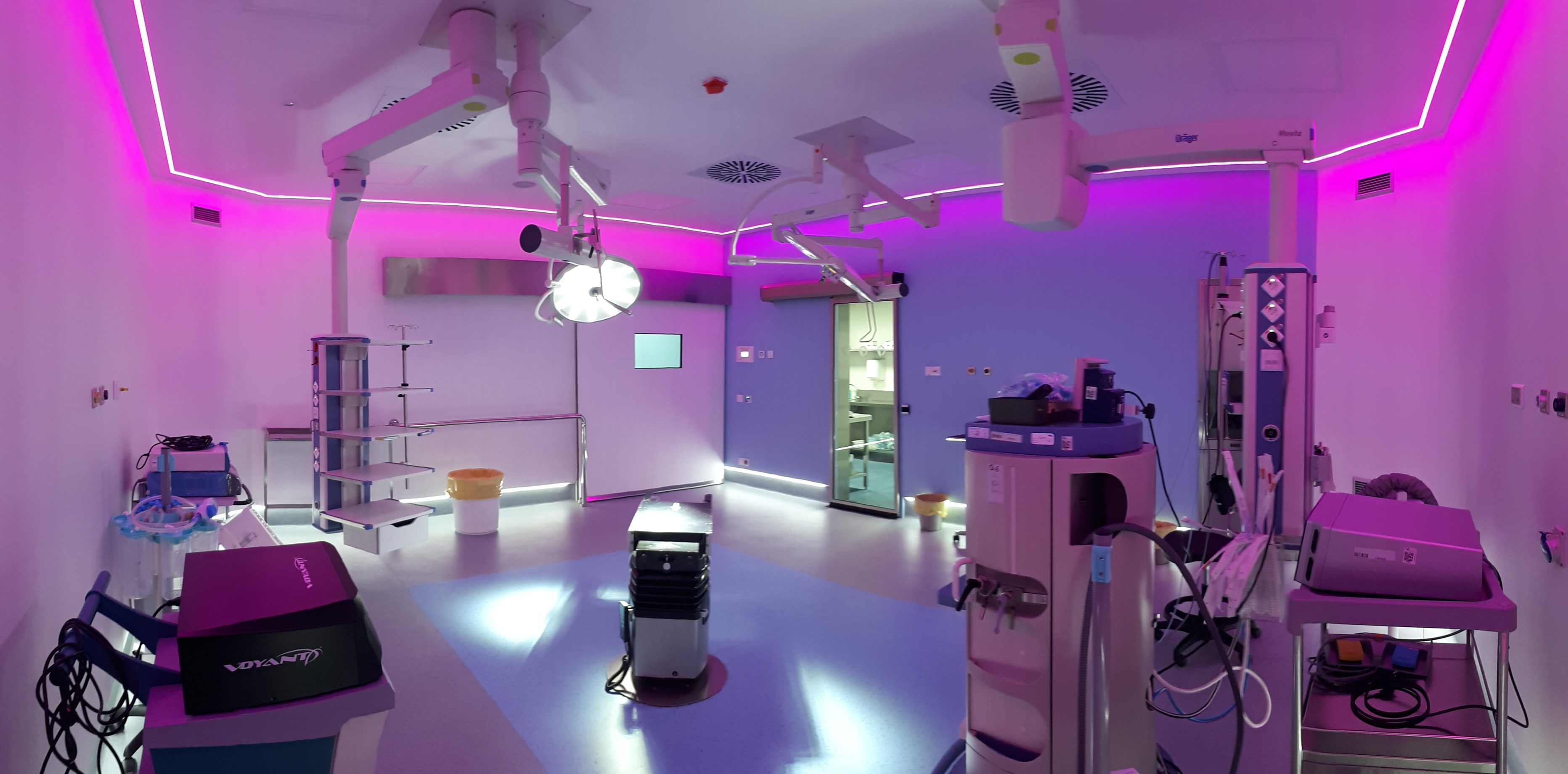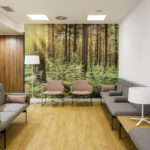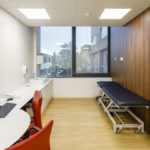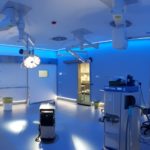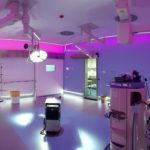
Figueres Hospital has experienced an annual increase in the number of patients requiring rehabilitation services, necessitating a larger, more optimized space. Compounding this progressive space deficit is a lack of layout versatility, which restricts medical staff workflows. The proposed strategy implements a phased renovation, starting with the rehabilitation unit, outpatient consultations, and the surgical block. Additionally, the plan integrates a therapeutic garden—an outdoor space tailored to address the physical, psychological, social, and spiritual needs of inpatients, helping them maintain a connection to reality while fostering psychophysical well-being for all users, including patients, families, and healthcare professionals.
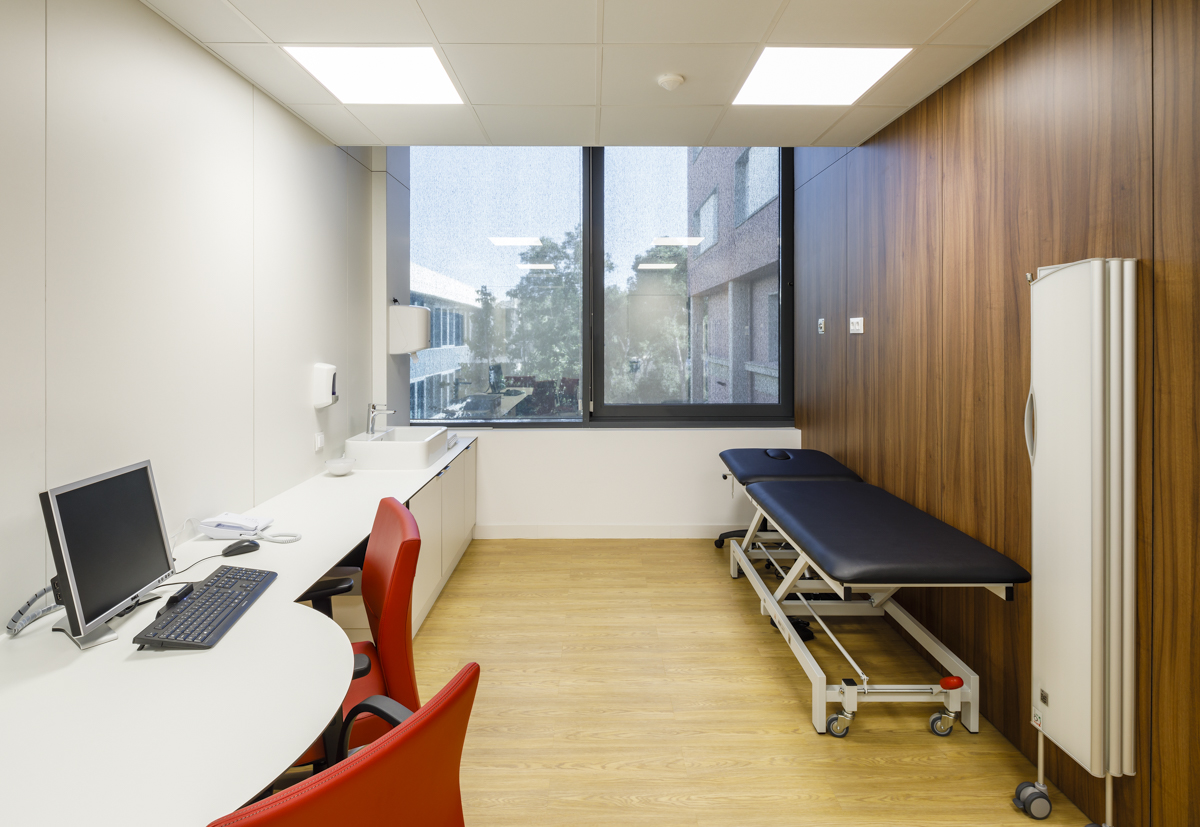
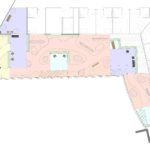
Context & Integration// The new location introduces key improvements, such as a direct outdoor access circuit for patients and abundant natural daylighting within the rehabilitation hall. Concurrently, the intervention encompasses the renovation of an adjacent zone to accommodate five consultation rooms.
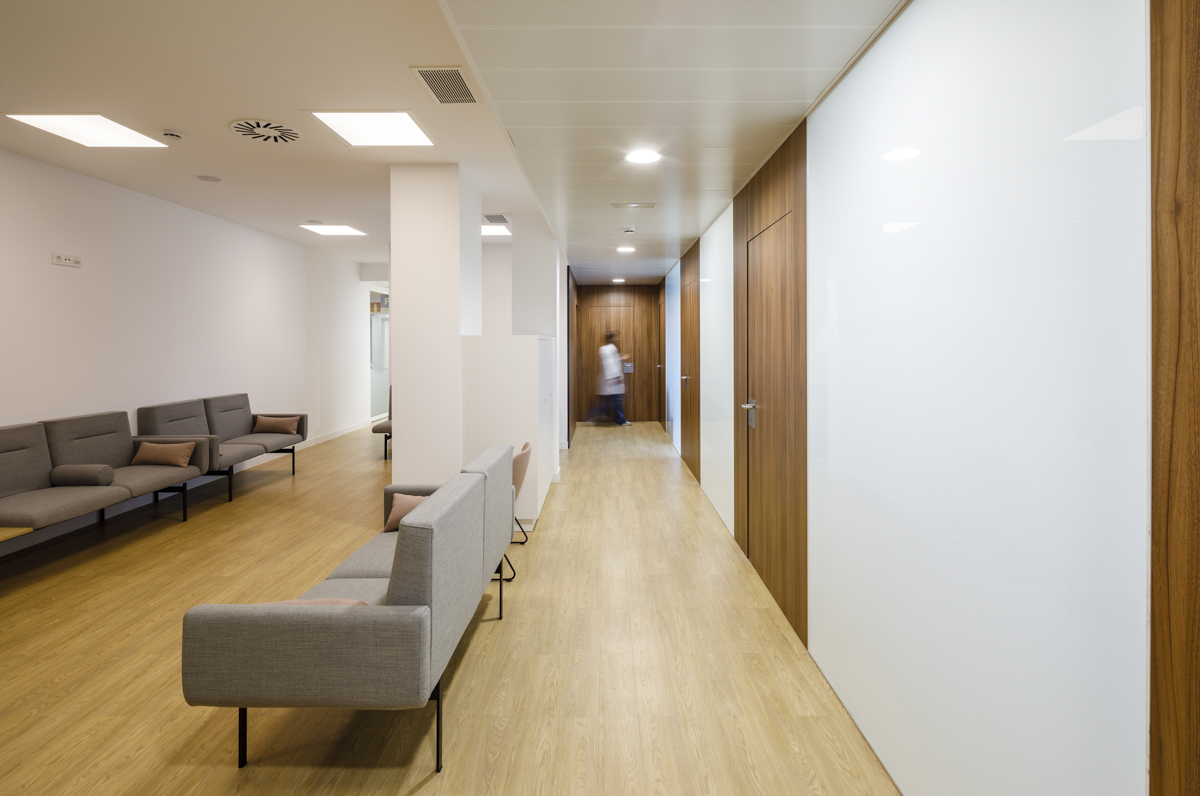
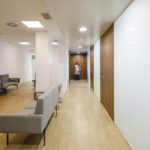
Layout & Organization// Its direct relationship with the main hospital entrance optimizes user circulation flows. Simultaneously, the strategic spatial layout separates internal staff pathways from public areas, preventing cross-interference. The surgical block renovation focuses strictly on interior reconfigurations—reorganizing storage and ancillary zones—while preserving the existing, highly functional layout and circulation schemes.
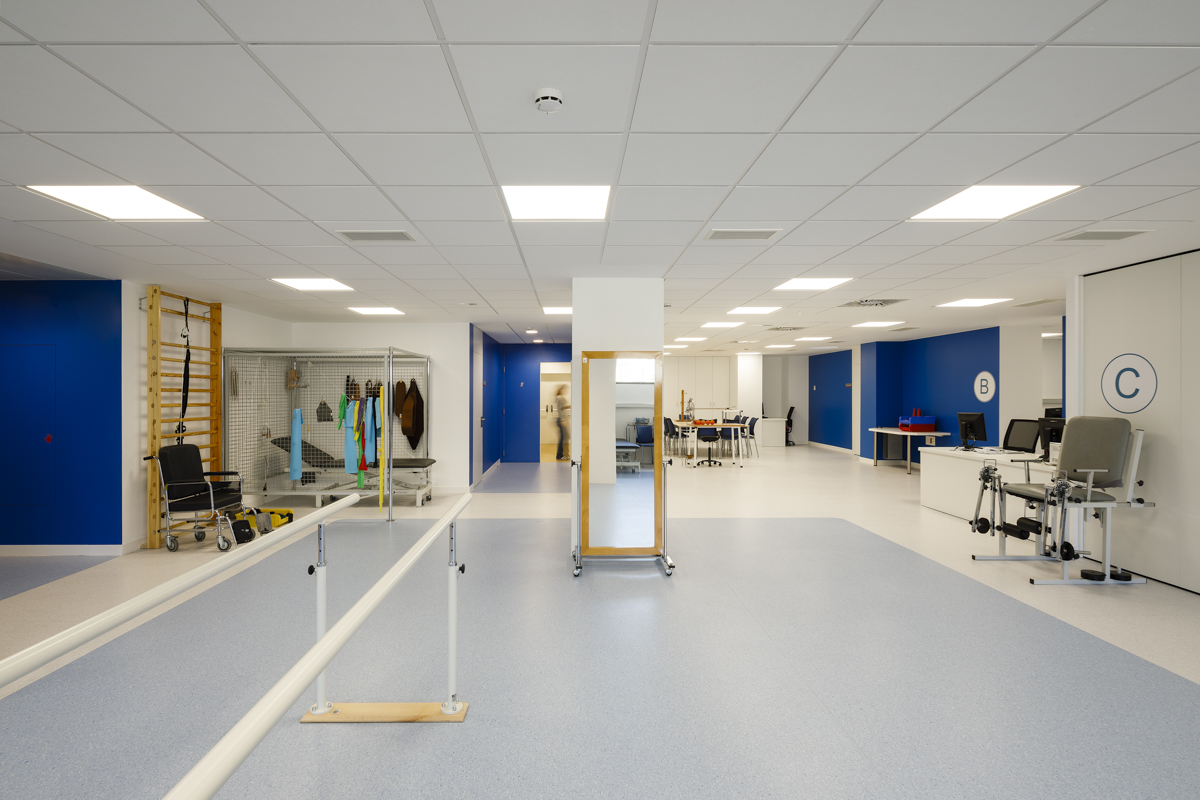
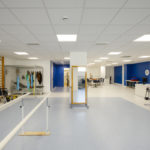
Uniqueness & Character// The project revolves around a generous central hall dedicated to active exercise. This space acts as the core hub of the gymnasium, from which smaller-scale rooms for individual therapy sessions branch out. A curated color palette across vertical and horizontal surfaces defines distinct zones, serving as an intuitive wayfinding system. The main gymnasium hall receives optimal, glare-free natural light from the north facade, while internal glazed openings allow daylight to penetrate deep into inner rooms. Furthermore, clerestory windows and skylights bring quality daylight into staff offices, ensuring an enhanced workplace environment.
Sustainability Criteria// The project prioritizes passive solar design, integrating strategically placed windows and skylights to maximize natural daylight. Additionally, the existing facade has been insulated to optimize the efficiency of HVAC systems and enhance overall user comfort.
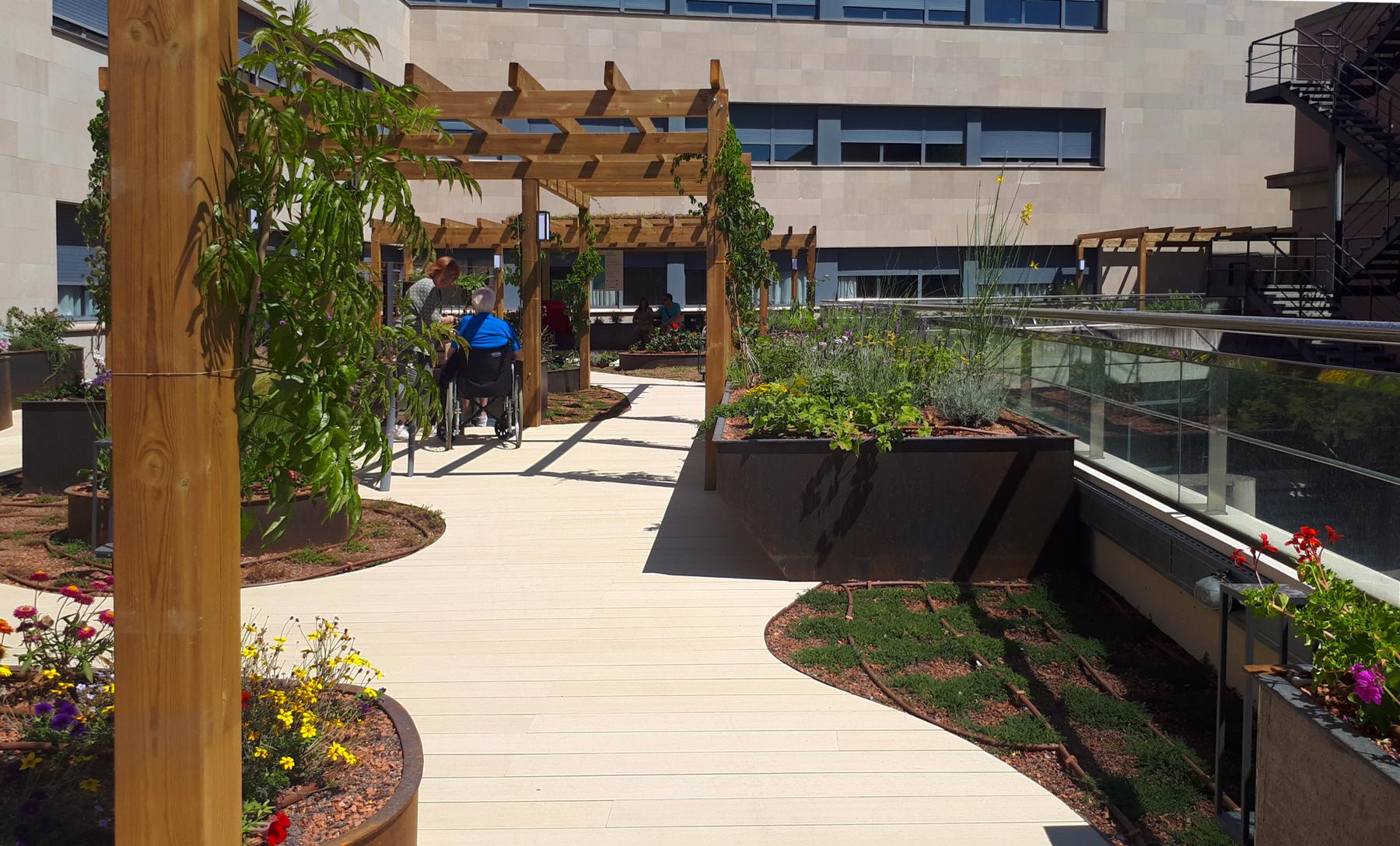
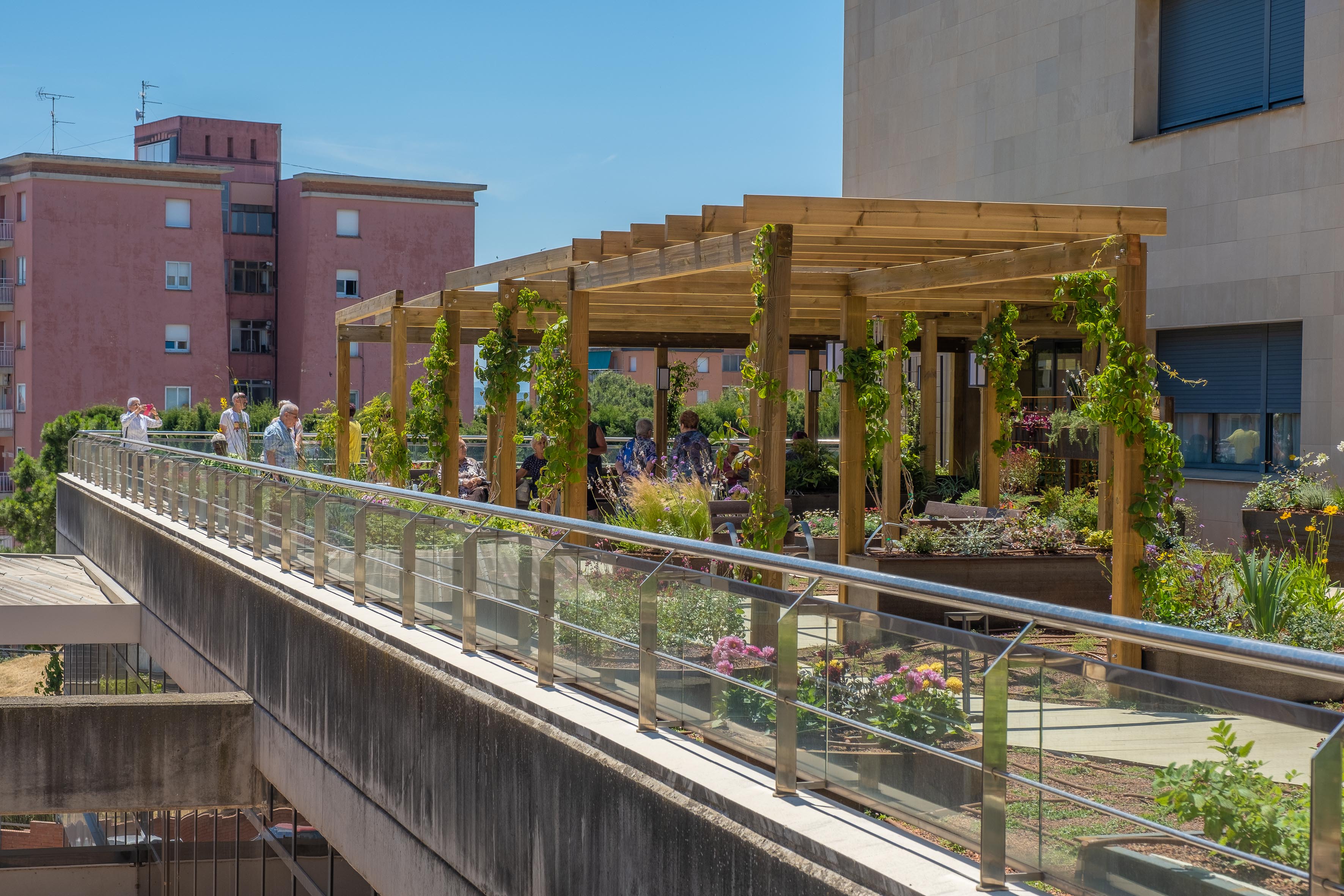
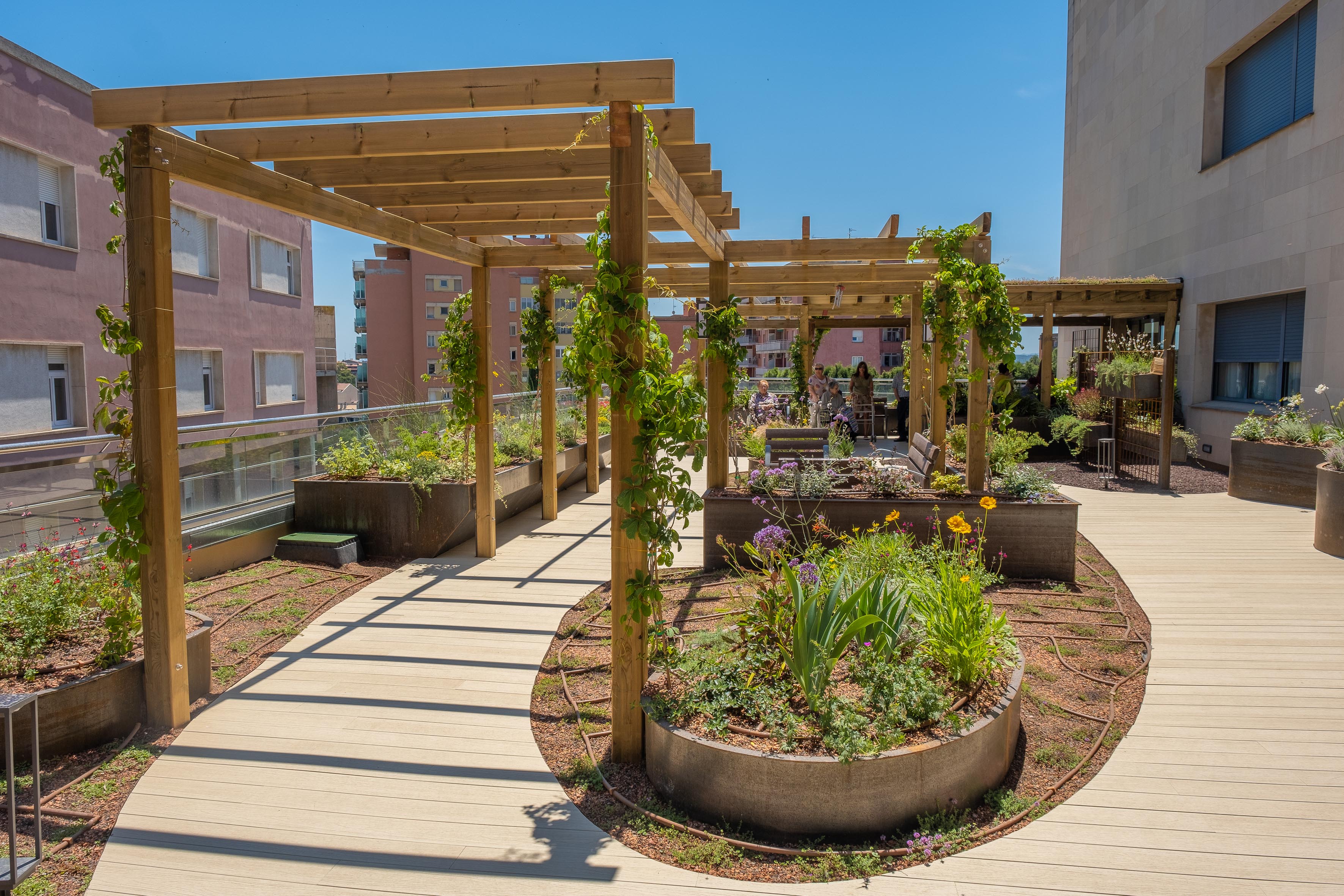
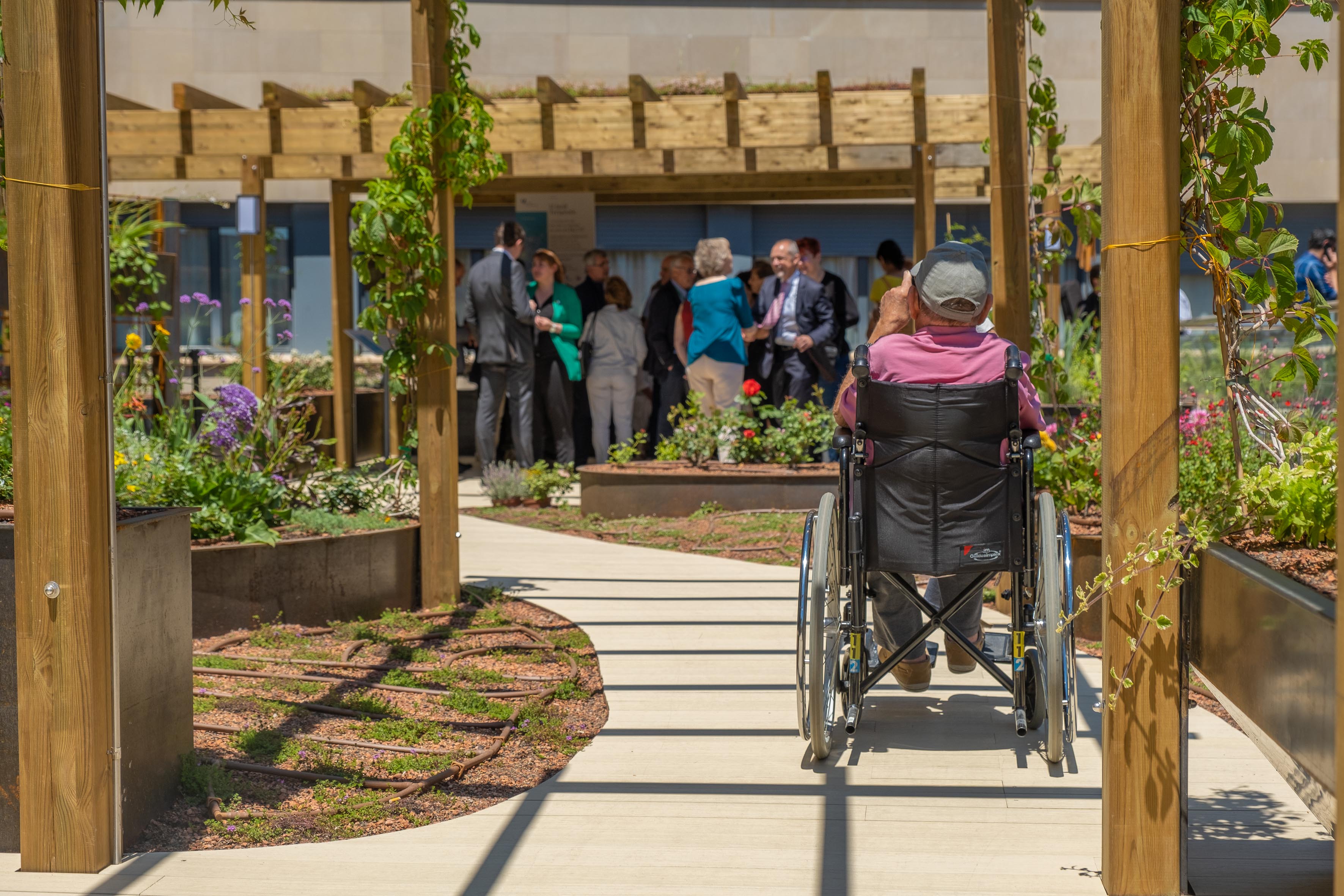
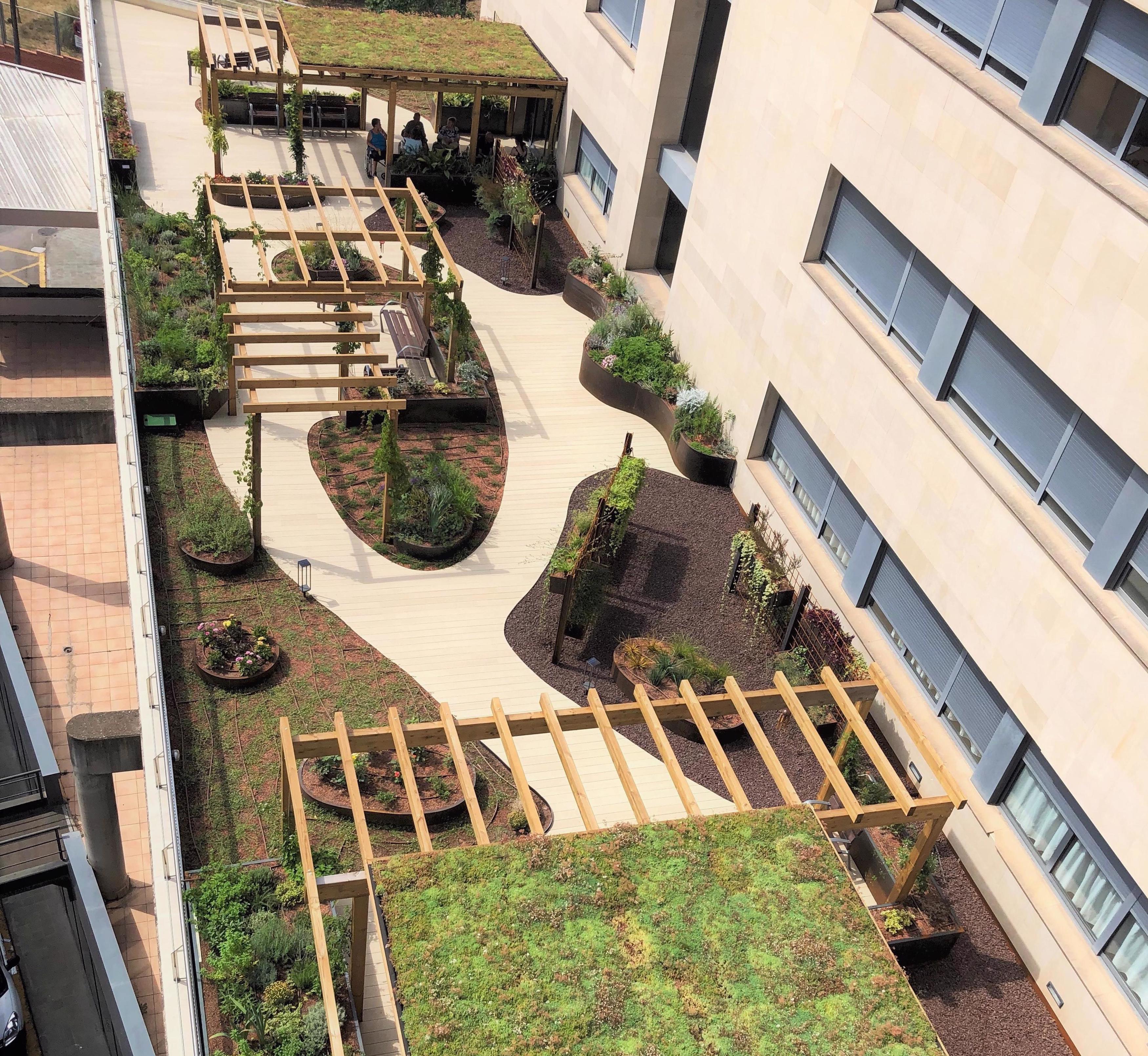
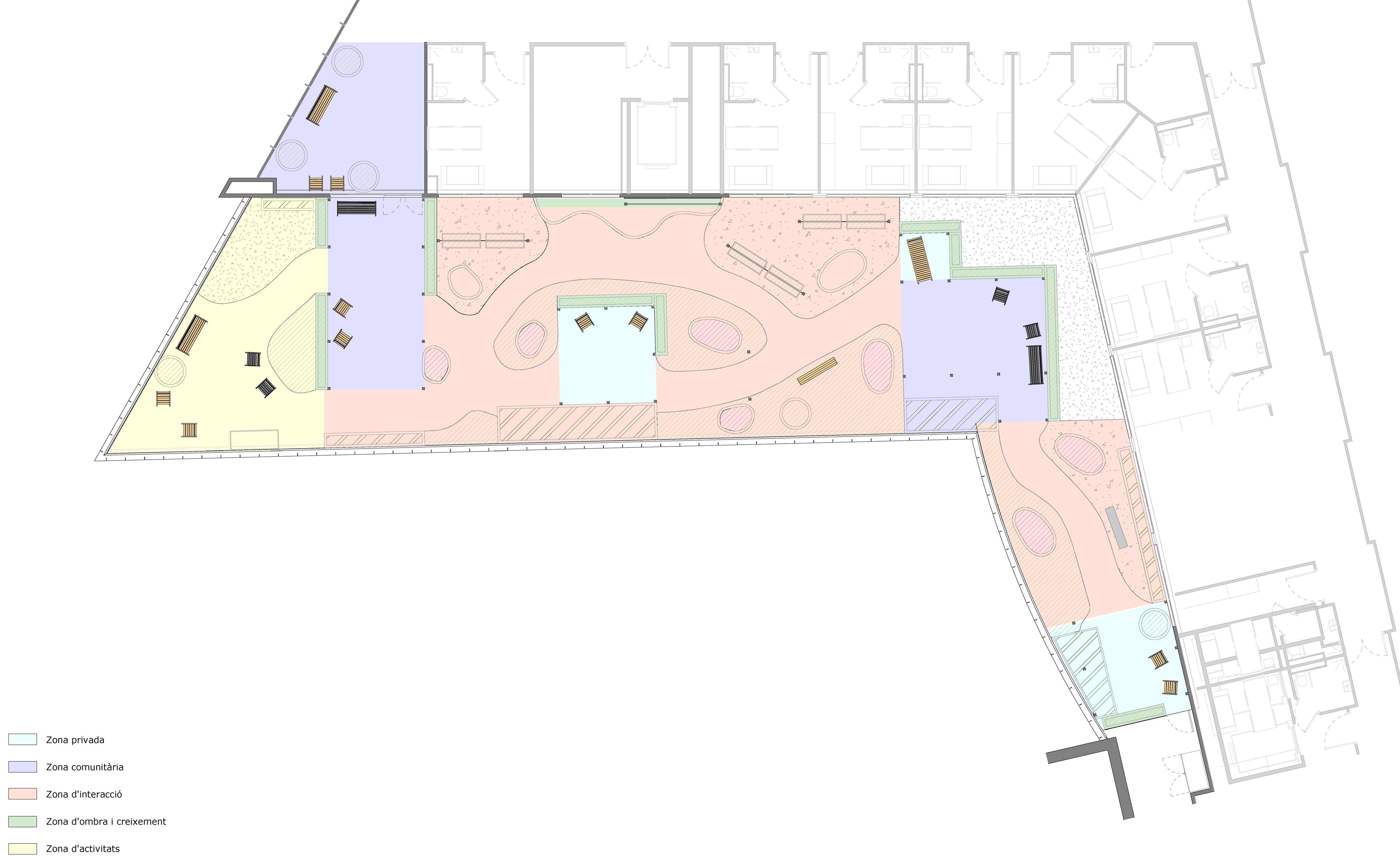
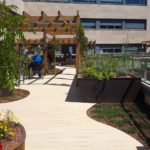
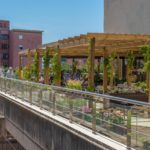
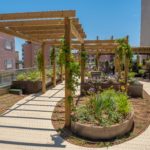
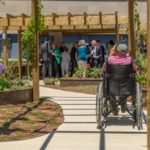
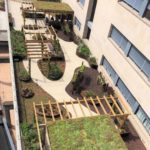
Key Intervention: The Bernat Jaume Therapeutic Garden// Addressing the challenges of chronicity and aging, this project leverages the scientific evidence of therapeutic gardens to humanize healthcare architecture, benefiting over 1,000 users annually. Designed as an autonomous-access Mediterranean oasis, it serves as a panoramic balcony connecting users to nature. The space is structured around organic-shaped pathways adapted for wheelchair access, combining pergolas and porches to ensure year-round usability and a smooth indoor-outdoor transition. The integration of aromatic plants, sensory stimuli, and flexible furniture fosters rehabilitation, socialization, or quiet contemplation, while raised planters safeguard the privacy of the patient rooms. The result optimizes the center’s environment and generates direct benefits: improving quality of life, reducing medication reliance, and lowering stress levels for patients, families, and healthcare professionals.
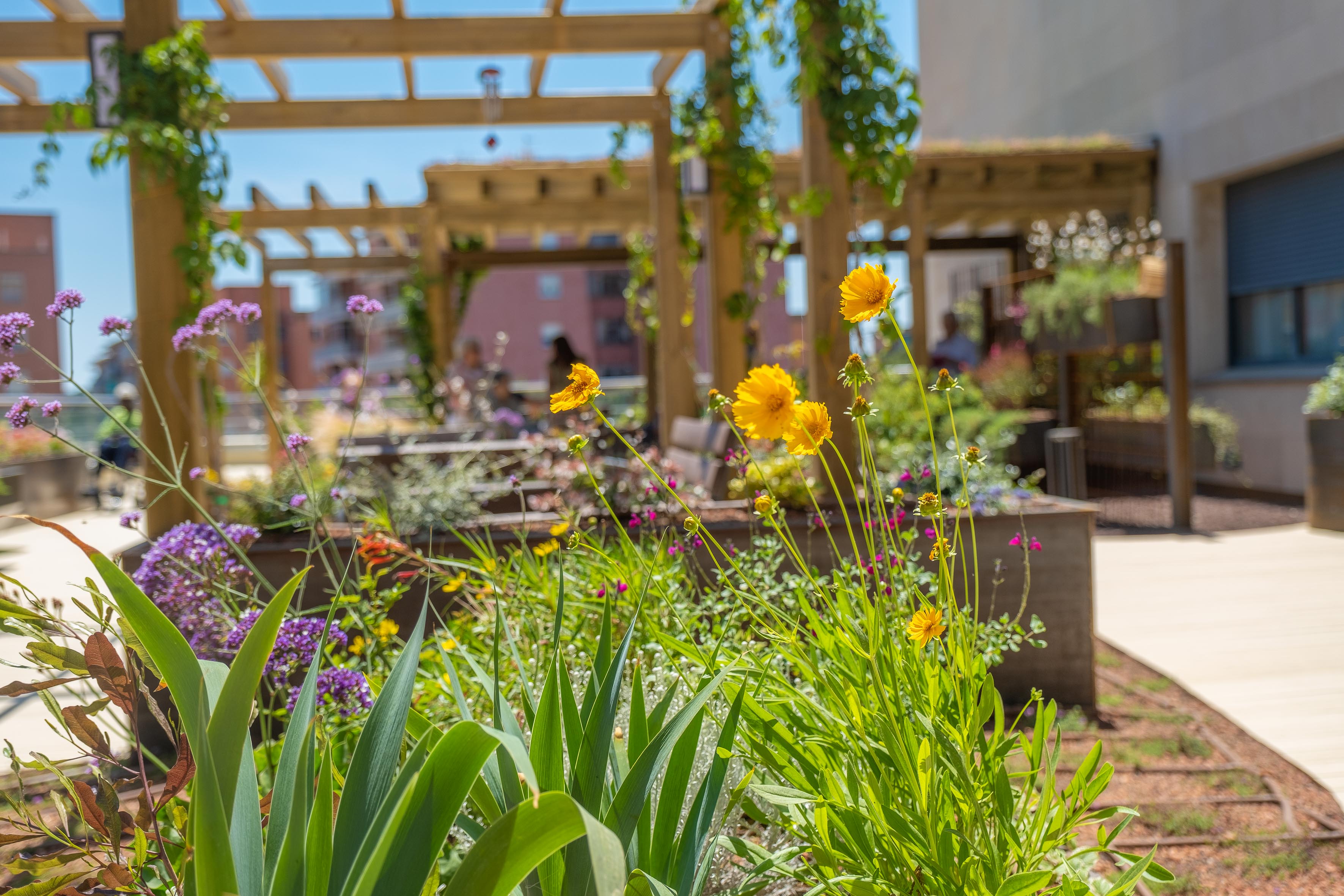
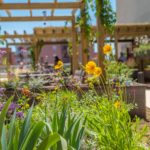
Architecture plays a fundamental role in the therapeutic garden by creating diverse micro-environments where users can engage in a wide variety of activities. These high-quality spaces are achieved as the garden seamlessly extends into the building interior through integrated planters and wooden benches. A deep porched area at the garden exit provides a smooth transitional threshold, preventing a jarring outdoor departure and offering a sheltered, shaded space protected from the rain. The garden features curved pathways allowing patients to interact directly with nature—such as colorful flowers, aromatic herbs, harmonic water fountains, and bird life. Surrounding these paths, lawns invite walking, while gravel segments provide diverse tactile sensations underfoot. The organic-shaped planters are integrated along the entire route, tailored specifically for wheelchair accessibility. To ensure a restorative stroll, distinct atmospheres are formed using varied furniture pieces like benches, chairs, or loungers, helping patients find spaces to socialize with relatives or simply sit and restore their inner balance. Non-fixed elements such as portable solar lighting, birdhouses, or wind chimes allow users to customize their surroundings and interact with the space. Furthermore, the organic geometry of the paths gives rise to open pockets suited for more dynamic activities.
The porched zones create adaptable configurations that can be either covered or open. This spatial differentiation allows patients to enjoy the garden in any season, providing sheltered pergolas for rainy days and open ones where users can stay connected to life cycles, changing seasons, or the calming sound of water. User privacy remains paramount; the curved geometry of the paths naturally generates distinct, secluded pockets where individuals can enjoy the garden alone or accompanied. The vertical growth of selected flora offers another layer of natural refuge. These porched structures host climbing plants that form transitional green thresholds between nature and architecture, enriched by the positive stimuli of combined aromatic scents.