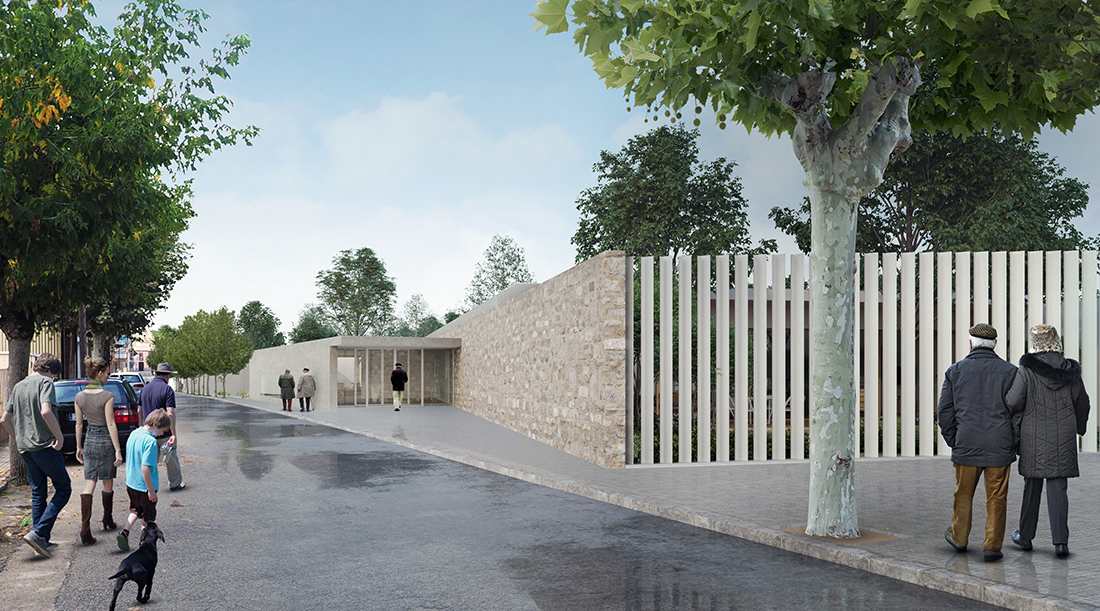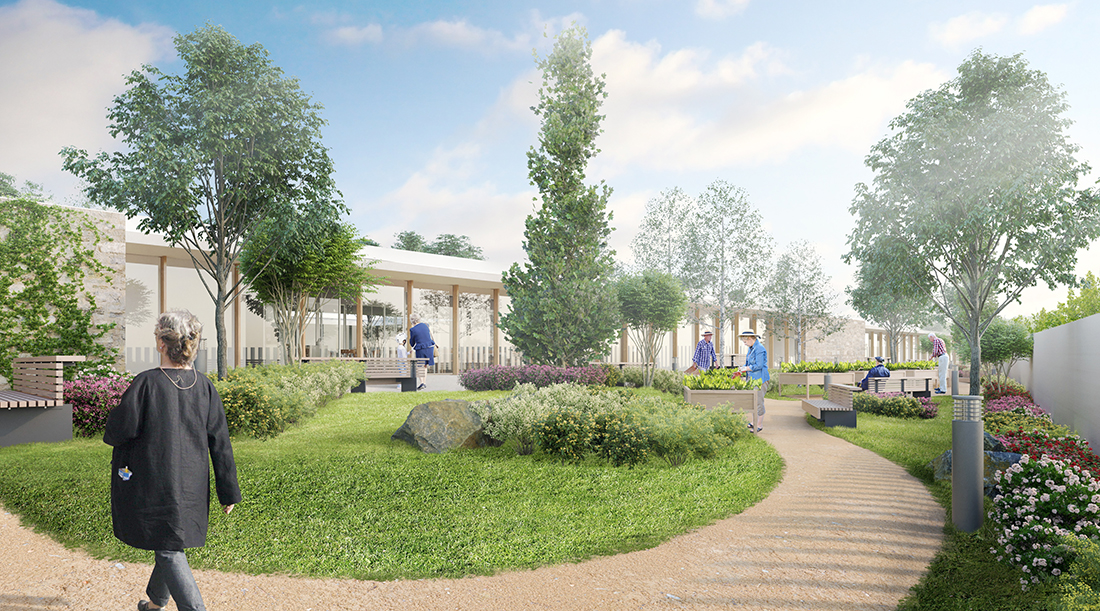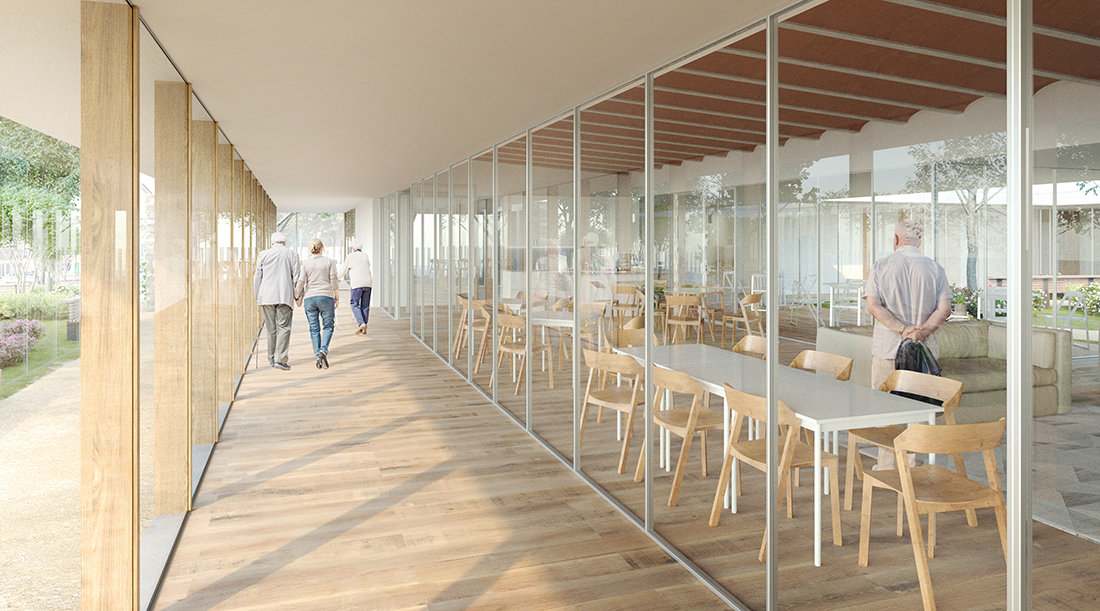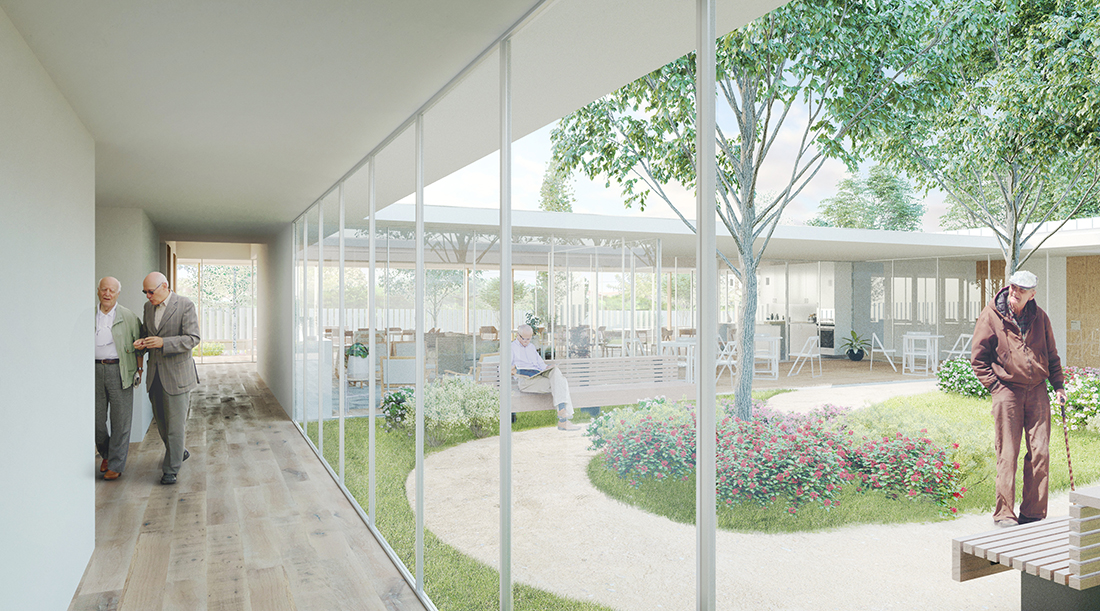
The project addresses the growing healthcare demands resulting from the progressive aging of the population in Vidreres. The proposal outlines the construction of a day care center and two residential co-living units for the elderly, structured around the Person-Centered Care (PCC) model through welcoming, accessible architecture in continuous dialogue with its urban and natural surroundings.
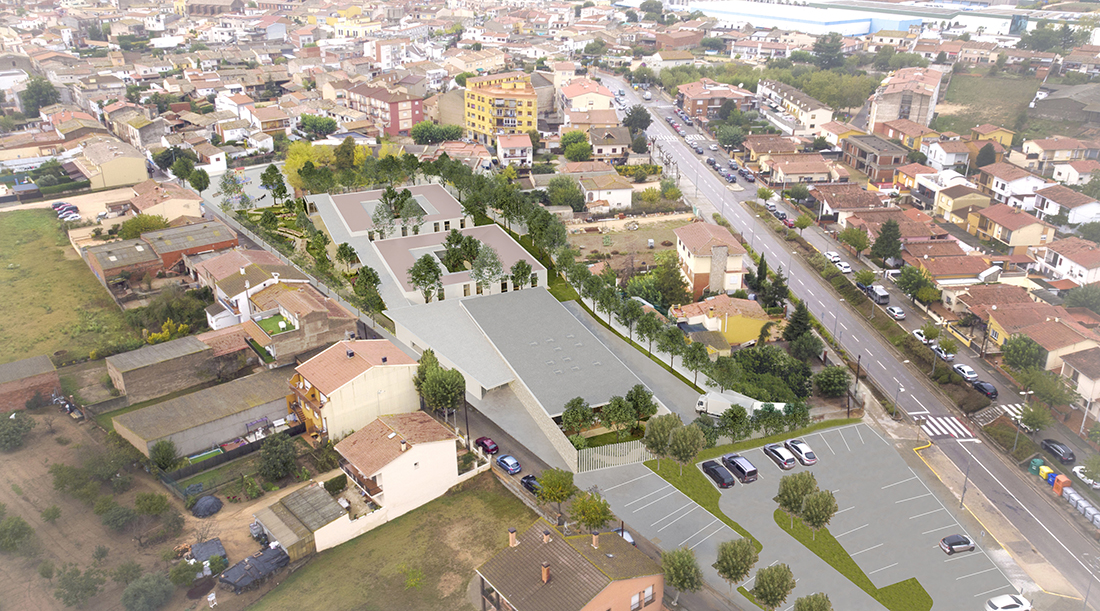
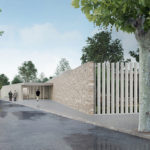
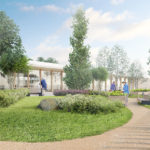
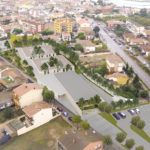
Context & Integration// Developed entirely on a single ground level, the building integrates harmoniously into the historic town center’s fabric, adopting a low-rise volume and reinterpreting traditional architectural and constructive methodologies. Main access is provided from Orient Street via a welcoming covered porch and a lobby set back to widen the sidewalk, gifting a new public gathering space to the town. The plot layout includes a new public parking area, a children’s playground, and a dedicated therapeutic garden for the center’s residents. Logistic and service accesses are positioned independently at the rear, entered from Costa Brava Street.
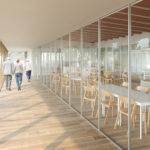
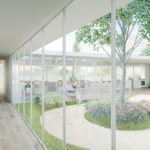
Layout & Organization// The spatial composition comprises three distinct volumes interconnected by a glazed corridor that ensures visual and physical continuity with the surrounding gardens:
-
Volume 1 (Day Care Center): A rectangular volume organized around a generous communal living room and its own private garden.
-
Volumes 2 & 3 (Co-Living Units): Square-plan structures centered around internal courtyards. This arrangement ensures privacy for the bedrooms while fostering bright, outdoor-connected common areas designed as active therapeutic elements.
Singularity & Character// The design embraces the concept of “home” to enhance dignity in daily living and support personal life projects for the elderly. The architecture prioritizes a human scale, interior warmth, and spatial permeability between inside and outside to cultivate a domestic, protective environment.
Sustainability criteria// The project adopts a holistic sustainability approach to minimize environmental impact and reduce overall energy demand:
-
Passive Strategies: Strategic use of interior courtyards to maximize natural daylighting and facilitate cross-ventilation.
-
Low-Impact Materials: Selection of low-CO2 emission, environmentally certified materials.
-
Dry Construction Systems: Specification of demountable, industrialized dry construction methods that support future reuse and minimize on-site waste generation.