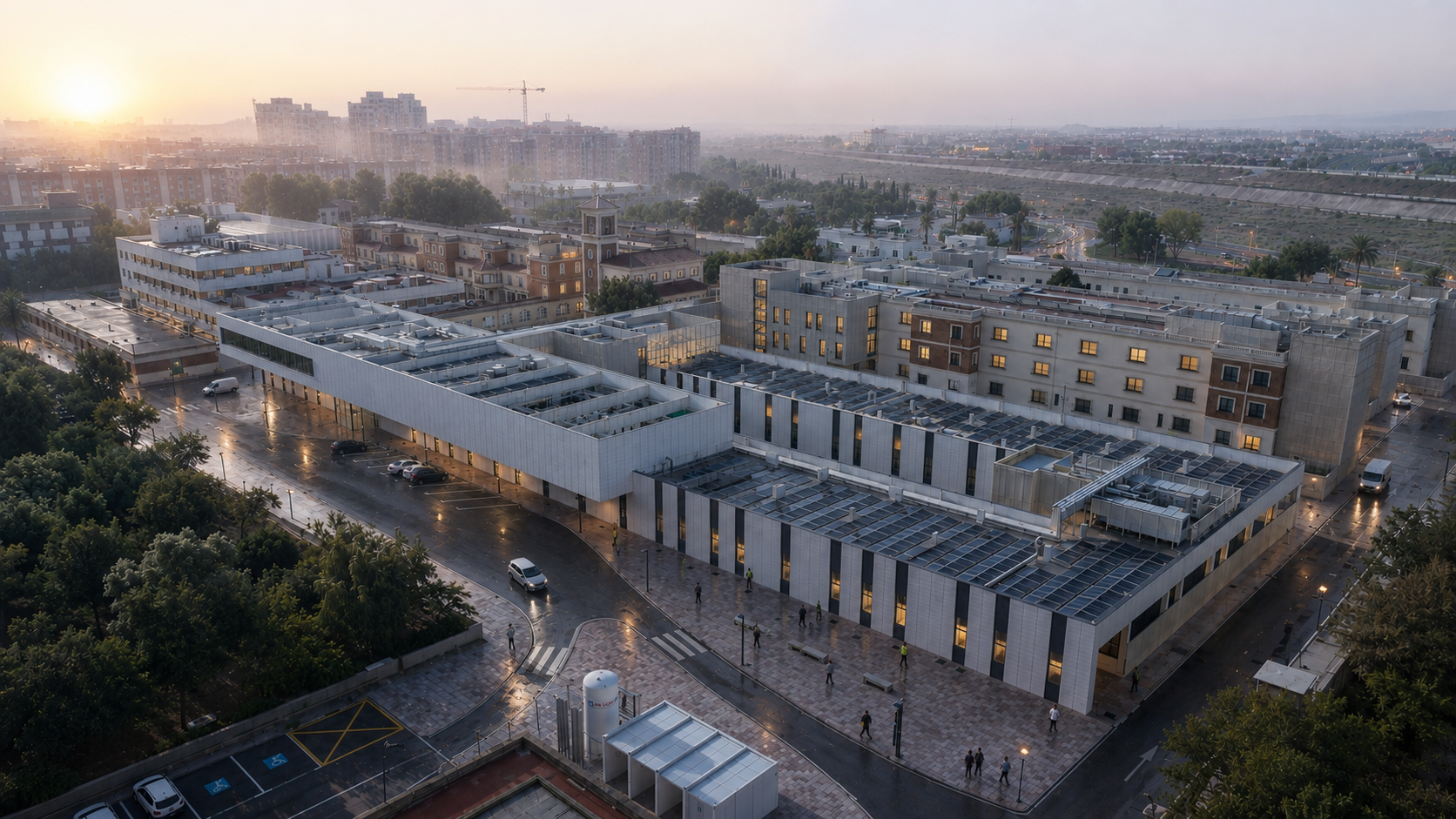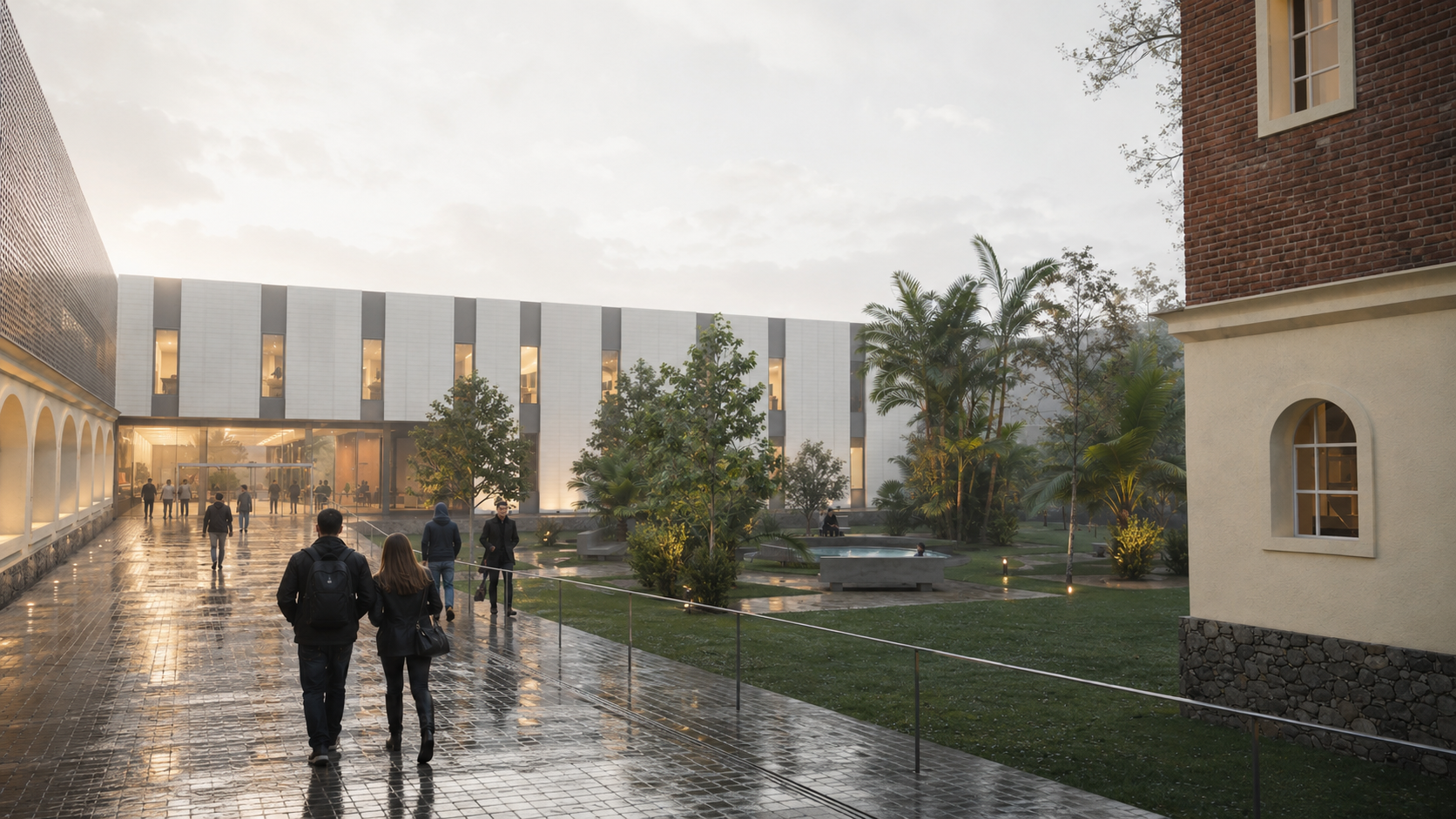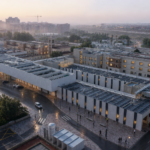
The existing building that is presented to us, corresponds to the Valencian military Hospital, in Quart de poblet de misata. Built in 1952. It is a hospital formed by pavilions, where each of the functional units or services was placed in a canopy. They are all communicated by a gallery. It raises and reforms in the military hospital Manuela Solis as a chronic hospital, long stay and mental health.
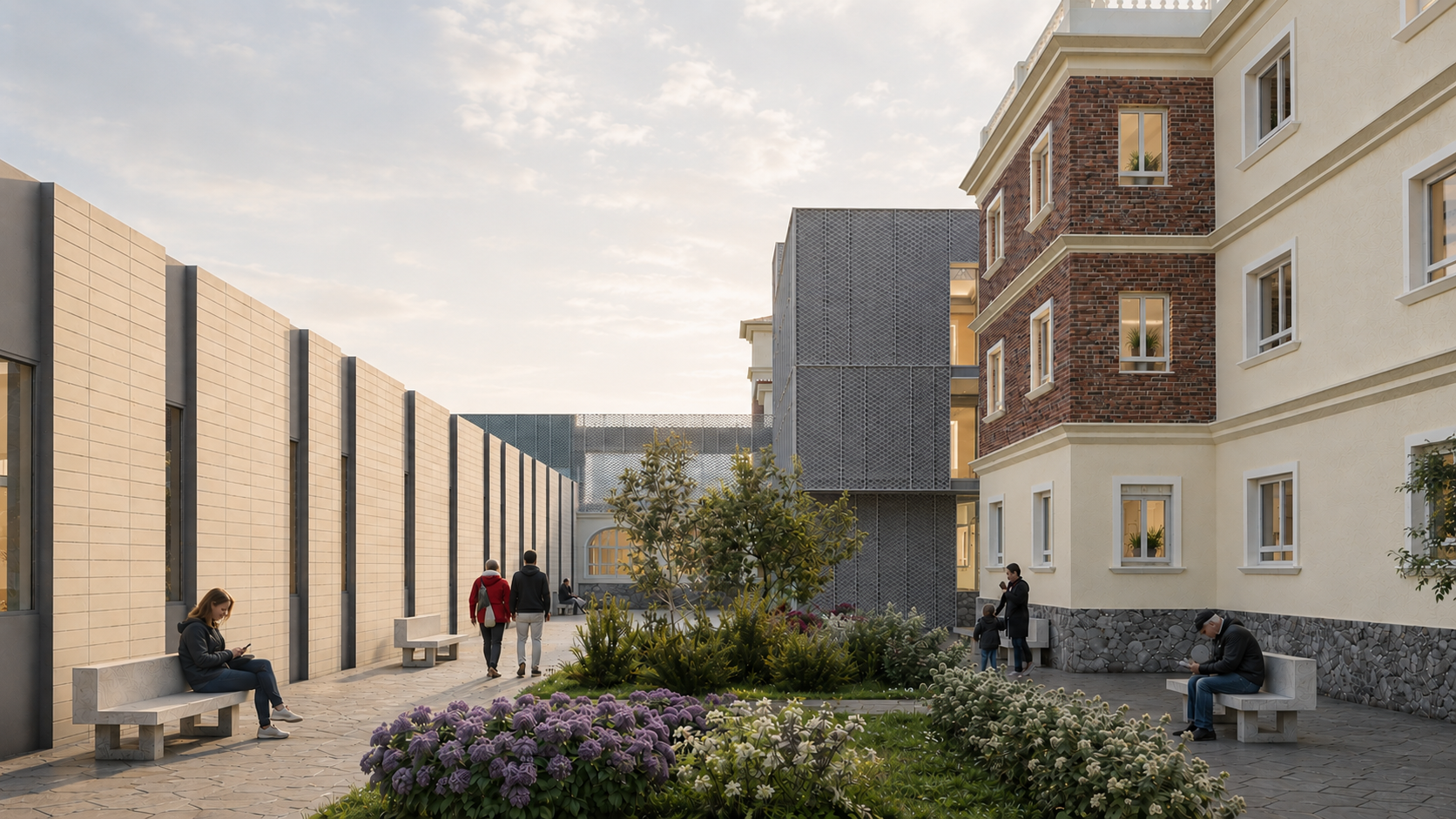
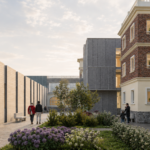
Context & Integration // The proposal rigorously respects the configuration of the existing building, preserving the aesthetic quality and architectural value of the original facades and key elements.
Layout & Organization// The core architectural interventions are structured around three main actions:
-
Vertical Circulation Cores: The existing vertical circulation cores are replaced to meet current building regulations, introducing new structures with a distinctive character that deliberately contrasts with the original construction.
-
Circulation Segregation: A new level is integrated over the main corridors connecting the pavilions, successfully separating patient circulation from technical and logistical flows.
-
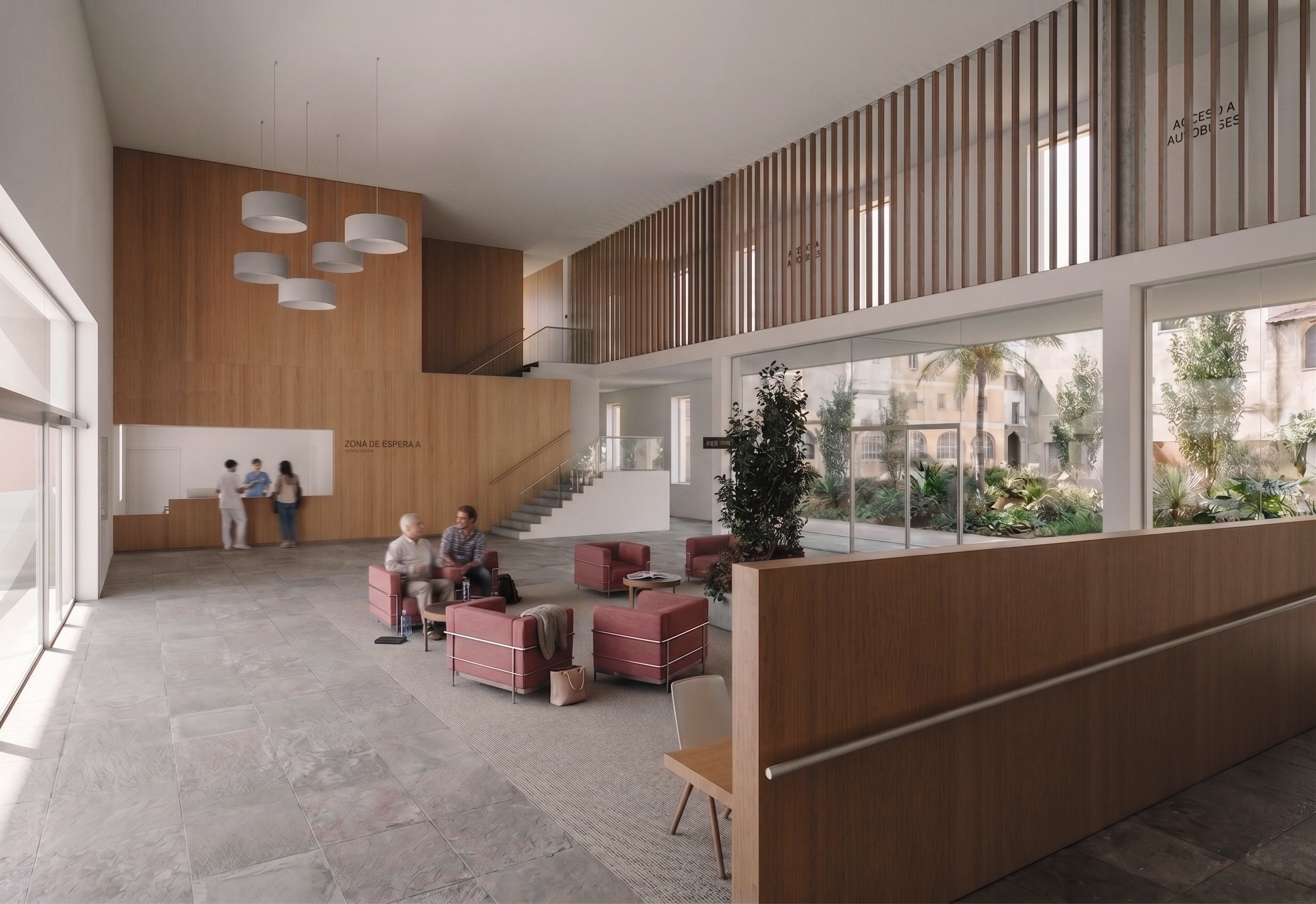
Main Entrance & Logistics Hub: A new volume is projected to serve as the main entrance and central logistics hub. This building adopts an entirely different architectural language, clearly identifying itself as a contemporary expansion.
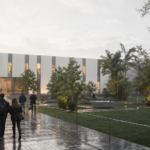
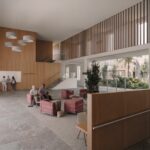
Singularity and character//The project prioritizes a humanized design tailored to both patient well-being and the optimization of the medical team’s working conditions. Direct connection to the landscaped courtyards is promoted, either through optimized views from the rooms or direct physical access. The ultimate goal is to embrace the Wellness Hospital concept, where environmental comfort and the therapeutic surroundings actively accelerate patient recovery.
Sustainability criteria:To minimize the infrastructure’s ecological footprint, the environmental strategy focuses on three core pillars: maximizing energy conservation, integrating renewable energy sources, and implementing low-consumption, high-efficiency equipment throughout the complex.