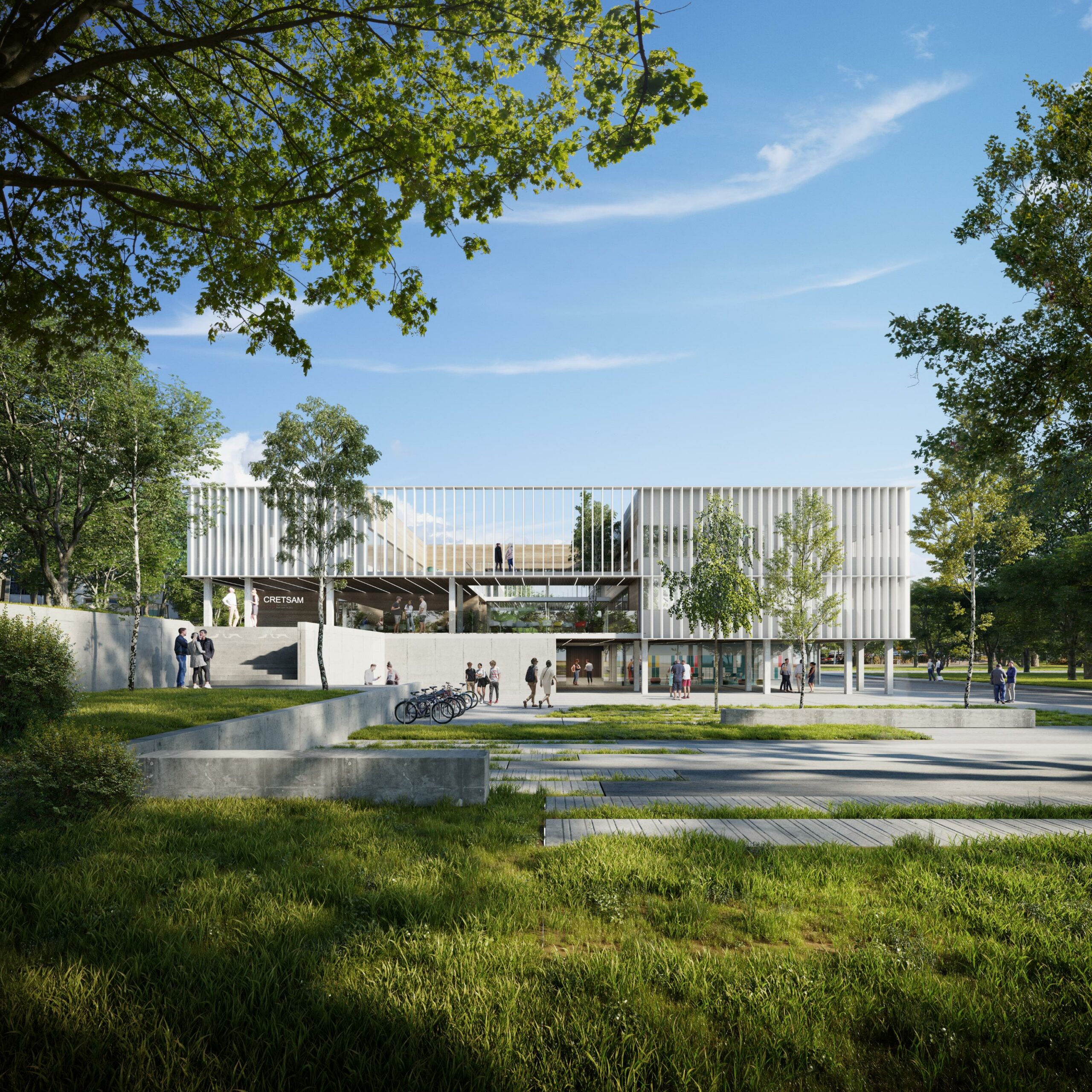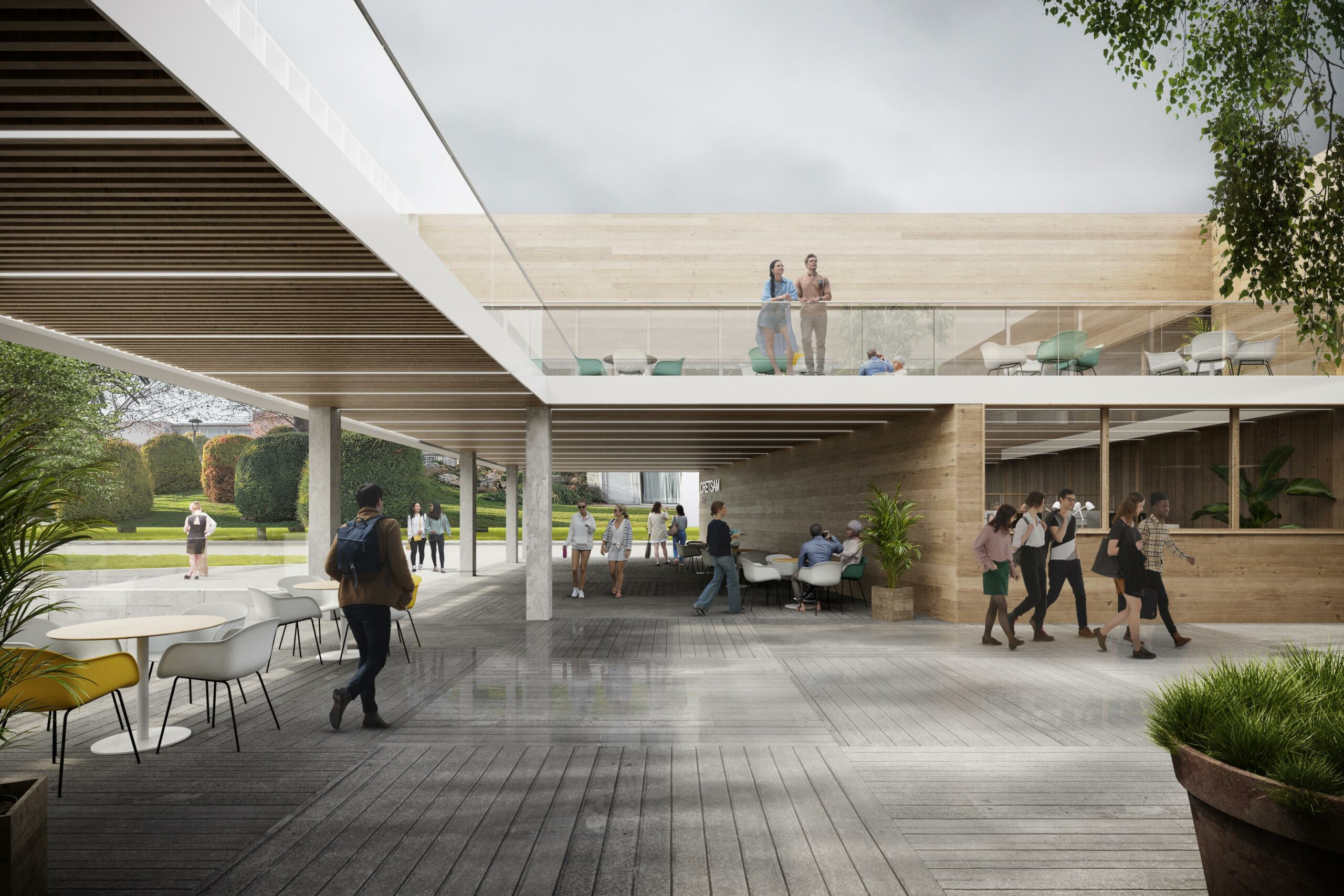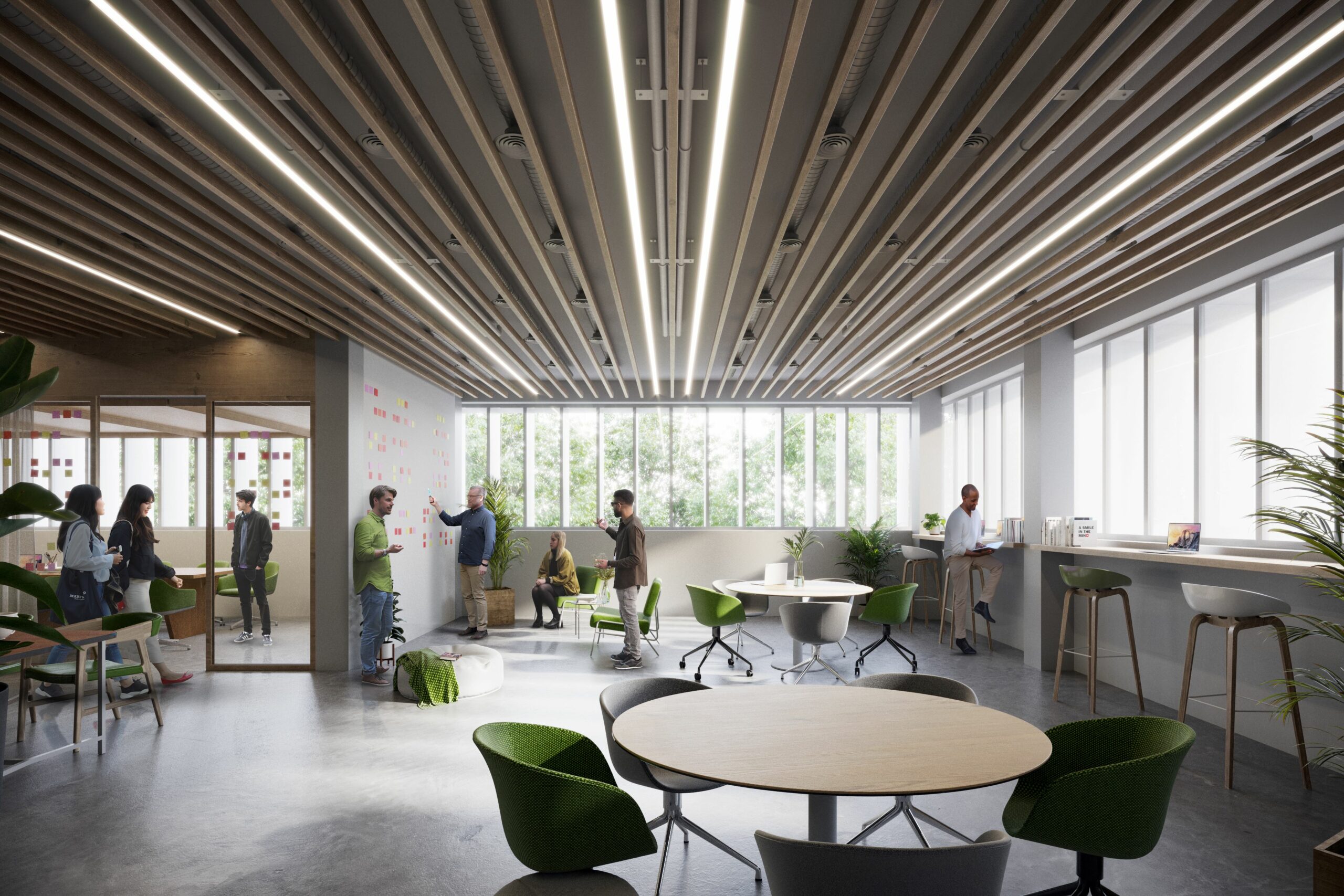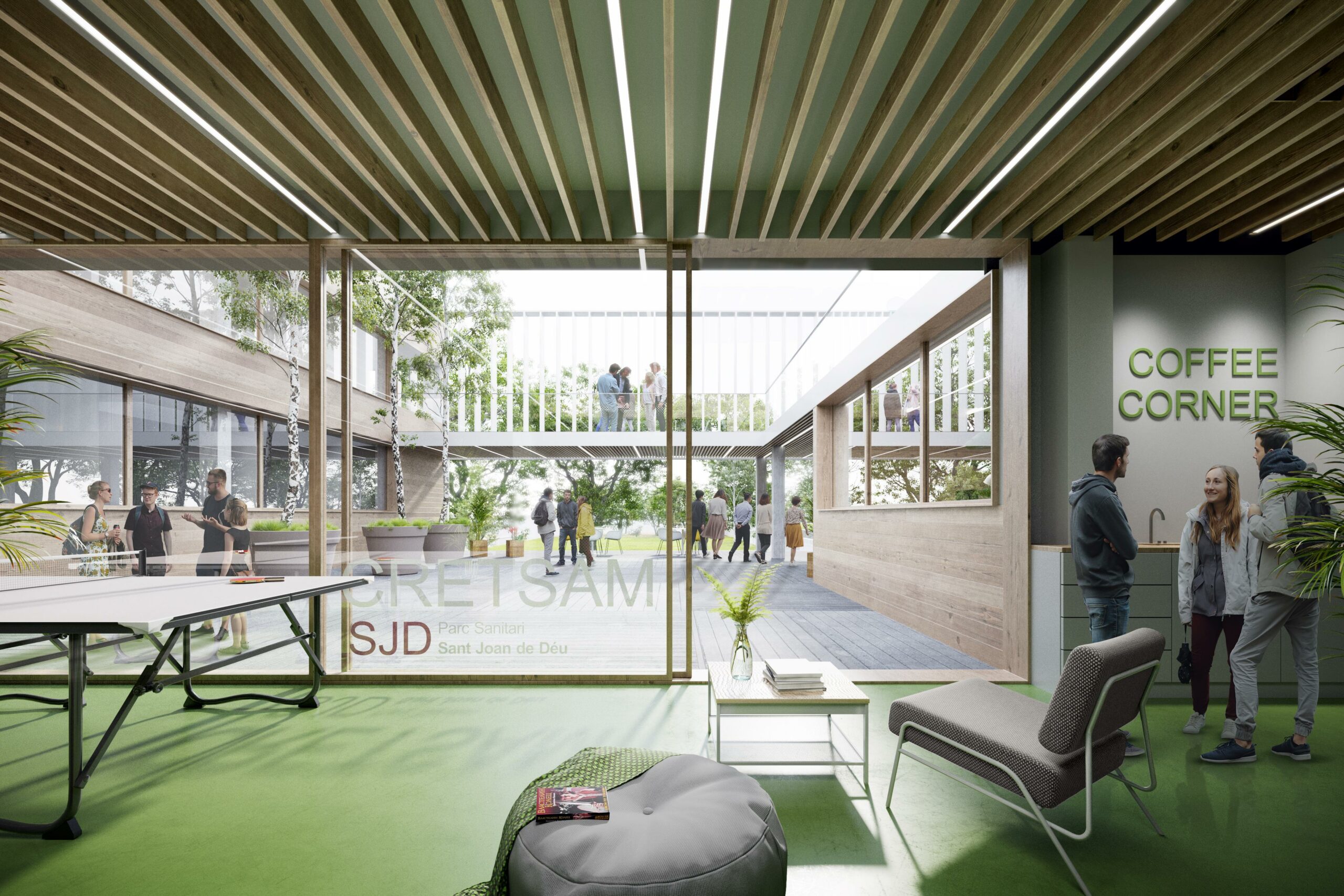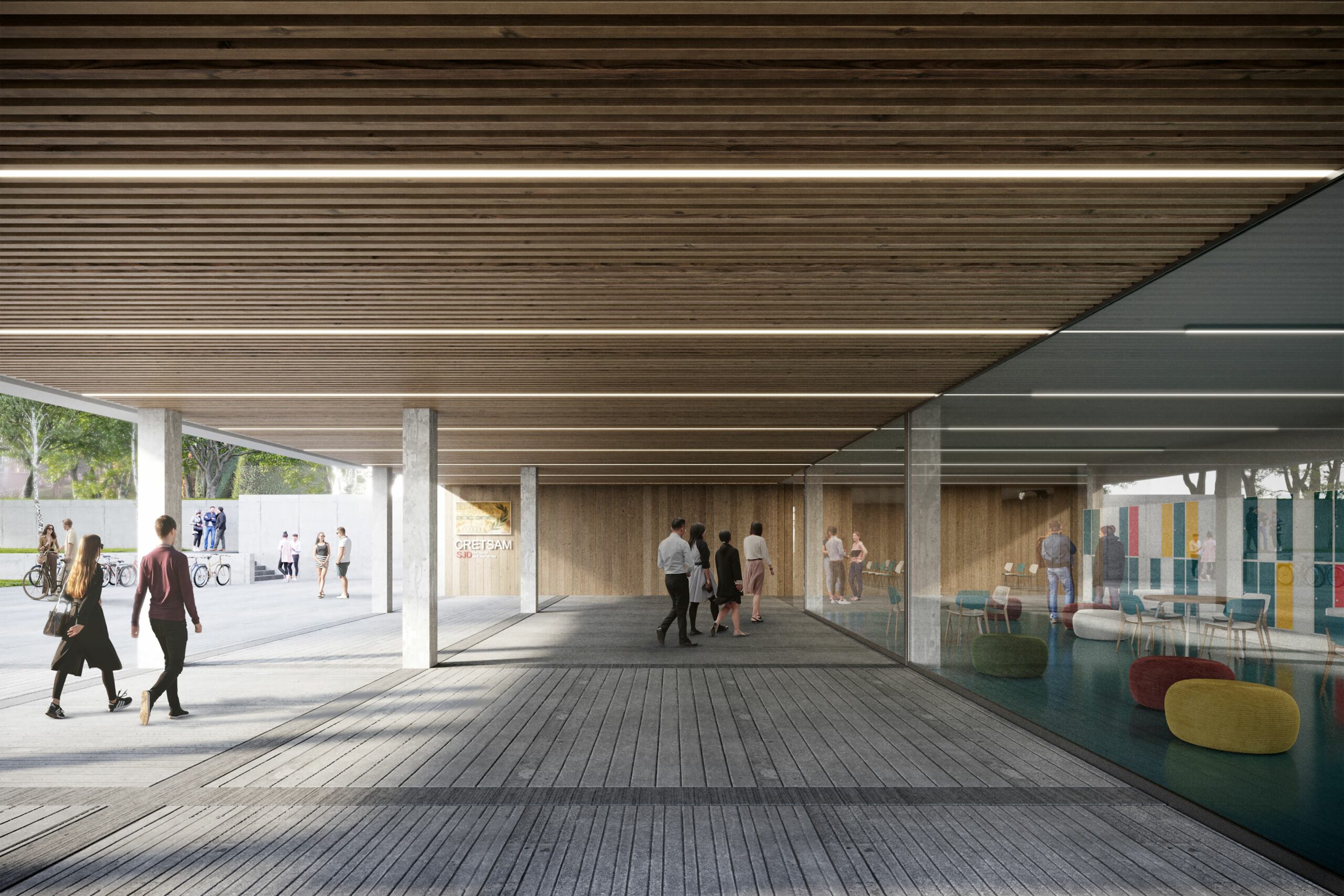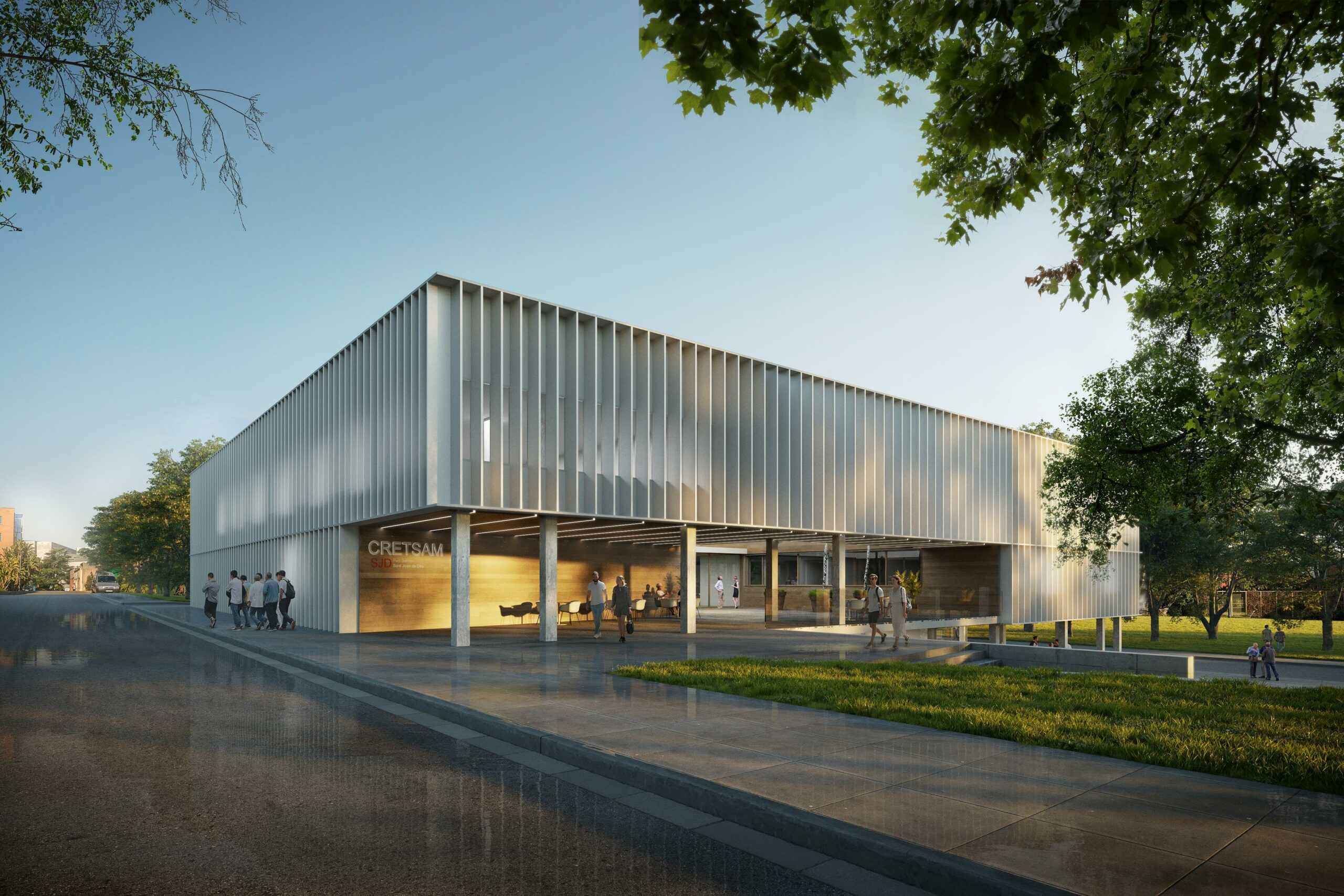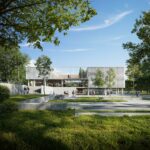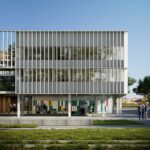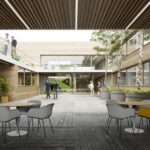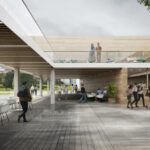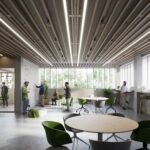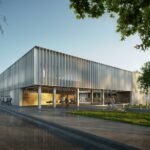
The proposal conceives the new facility as an open knowledge hub for all professionals within the campus. This vocation is expressed in both the renewed exterior image and the interior layout, with a clear intention to provide highly flexible spaces that foster interaction and synergistic relationships among users.
Architectural Integration // The Pujadas Building, the subject of this adaptive reuse project, is integrated into the Parc Sanitari Sant Joan de Déu complex (Sant Boi de Llobregat), a campus specialized in Mental Health.
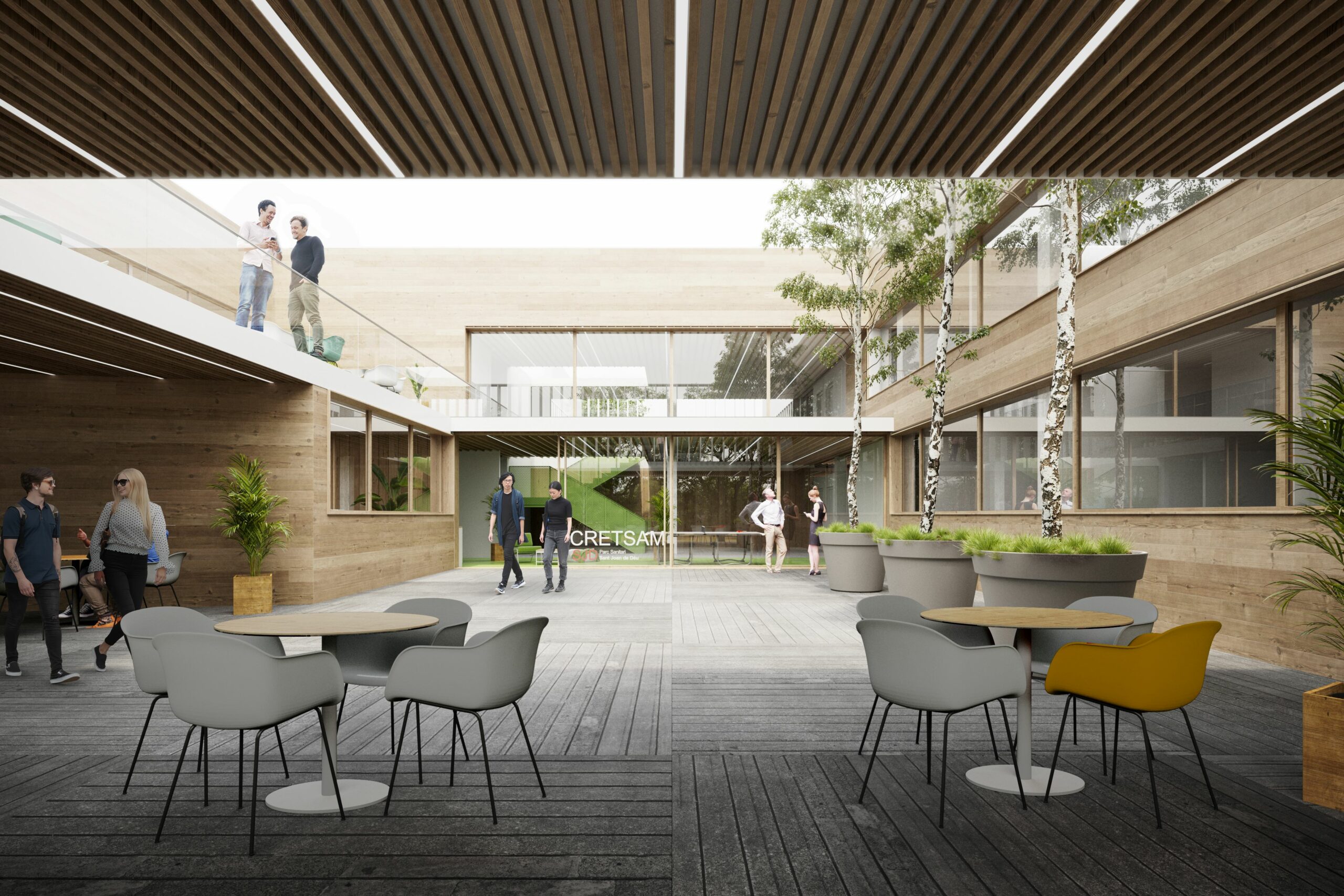
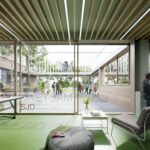
The new main entrance is closely linked to the adjacent expansive green area, generating a gentle transition between the park and the interior. This large outdoor space functions simultaneously as an entrance plaza, a waiting area, and a green lung. Addressing the fragmentation and poor orientation of the original terraces, the project unifies the outdoor areas to create three highly qualified, independent spaces: a garden on the ground floor, a courtyard on the first floor, and a terrace on the second floor. This transformation substantially improves natural ventilation and lighting, seamlessly connecting the interior with nature.
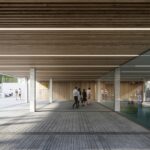
Circulation Core// The main entrance is located on the southeast facade of the ground floor, in direct dialogue with the new green plaza. On the same facade, but on the first floor, a secondary entrance is accessible via the courtyard. Both access points are stitched together by the newly introduced vertical circulation core, which acts as the spatial hinge of the building in both plan and section.
Daylighting// Organizing the functional program around the central courtyard and the facade perimeter guarantees natural daylight in virtually all spaces. The courtyard is designed with a stepped section—wider at the upper levels than at the bottom—to maximize sunlight penetration all the way down to the ground floor.
Sustainability Criteria // The project places human health and environmental balance at the core of its design:
-
Adaptive Reuse (Urban Recycling): Opting to rehabilitate the existing structure rather than demolishing and rebuilding reduces CO2 emissions by more than 50%.
-
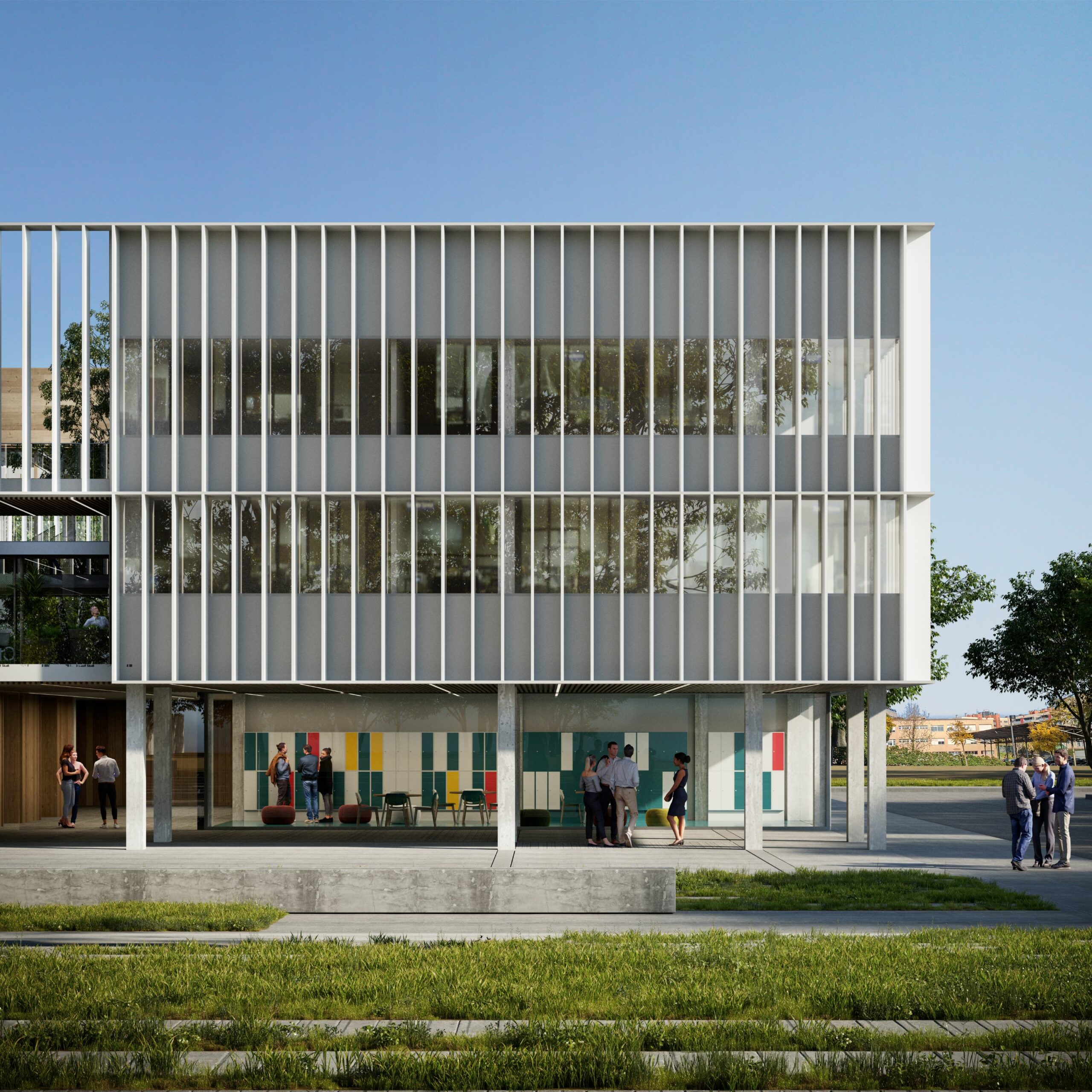
Well-being & Health: Healthy habits are encouraged through an open, highly visible central staircase. The strategic use of white on the facades mitigates the urban heat island effect while providing a sober aesthetic that contrasts with the surrounding vegetation.
-
Passive Strategies: The thermal envelope is optimized by reinforcing roof and facade insulation and completely replacing all window joinery, minimizing overall energy demand.
Active Systems Integration// Active MEP systems are consolidated on the roof, fully integrated into the building’s massing by extending the facade louvers upwards to conceal the mechanical plant. The project commits to decarbonization through a 100% all-electric strategy:
-
HVAC Systems: High-efficiency chillers and heat pumps interact to maximize seasonal performance.
-
Smart Building Management: A centralized BMS sectorizes climate control and lighting based on real-time spatial occupancy.
-
Solar Harvesting: Installation of 180 m² of photovoltaic panels (40 kWp) integrated into pergolas and roof structures, oriented southwest (at a 5º tilt). They will generate approximately 37,000 kWh/year, driving the facility toward Nearly Zero Energy Building (NZEB) standards.
Functional Program // The program is strategically distributed:
-
Ground Floor: Houses the training and administration areas. It includes the main entrance, common zones, the conference hall, varied-format classrooms, and an office area segregated from public circulation.
-
First Floor (CRETSAM): Organized around a central networking space featuring a game room and pantry. The western front is dedicated to a large open-plan workspace, while the lateral wings contain individual offices and meeting rooms.
-
Second Floor (CRETSAM): Replicates the central common area layout but divides the remaining space into three highly specialized zones: a workspace, a laboratory, and an experimentation area.
Flexibility //Conceived as a research center in constant evolution, the building demands maximum adaptability to accommodate emerging technologies. Excluding the rigid cores (stairs/elevators, MEP shafts, and fire sectors), the architecture is designed using modular systems, demountable dry-construction partitions, and exposed MEP installations beneath continuous ceilings, allowing for rapid, cost-effective spatial reconfigurations in the future.