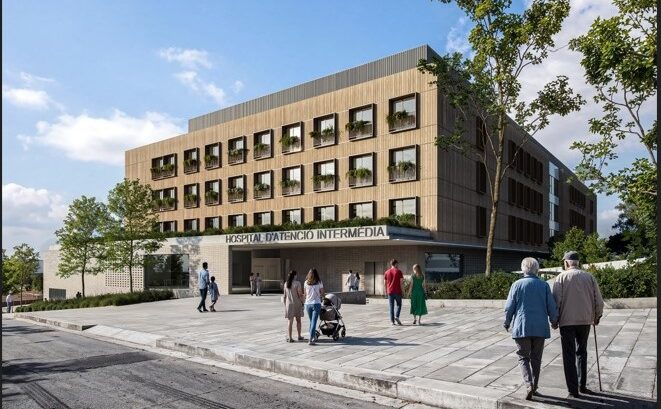
The new Mataró Intermediate Care Hospital (HAI) addresses the evolving paradigms of healthcare models driven by an aging population, rising chronic conditions, and the growing demand for specialized facilities dedicated to functional recovery and long-term care.
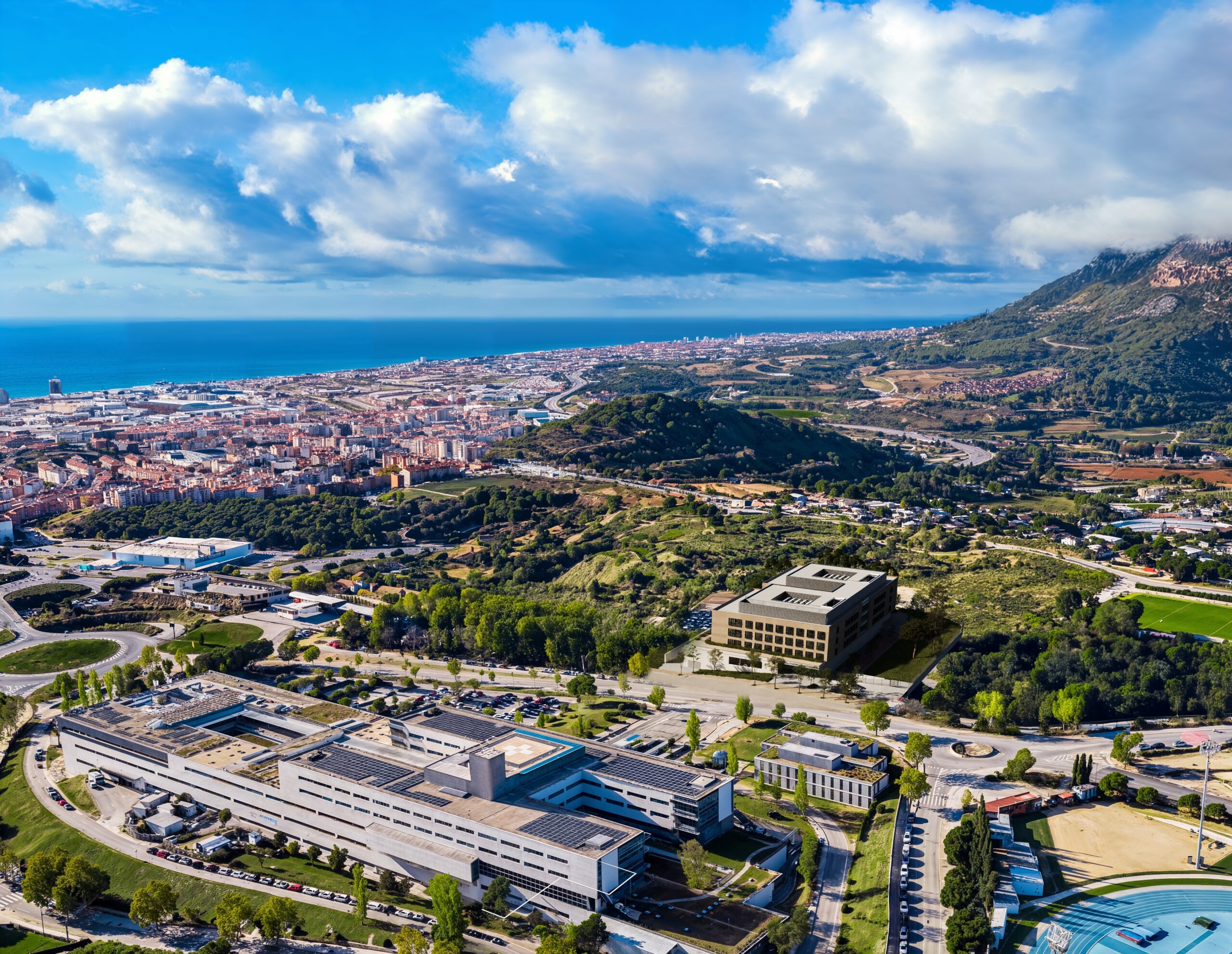
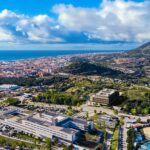
Promoted by the Consorci Sanitari del Maresme, the project features a new facility spanning over 21,000 m² situated directly opposite the current Mataró Hospital. The two centers will be linked via a 900 m² underground tunnel, ensuring seamless functional, clinical, and logistical integration.
The program accommodates over 240 inpatient beds for functional rehabilitation, subacute patients, and palliative care, complemented by an outpatient area with multidisciplinary consultation rooms and specialized day hospitals. The facility will also integrate community healthcare programs such as PADES, Home Hospitalization, SEVAD, and CAD, strengthening the continuity of care between the hospital environment and the patient’s home.
Beyond its clinical dimension, the project represents a strategic infrastructure for the Maresme healthcare system, engineered to respond to emerging epidemiological profiles and consolidate an intermediate care model that is more integrated, efficient, and person-centered.
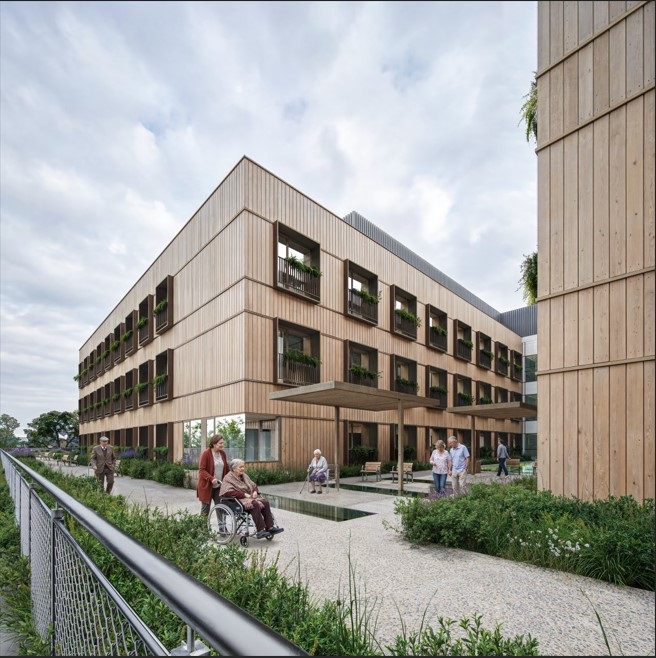
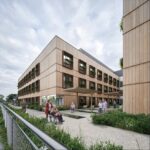
A bridge between city and nature// The building is strategically positioned along Carretera de la Cirera on a topographically complex site that slopes upward from south to north, acting as a transitional hinge between Mataró’s established urban fabric and the natural landscapes of the Els Turons park area.
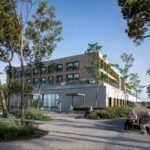
The design respects this gradient by embedding the building volumes into the hillside through a “soft landscaping” strategy. This approach incorporates:
-
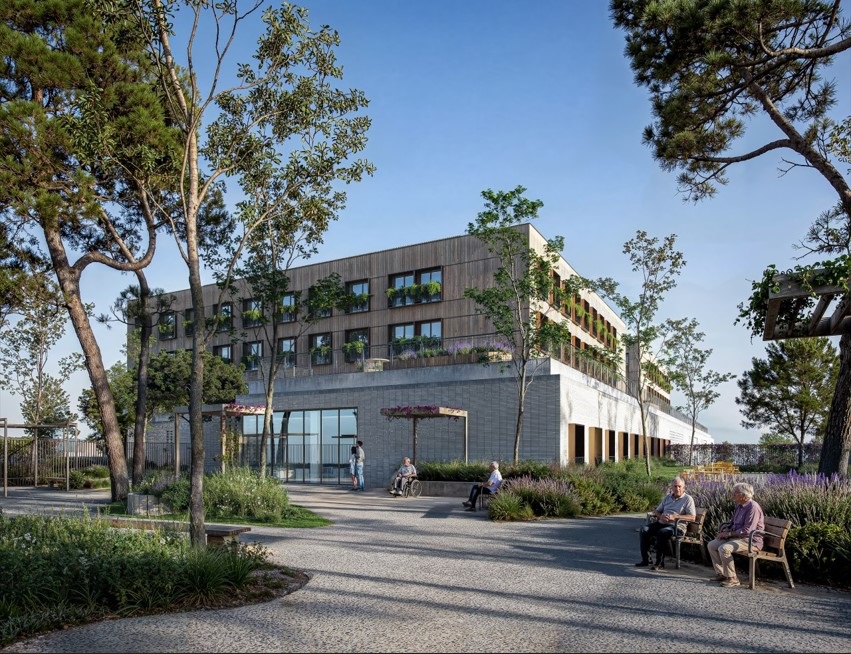
Green slopes and entry plazas that transition smoothly into the landscape.
-
Permeable pavements that facilitate natural stormwater infiltration.
-
Mitigated urban heat island effect, creating a welcoming environment that encourages active living and social interaction.
Furthermore, connecting the new center to the existing hospital via an underground tunnel prevents continuous surface disruptions and optimizes campus-wide connectivity.
The Boulevard as a central axis// The functional scheme of the building is structured to ensure maximum efficiency and clarity, divided into three major strategic areas across its various levels:
-
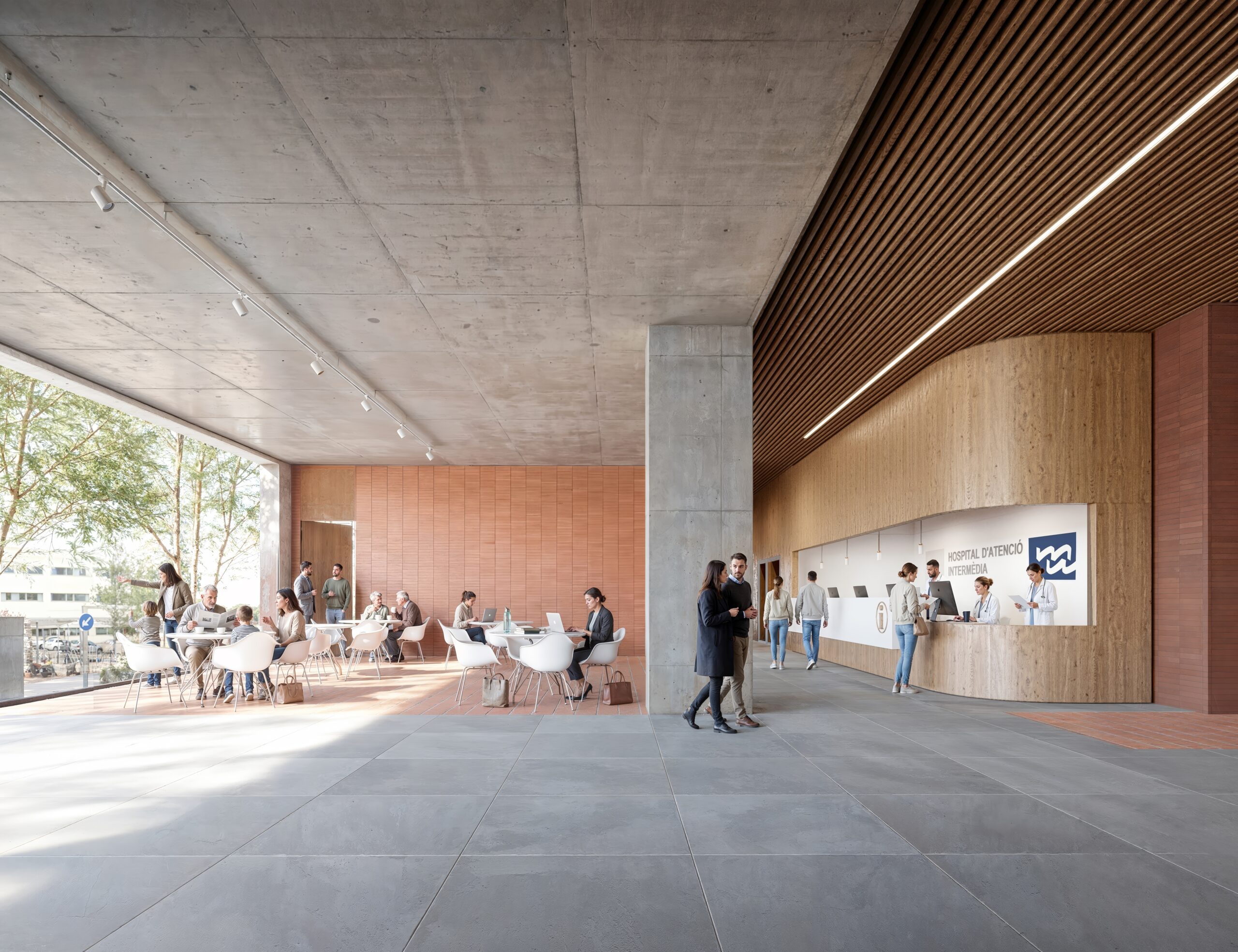
Ground Floor: Functions as a true extension of the city. It centralizes the main access points, outpatient consultation rooms, assessment teams, and specialized day hospitals (Psychogeriatrics, Rehabilitation, and Evaluation).
-
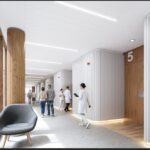
Inpatient Floors (+1, +2, +3): The three upper levels are dedicated exclusively to inpatient wards, including palliative care, subacute care, and functional recovery.
-
Semi-Basement Level: Houses clinical support areas, logistics, general services, and administrative quarters.
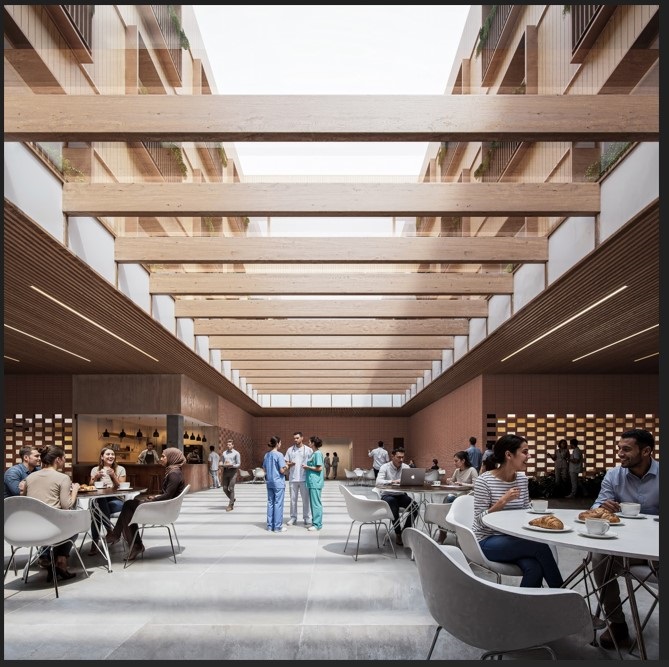
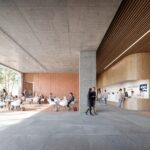
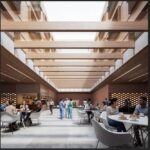
The spine of the entire layout is the expansive internal boulevard located on the street-level floor. This space intelligently segregates circulation flows: it creates a central promenade for patients and the general public, while establishing an independent, perimeter corridor that allows healthcare professionals to navigate the building without intersecting with public areas.
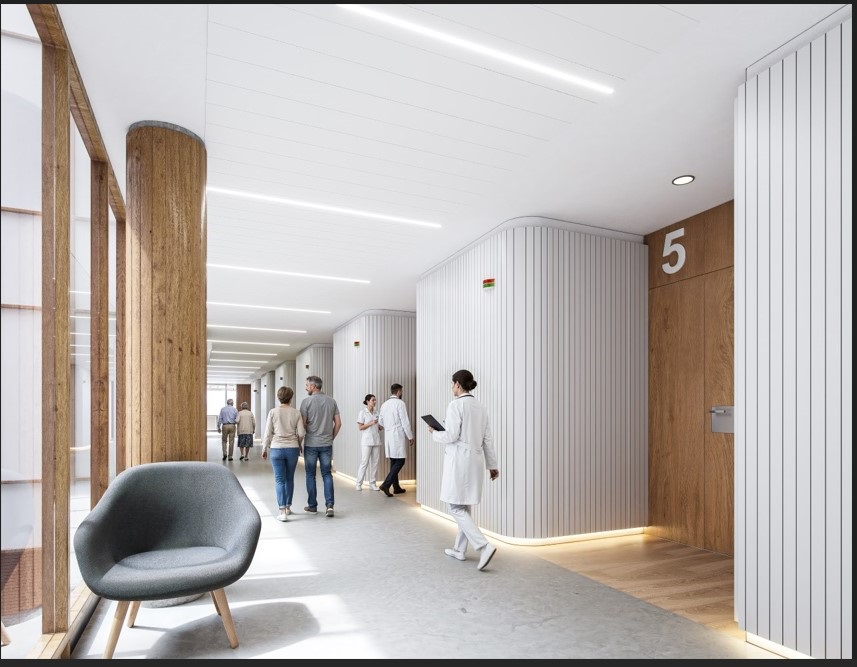
Space as an active catalyst for patient recovery// The project’s identity stems from a core philosophy: placing care at the center of architecture. In contrast to traditional hospitals designed solely for clinical efficiency, this proposal champions the human dimension of healthcare spaces and the importance of creating environments that foster well-being, autonomy, and social connection. The inpatient zones break away from the institutional model of long corridors lined with rooms; instead, they are organized into smaller-scale “living units” conceived as familiar, domestic environments. Warm materials, abundant natural light, panoramic views of the landscape, and a constant biophilic presence help create an approachable, de-medicalized experience. The internal Boulevard serves as the centerpiece of this strategy. Far more than a thoroughfare, it is envisioned as a vibrant social hub that integrates therapeutic gardens, resting spaces, and accessible pathways, reinforcing the link between architecture, nature, and health.
The project’s uniqueness is also reflected in its construction methodology:
-
Long-span steel structure: Provides column-free floor plates, maximizing functional flexibility and adaptability to future shifts in healthcare delivery models.
-
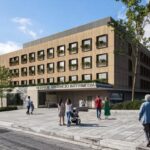
Industrialized components: Complemented by a high-performance prefabricated modular envelope, dry construction systems, and industrialized bathroom pods that elevate construction quality, reduce construction timelines, and minimize environmental impact.
Architecture and technology thus work in tandem: the former prioritizes human needs, while the latter ensures the facility can evolve to meet the healthcare demands of tomorrow.
Sustainability: Resilience and decarbonization // The building’s environmental performance sets a benchmark for eco-efficiency. Designed to meet strict nZEB (Nearly Zero-Energy Building) standards, the project is certifiable as LEED Platinum.
-
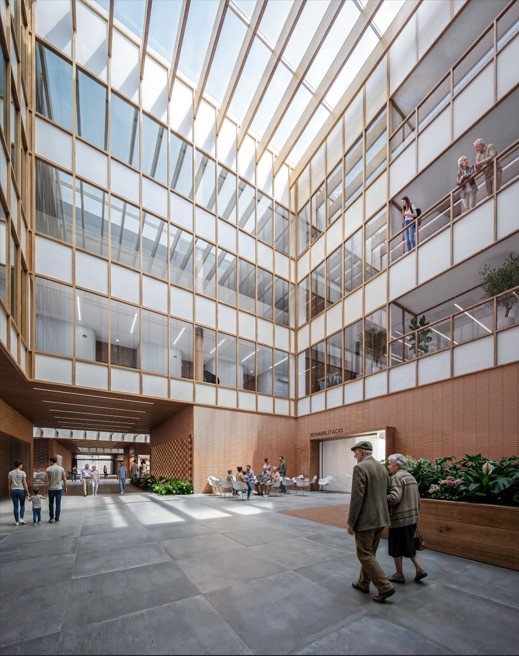
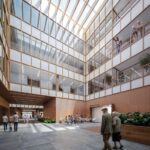
Passive Strategies: Three massive internal atriums (two spanning four stories) act as the building’s lungs, facilitating cross-ventilation and maximizing natural daylight to serve as passive thermal regulators. The industrialized facade achieves an exceptionally low thermal transmittance (U=0.22 W/m²K) and features active solar shading systems.
-
Active Strategies: To advance the facility’s decarbonization, heating production relies on a hybrid system connected to Mataró’s clean district energy network, “Tub Verd”, while also harnessing waste heat recovered from the cooling chillers. The rooftop features an extensive array of high-efficiency photovoltaic panels to boost on-site electricity generation.
-
Water Cycle: A centralized rainwater harvesting system has been engineered to serve as the primary source for the efficient drip irrigation of the extensive therapeutic gardens, drastically reducing potable water consumption during drought periods.