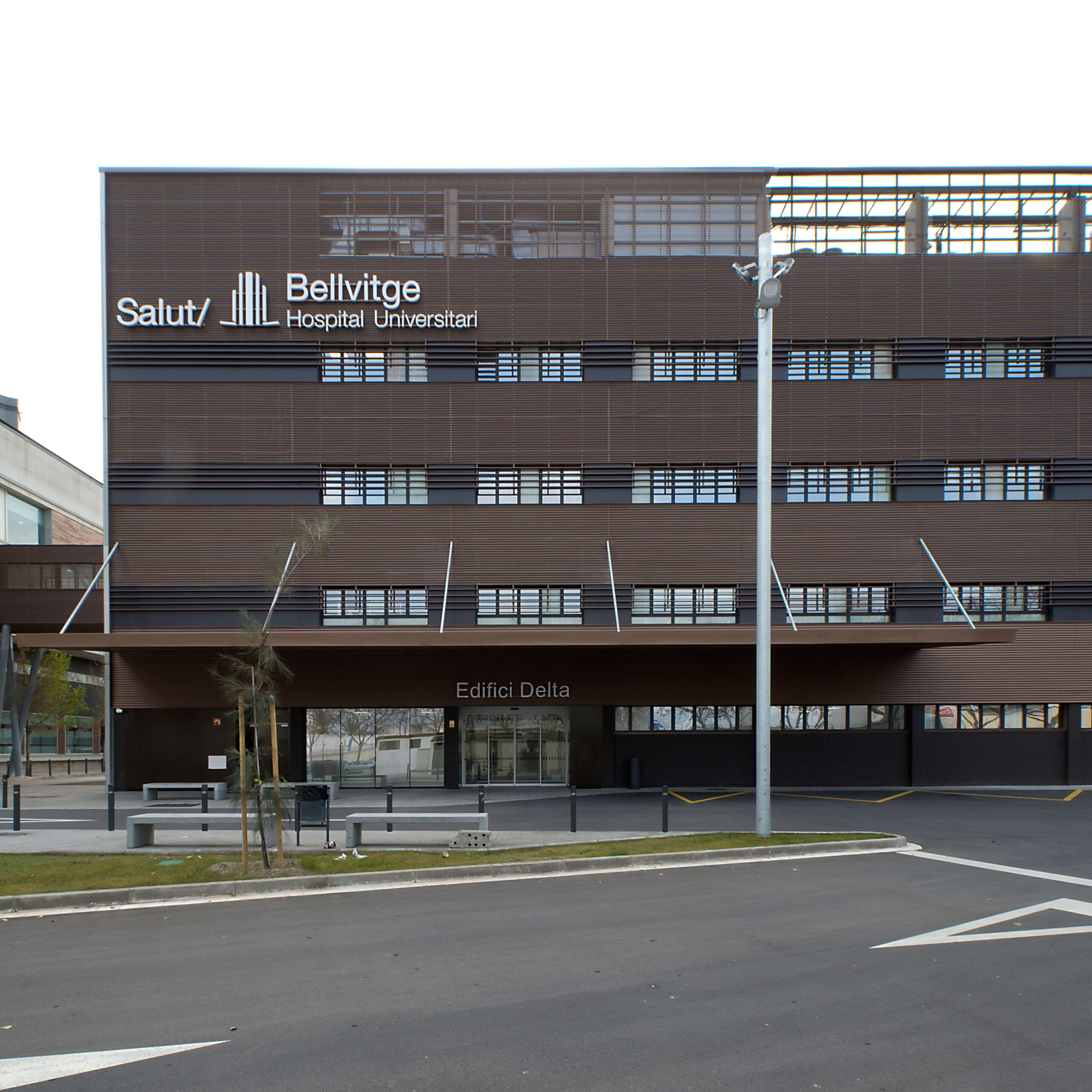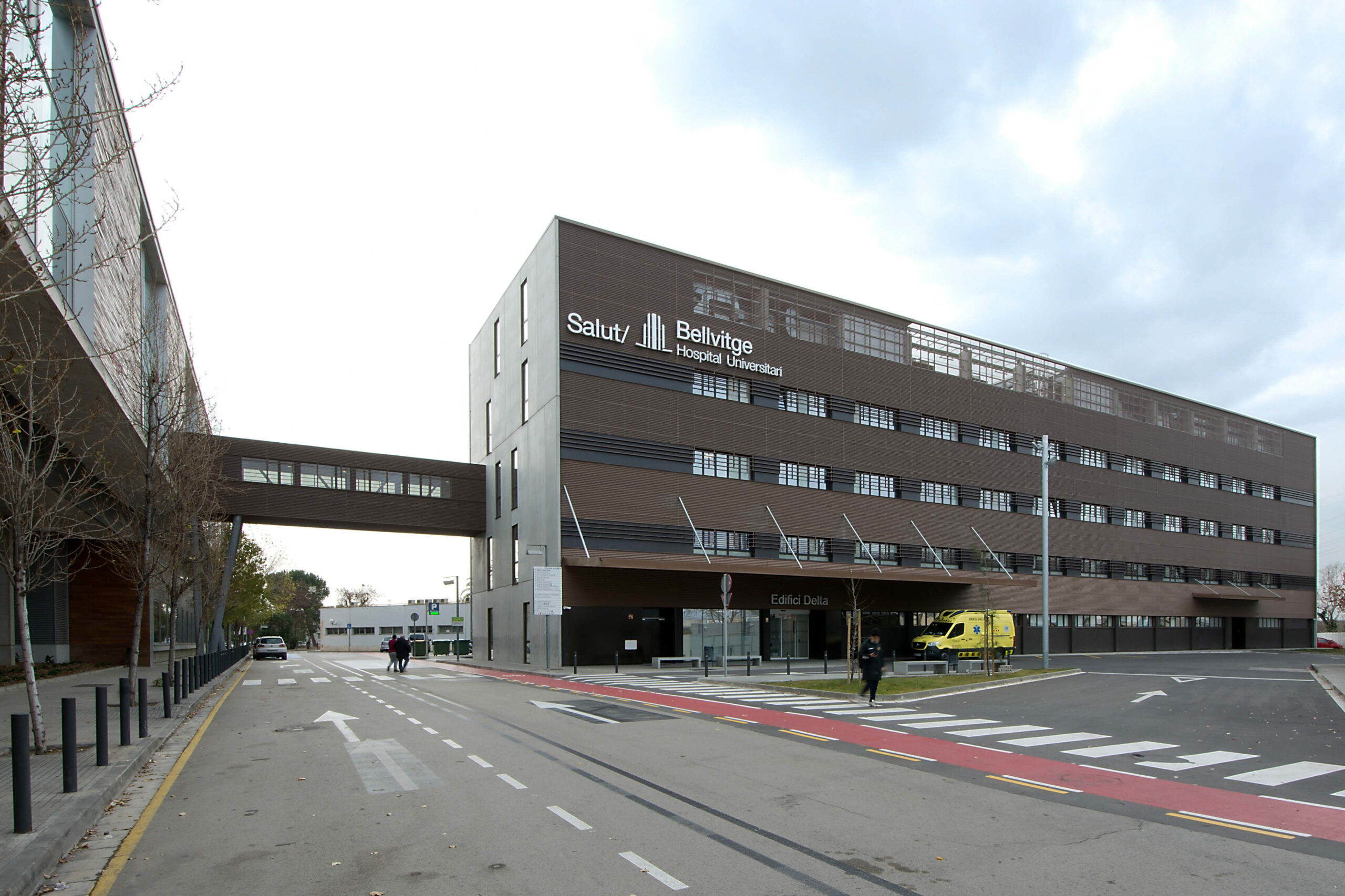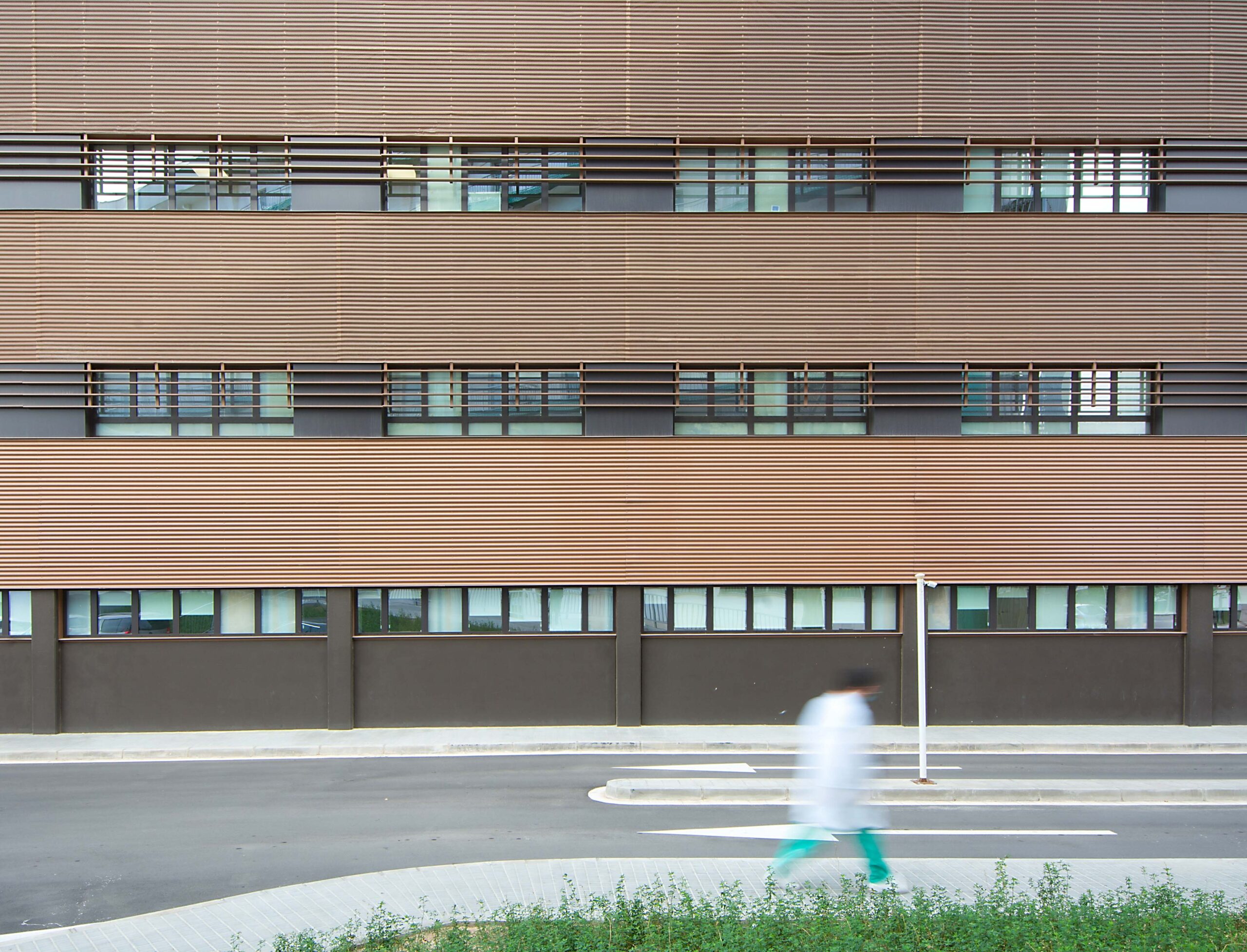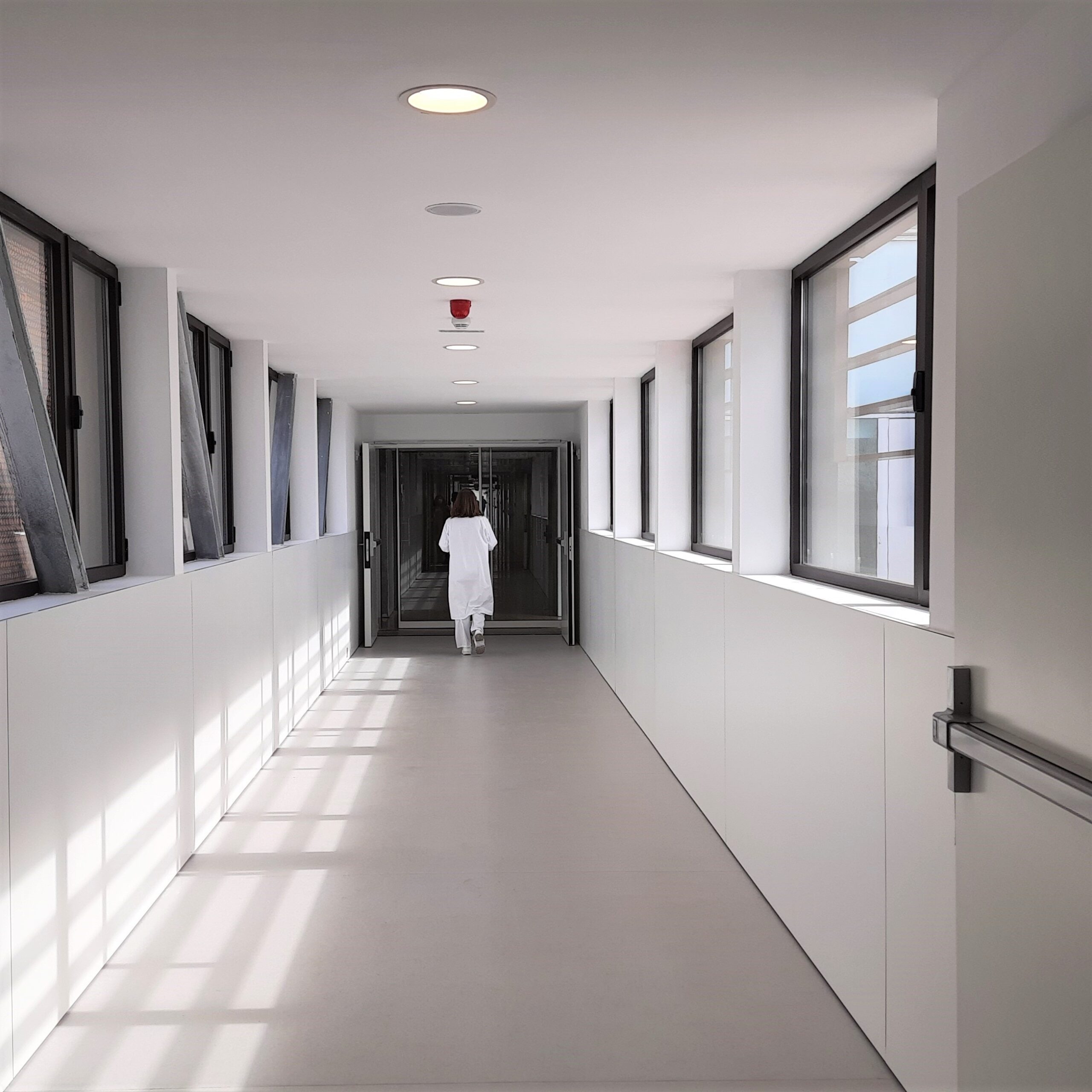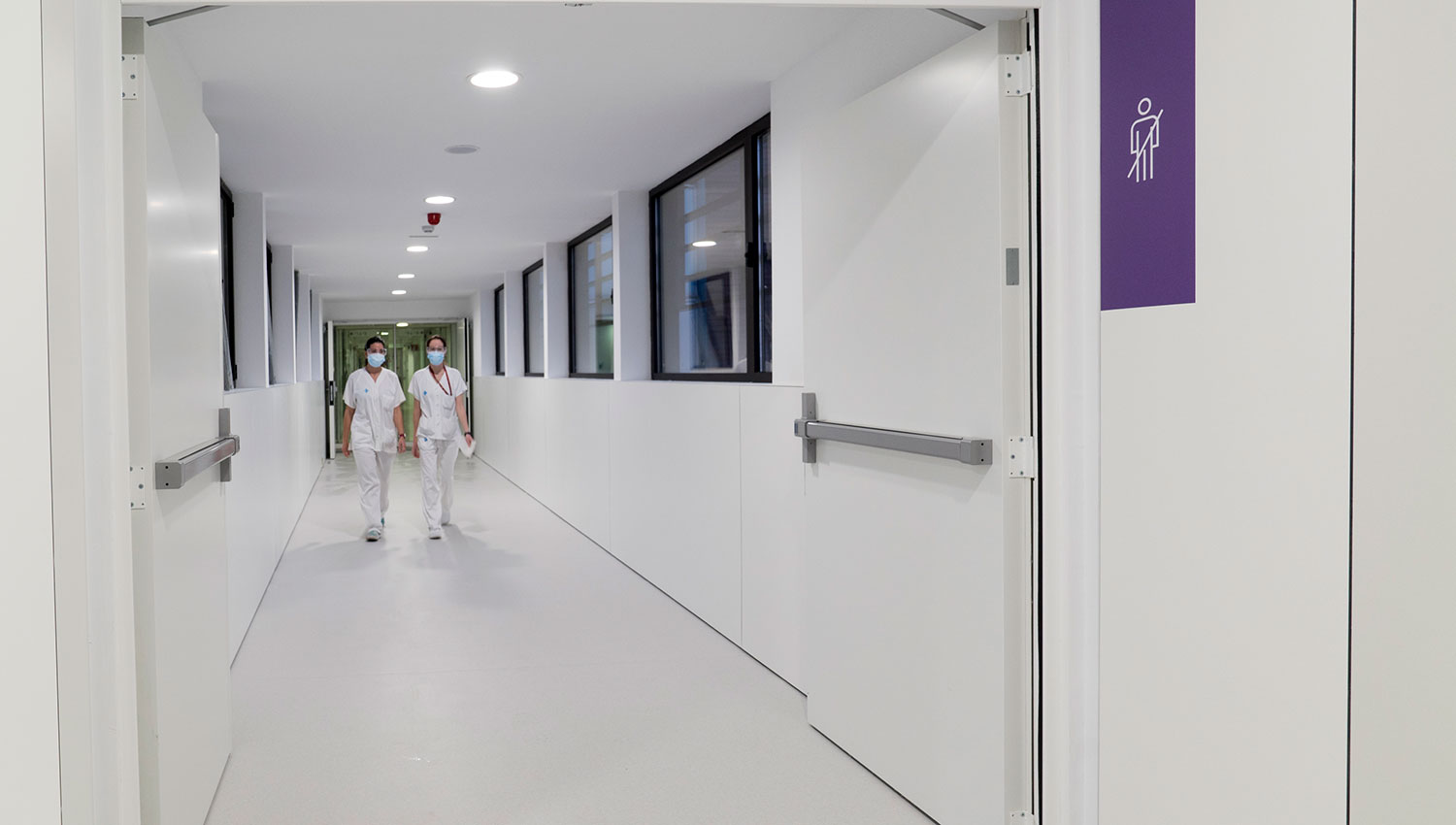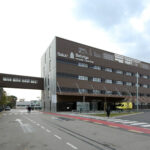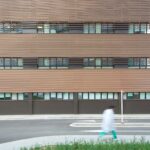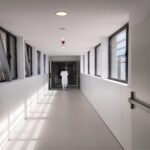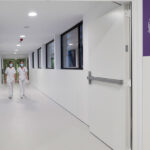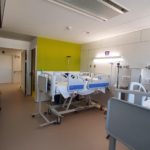
Built in a record-breaking four months, the new Delta Building at Bellvitge University Hospital is situated in the northwest zone of the healthcare campus, directly opposite the former School of Nursing and in close proximity to the hospital's Emergency department entrance.
A Facility for the Present and Future// In response to the 2020 pandemic, the Servei Català de la Salut promoted the creation of several annex buildings attached to existing hospitals to absorb the surge in healthcare demand. Among them is the Delta Multipurpose Hospital Building at Bellvitge Hospital (HUB) in L’Hospitalet de Llobregat. Initially projected to expand the emergency department with 48 treatment bays and COVID inpatient units with 36 rooms, the building occupies a former staff parking lot on the northwest corner of the hospital campus. This expansion brought the facility’s total capacity to 809 inpatient beds and 90 critical care beds.
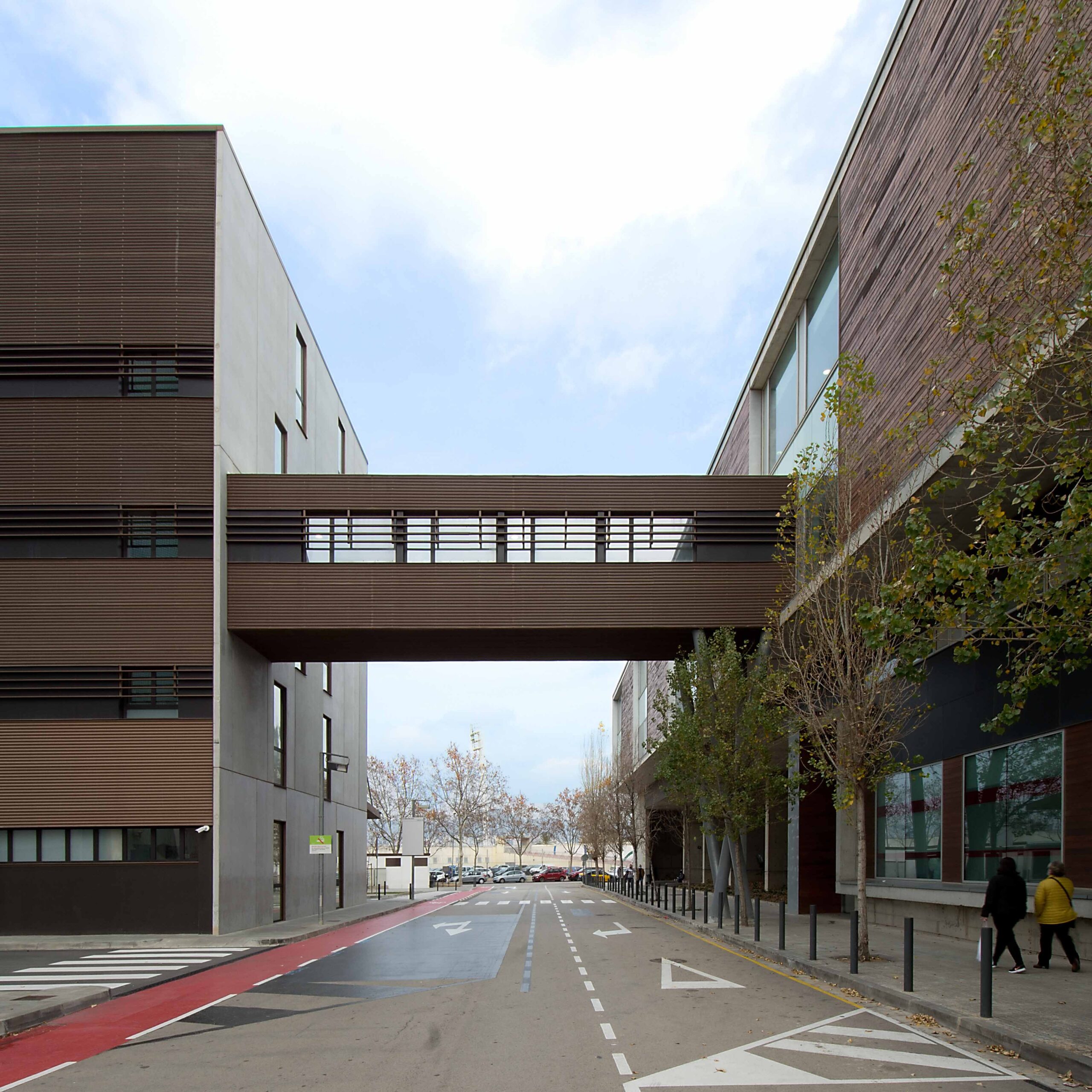
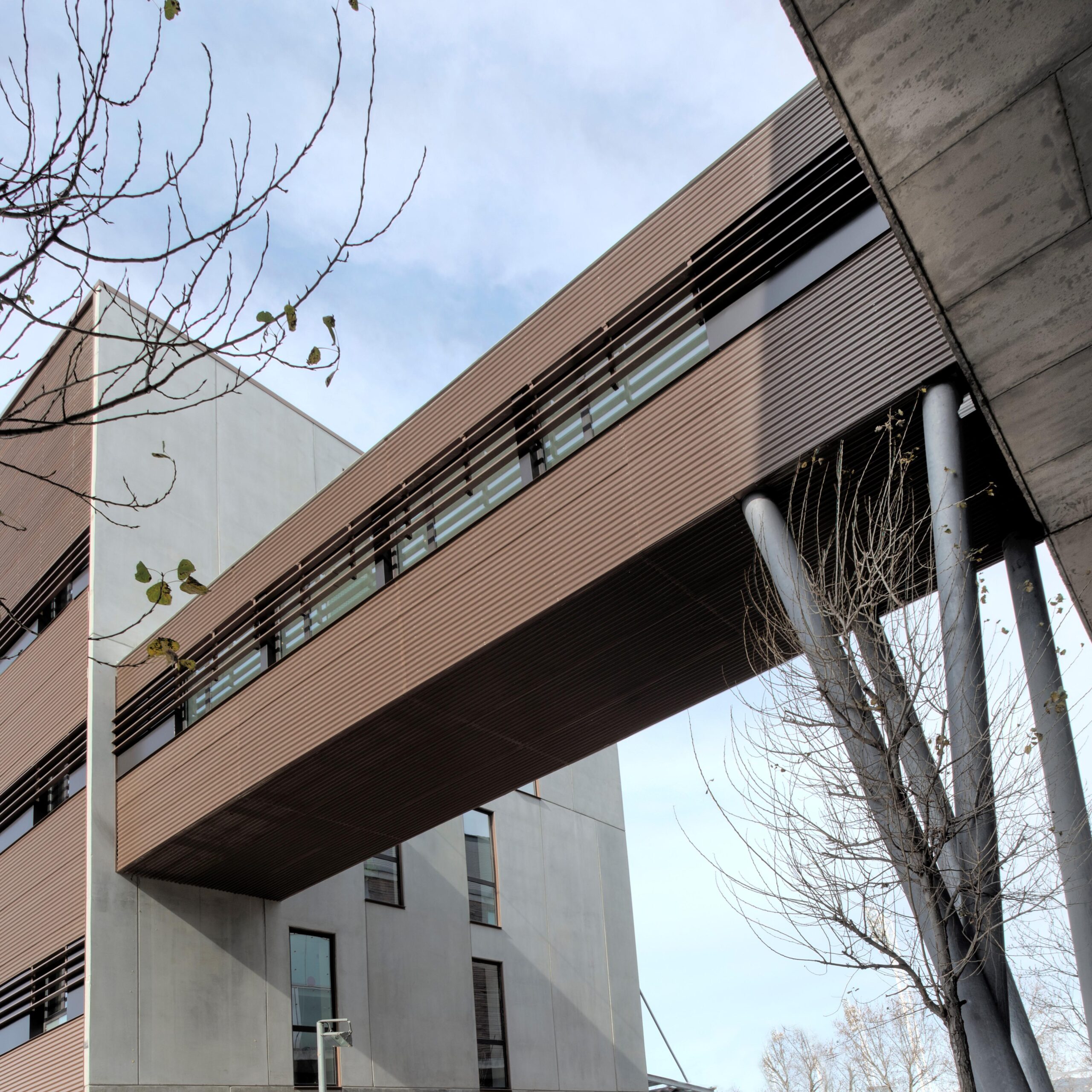
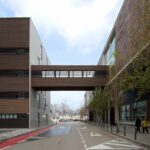
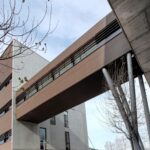
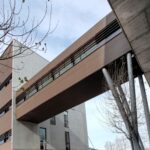
Architectural Description & Site Integration// In alignment with the Master Plan, the pivotal design decision was to rotate the building volume to line up with future campus expansions, connecting it to the existing hospital via an elevated pedestrian bridge on Level 2. Consequently, the building is conceived as the initial phase of a major master-planned expansion rather than an isolated emergency pavilion. The layout preserves the existing perimeter access road, efficiently reordering traffic and logistics flows.
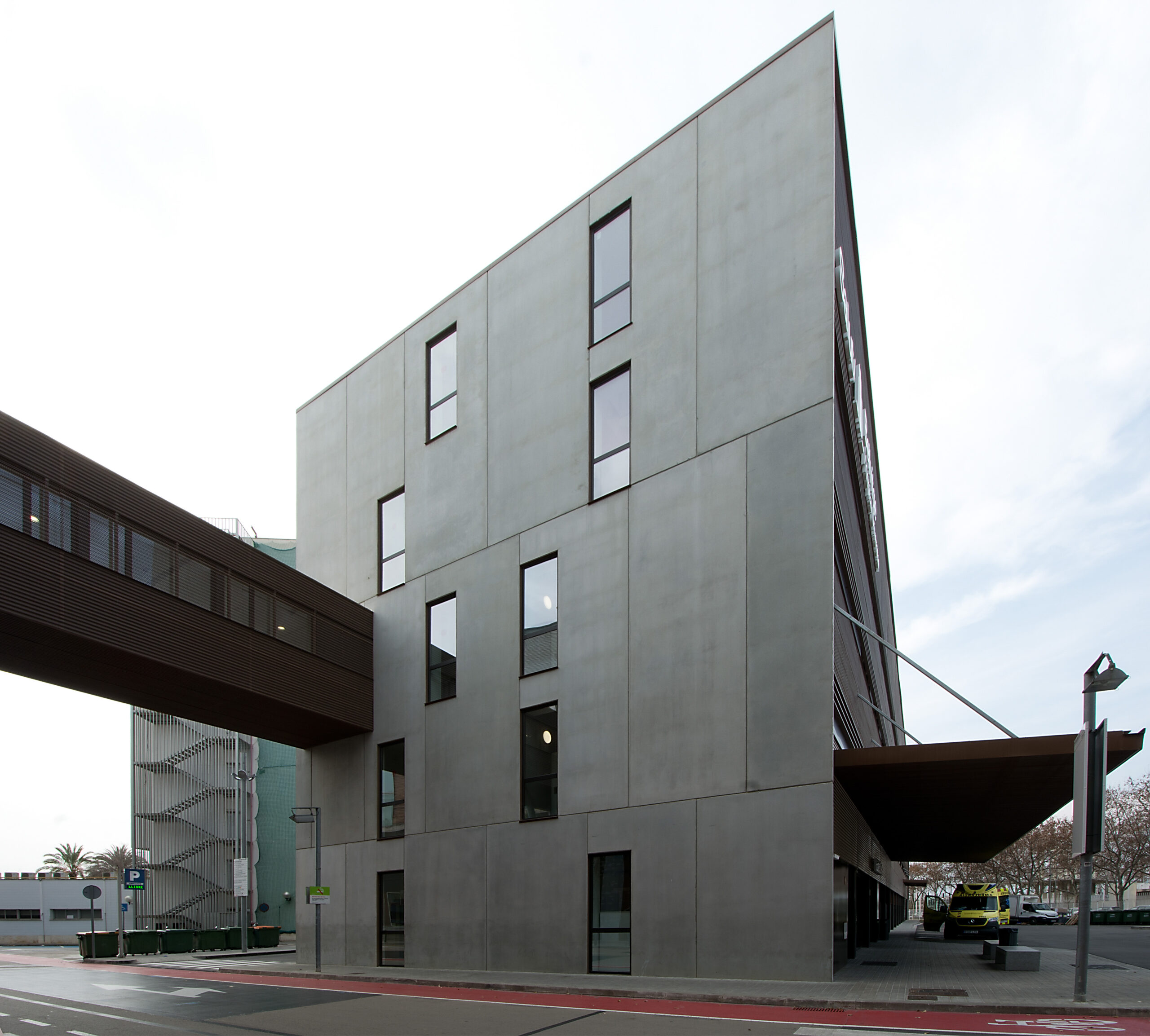
With a total area of 4,800 m², the building is organized across a ground floor plus four upper levels (G+4), crowned by a top-floor technical gallery that centralizes all MEP systems. The structural framework, engineered to support an additional future story, is composed of 14 precast reinforced concrete modules measuring 5×15 m, ensuring rapid construction and long-term durability.
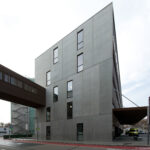
Regarding the envelope, the end facades feature a fair-faced concrete finish with vertical openings that flood the end circulation cores with natural light, clearly distinguishing technical workflows from public paths. Conversely, the longitudinal facades (north and south) feature horizontal window strips and a ventilated facade finished with mini-corrugated metal panels. The exterior color palette mimics the original building, reinterpreting it through a contemporary architectural language tailored to demanding execution deadlines.
Functional Program// The building effectively distributes its 4,800 m² across five clearly sectorized levels:
-
Ground Floor: Emergency Department (Covid-19) with 18 treatment bays.
-
First Floor: Emergency Department (Covid-19) / Respiratory Subcritical Care Unit with 30 treatment bays.
-
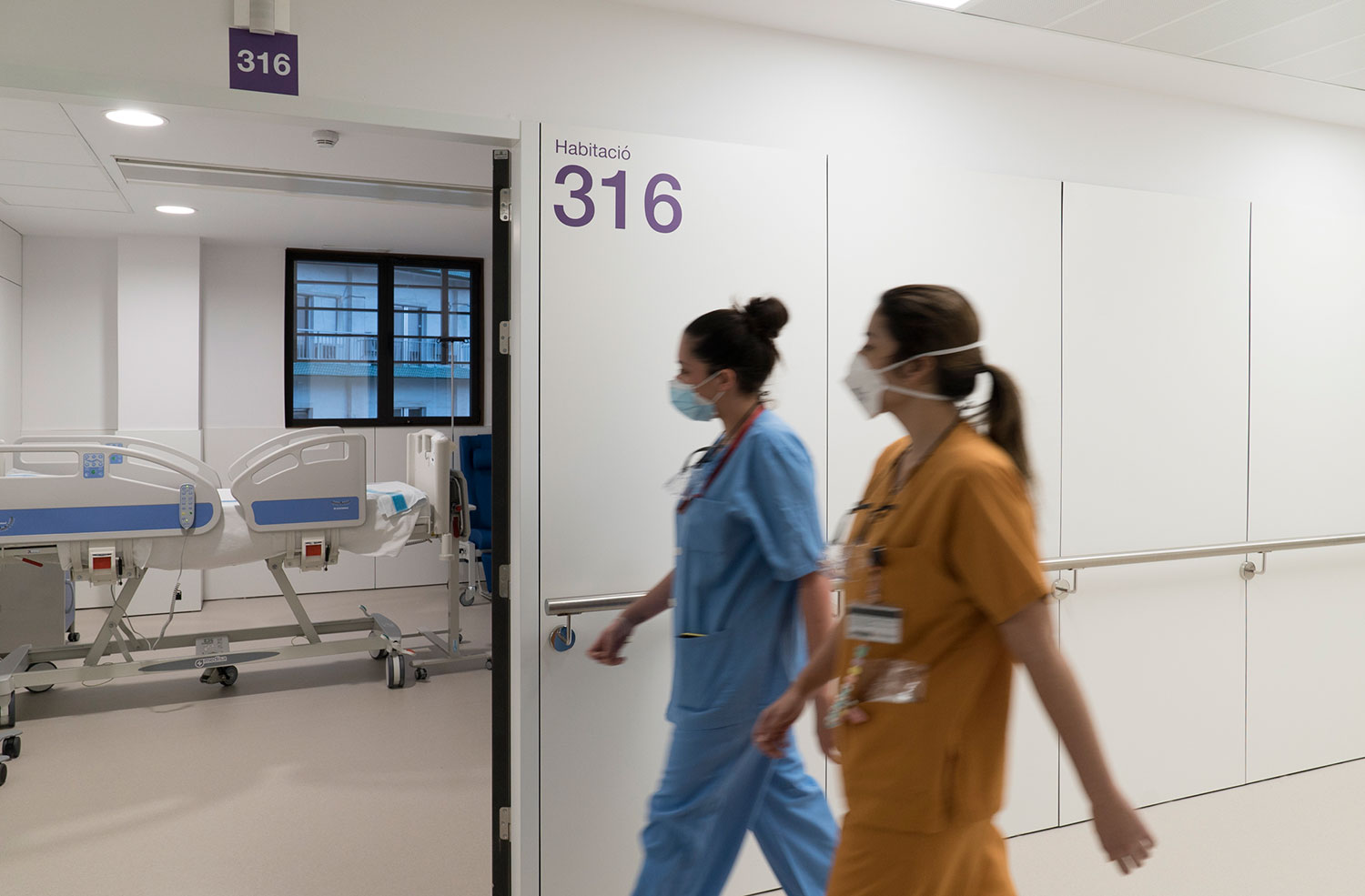
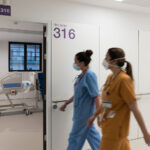
Second Floor: Conventional Inpatient Ward and intensive Rehabilitation, featuring 14 double rooms and 4 single rooms. This floor houses the connection bridge to the Surgical-Technical Wing.
-
Third Floor: Conventional Inpatient Ward with 14 double rooms and 4 single rooms.
-
Fourth Floor: Technical gallery and staff changing rooms.
A New Way of Working// The implementation of the Lean Construction methodology was a cornerstone in the structural and functional conception of the Delta Building. Minimizing waste and streamlining processes allowed the team to meet the tight objective of delivering and operating the building in record time to address the public health emergency.
New Post-COVID-19 Interventions: MRI and Angio-CT Rooms, DELTA HUB Building
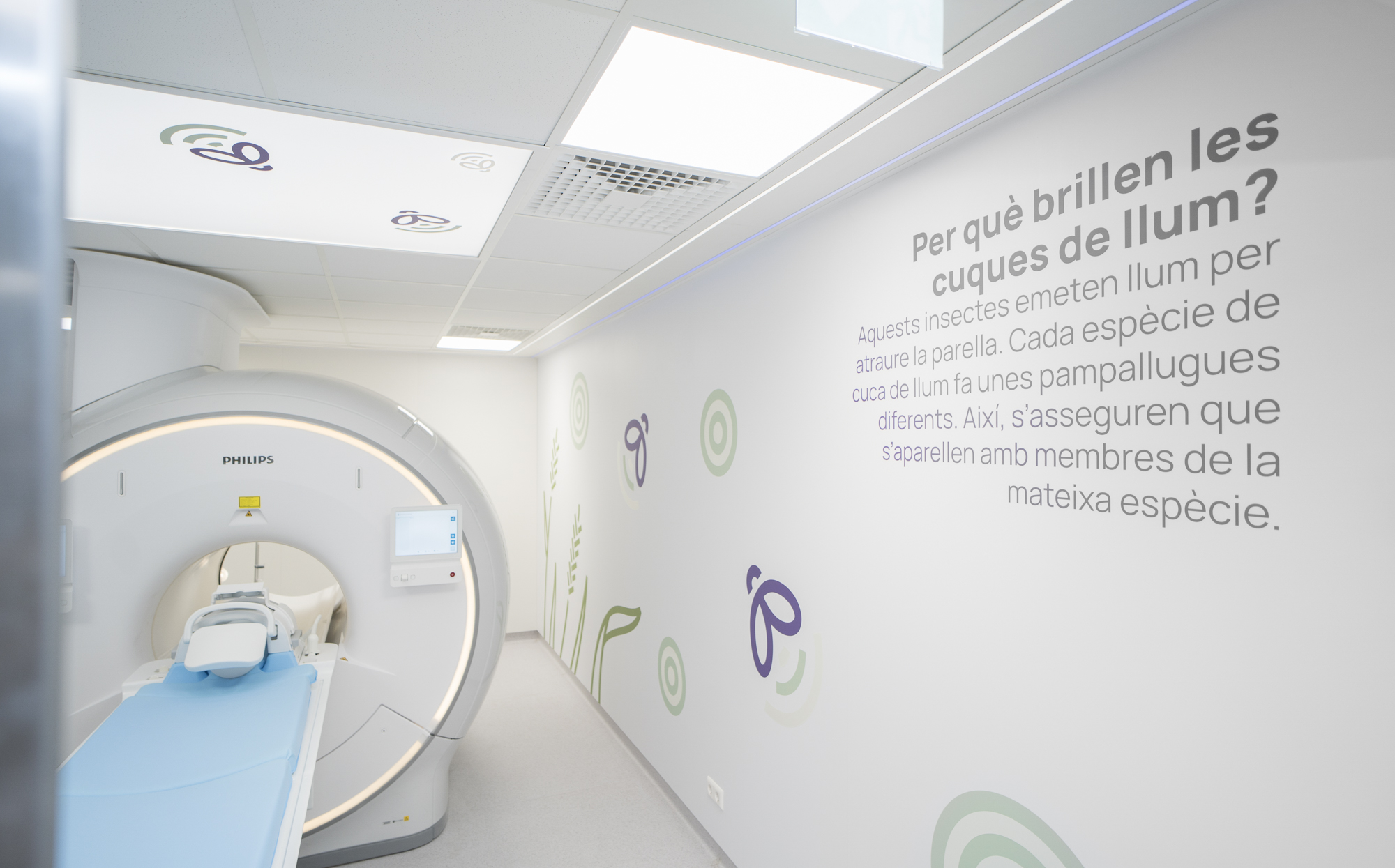
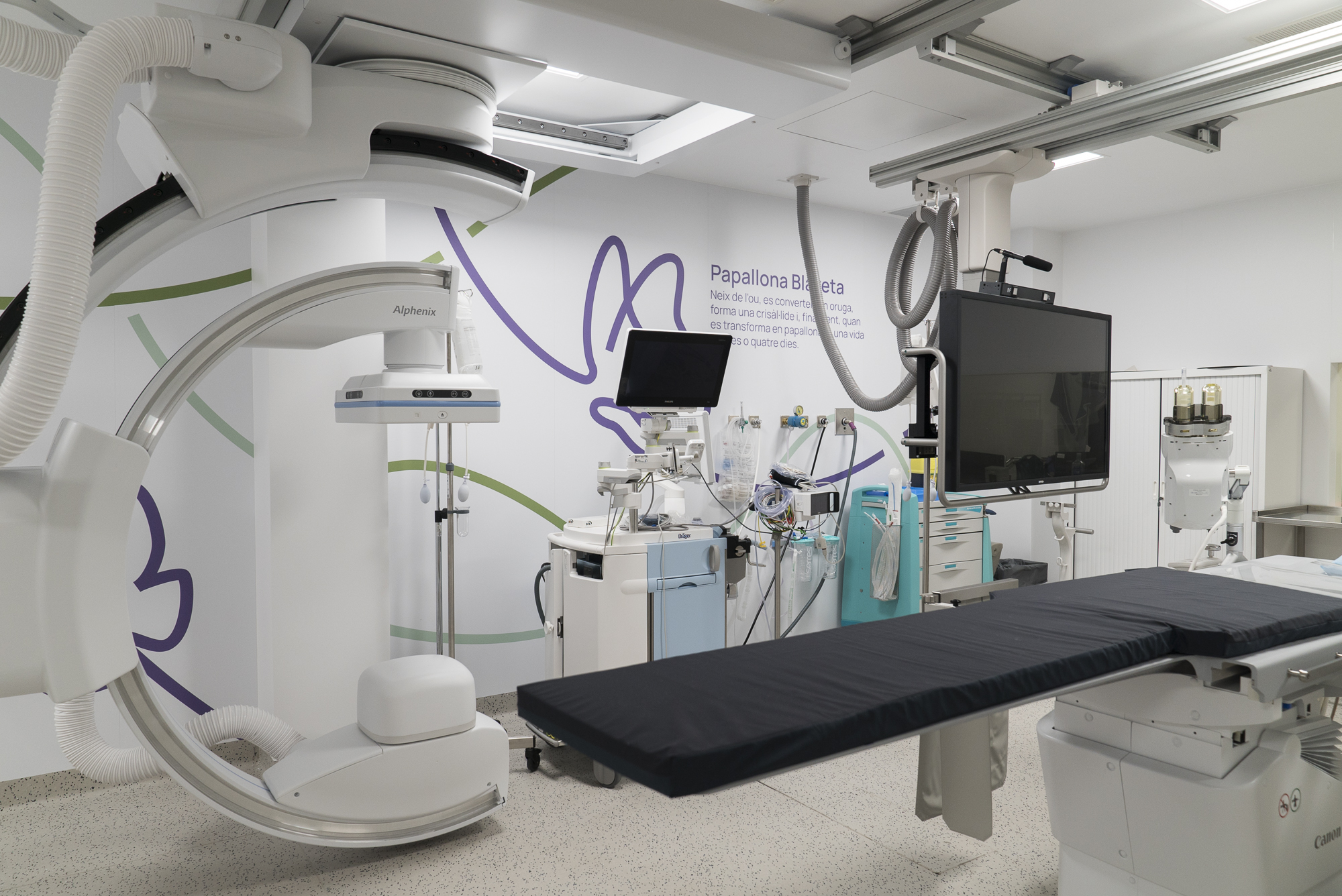
Executed between 2022 and 2023, this intervention repurposes the building’s ground floor to accommodate the Neurology Department, aligning the space with the hospital’s evolving clinical needs. As a strictly interior renovation that leaves the building’s volume and technical envelope unaltered, the project leverages the inherent modularity of the original framework. This allowed for a comprehensive layout and program reconfiguration without requiring structural modifications.
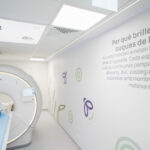
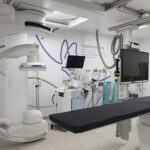
The renovation integrates two high-complexity diagnostic suites—an MRI room and an Angio-CT scanner—complete with dedicated control rooms, technical zones, and clinical support areas, seamlessly linking them with the pre-existing radiology department.