The project encompasses the renovation of former facilities at Hospital de l'Esperança in Barcelona to house the new Mental Health and Addiction Center, managed by the Sisters Hospitallers (Hospital Mare de Déu de la Mercè).
The intervention repurposes disused areas—previously occupied by the Emergency Department and Diagnostic Imaging—into a specialized healthcare facility equipped with consultation rooms, a day center, and specialized treatment units.
Although integrated within the larger hospital complex, the new center operates with complete functional segregation and independence. The program is distributed across two levels:
-
Upper Level (Ground Floor): Situated at street level, offering direct and independent entrance from the exterior.
-
Lower Level (Semi-Basement): Extends beyond the footprint of the ground floor and features its own dedicated entrance at the end of the access ramp from Avinguda del Santuari.
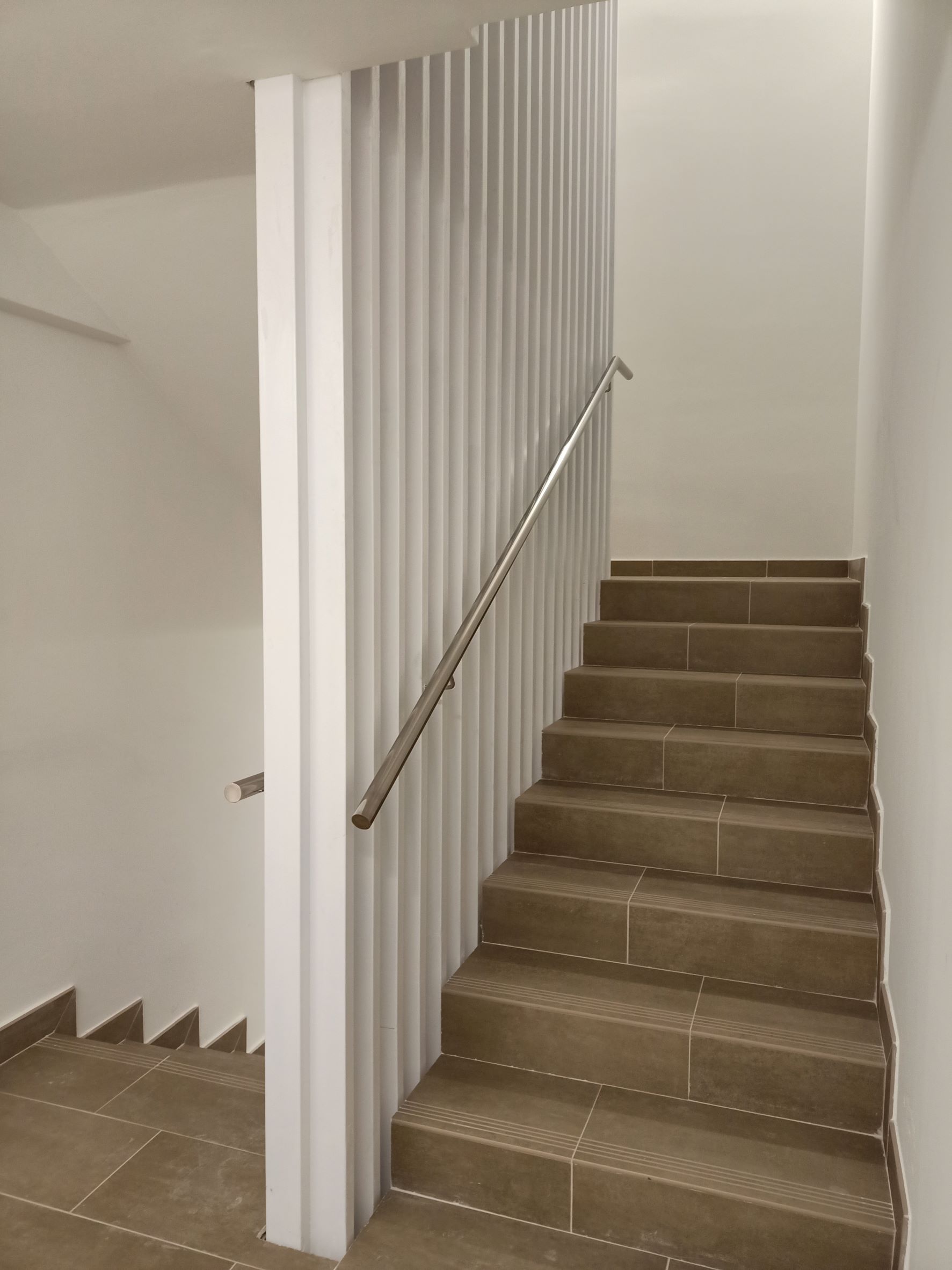
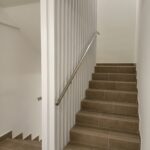
To ensure operational autonomy from the rest of the hospital, the renovation introduces a dedicated internal vertical circulation core (stairs and elevator) linking exclusively both levels.
The semi-basement floor accommodates the primary program, housing the Memory, Behavior, and Dementia Unit:
-
Access & Control: The reception desk is strategically placed at the main entrance. To the right, a compact dispensing unit comprises 2 consultation rooms, 3 offices, and a restroom.
-
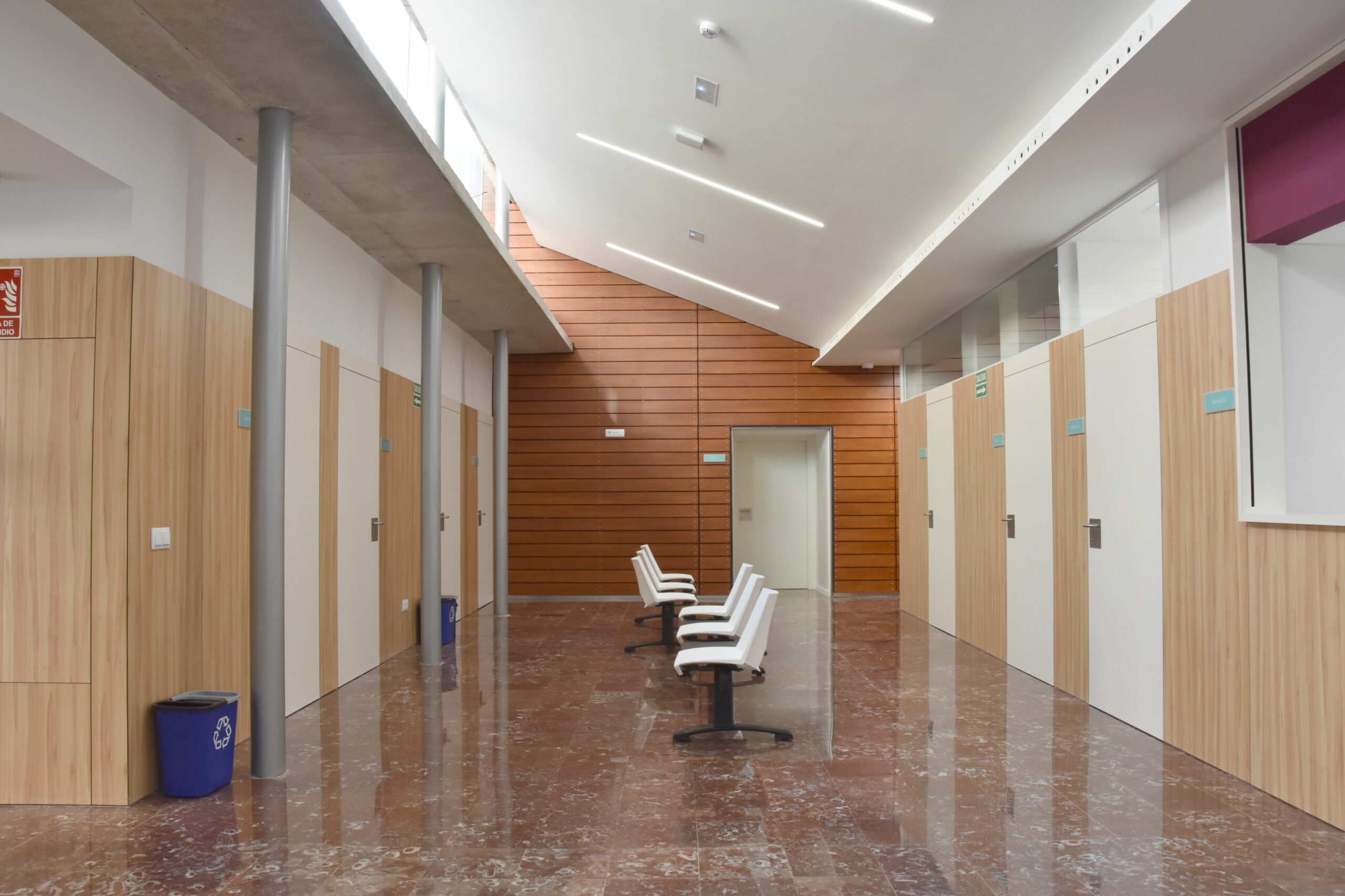
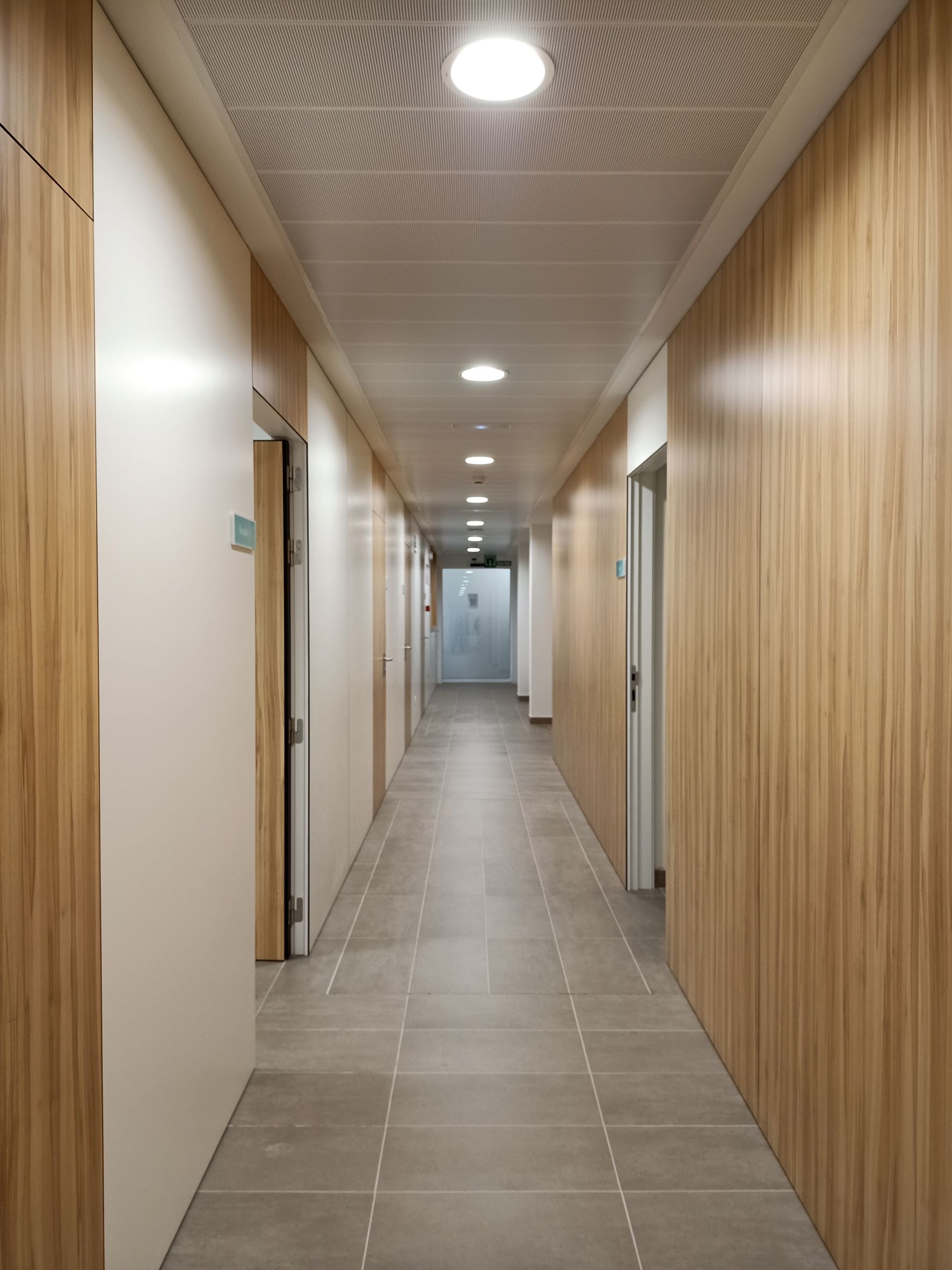
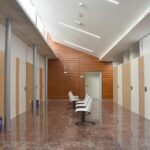
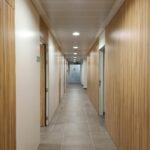
Clinical Area: To the left of reception, 10 mental health consultation rooms are organized around a central waiting room.
-
Day Center & Logistics: Features a dining space for 25 users and a pantry adjacent to the elevator to streamline supply transport and service carts.
-
Repurposed Therapeutic Spaces: Three former diagnostic imaging vaults are completely rehabilitated into three activity and therapy rooms, serving both the day center and outpatient consultation areas.
A central goal of the project is space humanization through maximized natural daylighting:
-
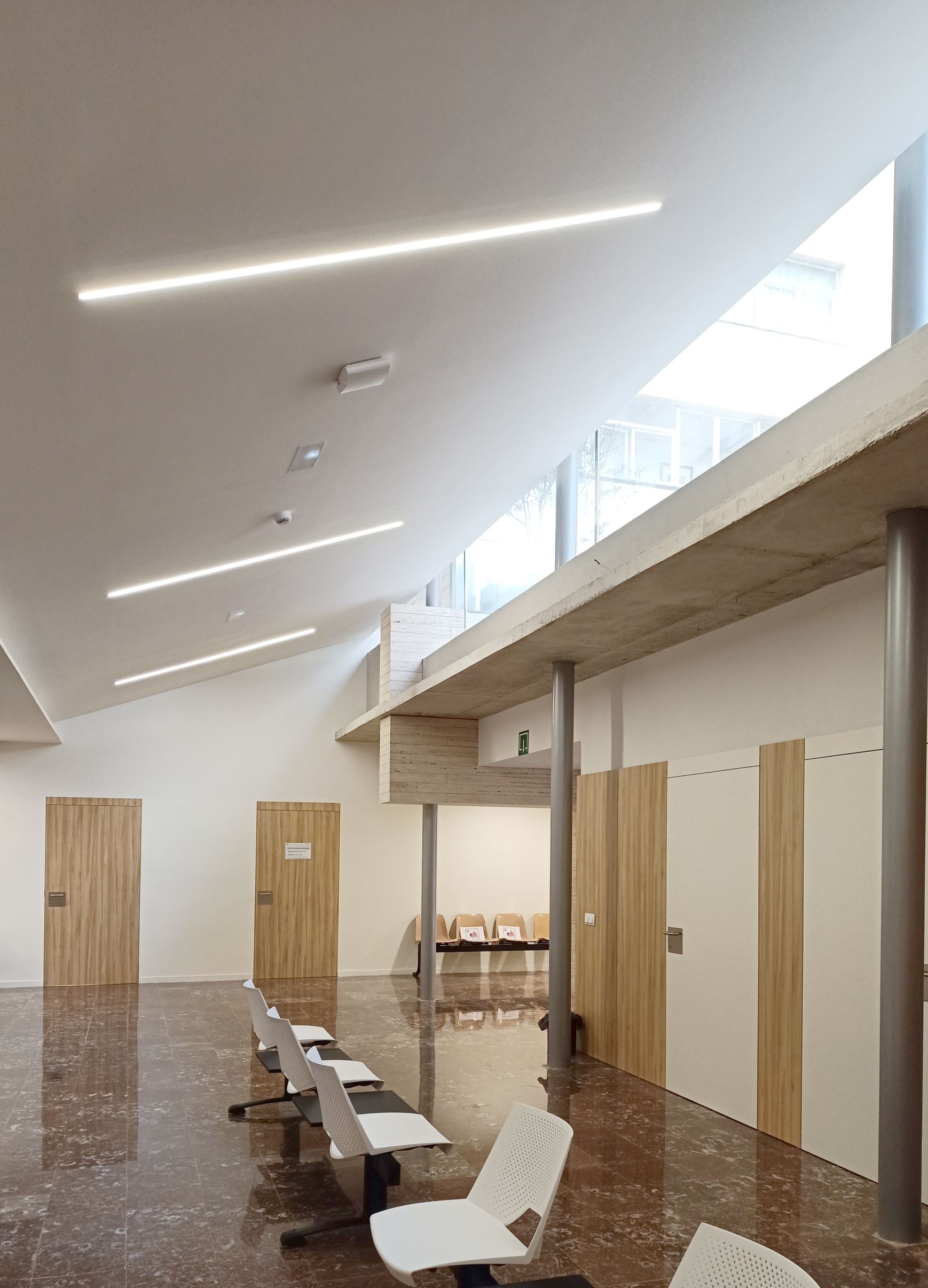
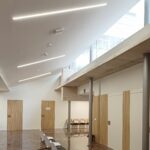
Signature Waiting Room: Designed as the most iconic space of the facility, featuring a sloped ceiling rising up to 4.70 meters in height to capture and channel sunlight entering through high clerestory windows.
-
Perimeter & Indirect Daylighting: Facade-facing consultation rooms leverage existing exterior glazing for direct daylight, while interior rooms receive indirect sunlight through upper glass transoms in the partition walls—ensuring nearly all functional spaces benefit from natural light.