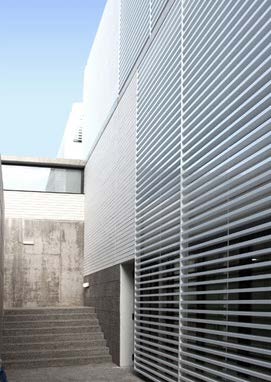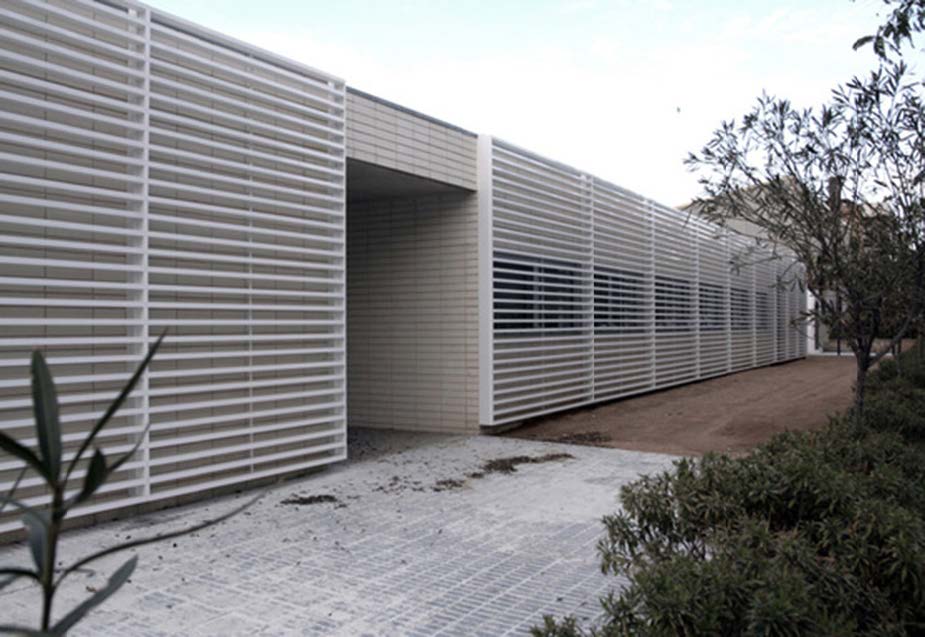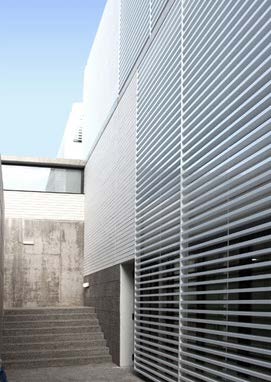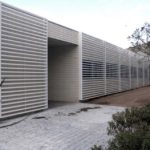
The project encompasses the expansion of the existing healthcare facility while preserving the overall architectural unity of the complex. The intervention maximizes the retention of the original premises, concentrating the new clinical program within the extension volume.
Architectural Integration// The new volume originates from the existing building and expands into the available plot space, establishing a direct connection with the street. This arrangement clearly organizes access points to the various healthcare units while ensuring harmonious integration with the surrounding urban fabric.
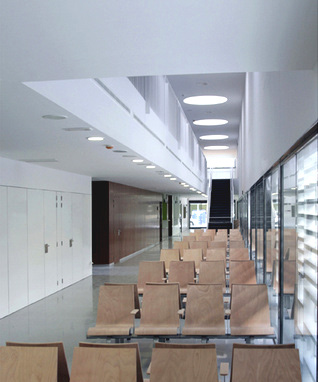
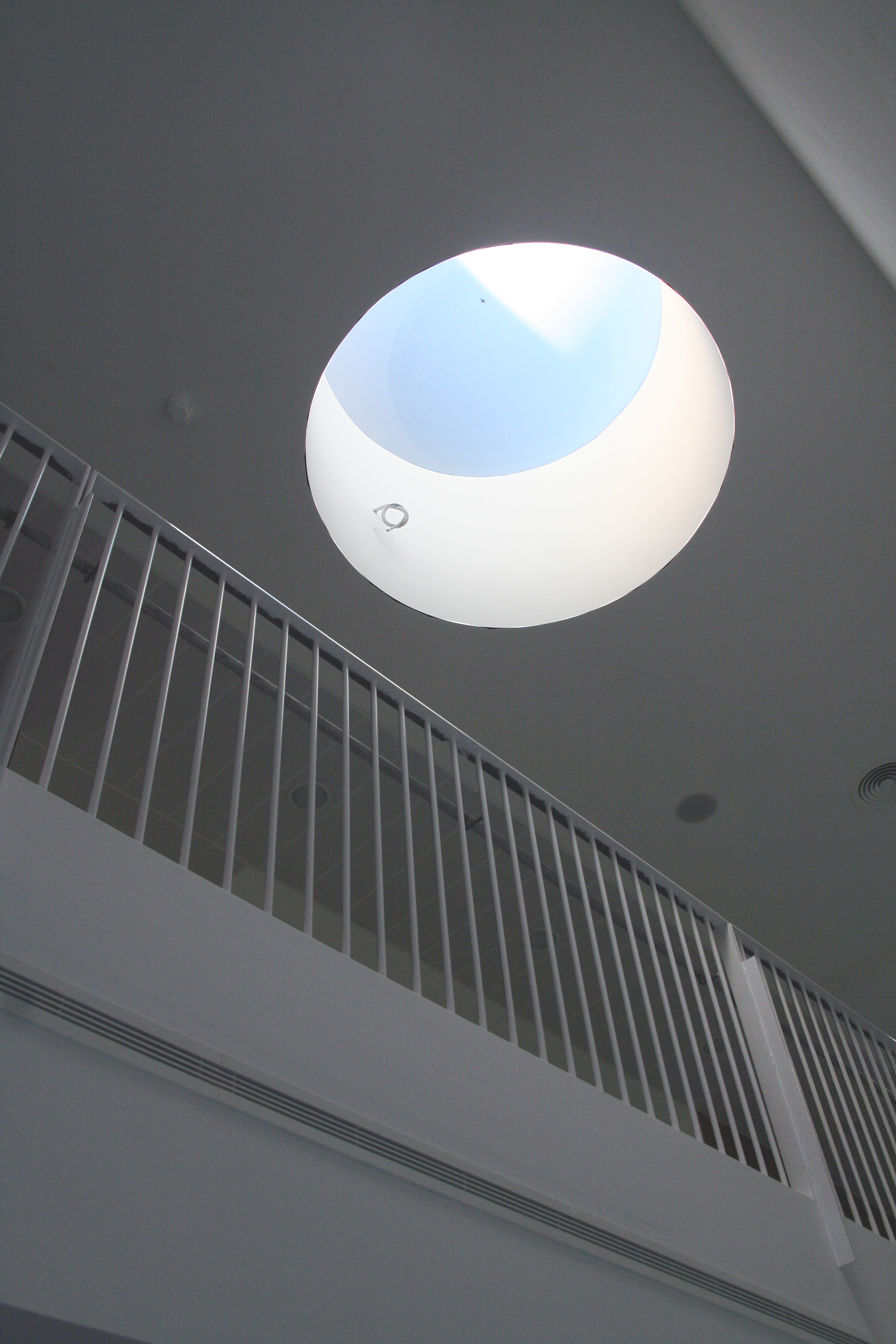
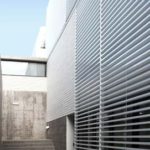
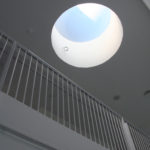
Layout & Organization// The main entrance remains at street level, connecting directly to a central lobby that acts as a primary circulation hub between the existing block and the new facilities, effectively optimizing movement flows. The continuity of the complex is showcased through its envelope, which utilizes white fair-faced brickwork to visually unify the structures. Concurrently, interior circulation routes are enhanced by skylights that flood corridors and gathering zones with controlled natural daylight, transforming them into welcoming, humanized spaces.
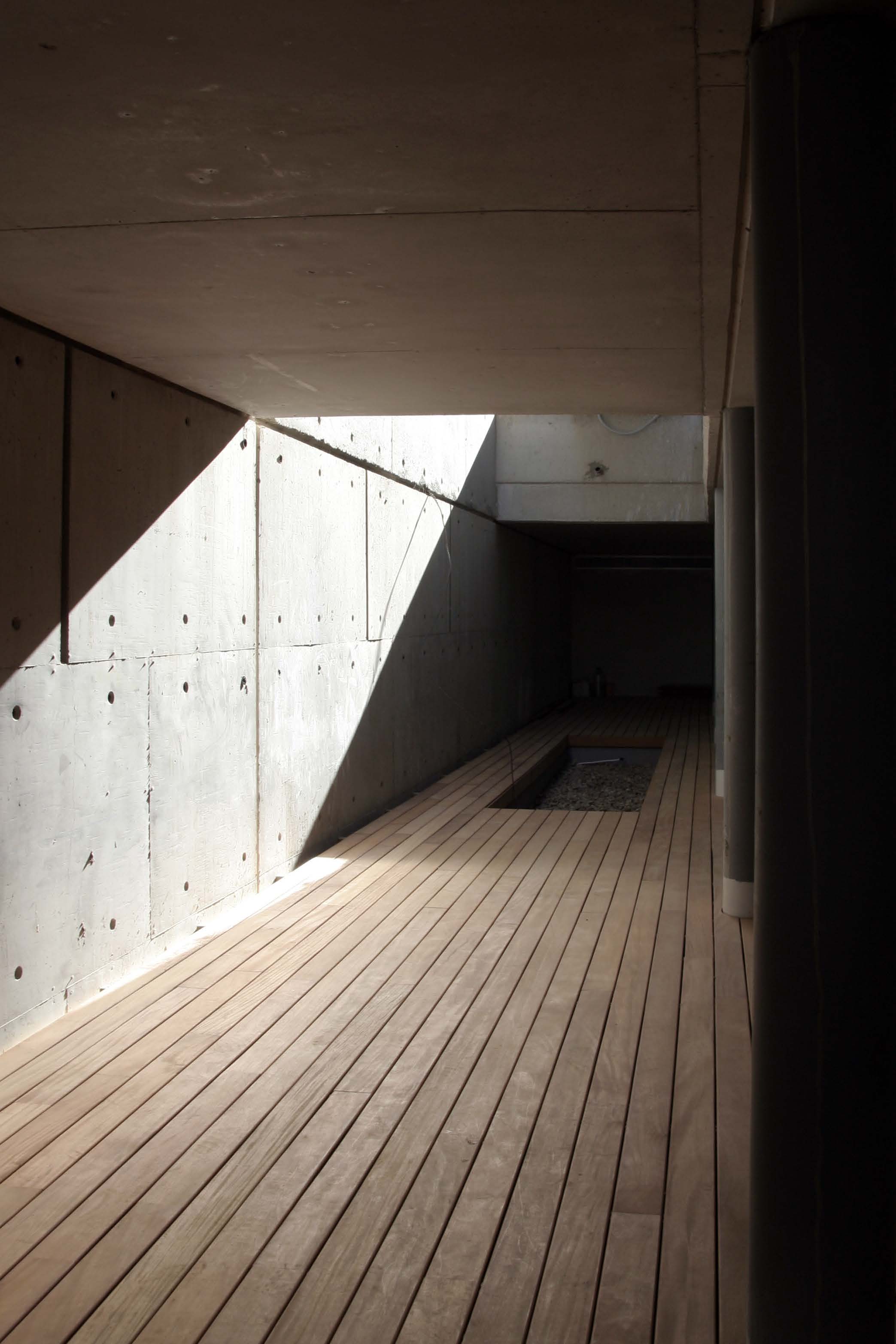
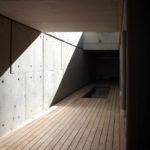
Uniqueness & Character//The proposal places user well-being at the core of the design, articulating fluid and comforting pathways. The integration of wooden benches and wall claddings, combined with landscaped interior lightwells, humanizes the experience within the waiting rooms and consultation spaces. The project balances strict technical healthcare requirements with meticulous constructive detailing to deliver high spatial and sensory quality.
Sustainability Criteria// The environmental strategy is addressed holistically through passive architecture and energy-efficiency measures, adapting the facility to contemporary performance standards:
-
Daylighting Optimization: Strategic orientation, solar control mechanisms, and energy-saving lighting fixtures.
-
Natural Climate Control: Solar shading integrated into openings alongside passive natural ventilation mechanisms.
-
Passive Strategies: High-performance thermal insulation in building partitions, cross-ventilation, and thermal mass utilization within floor slabs.
-
Acoustic Comfort: Double-glazed joinery, high-efficiency insulation materials, and sound-absorbing wall finishes to ensure a quiet healthcare environment.