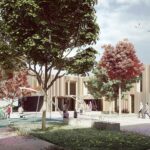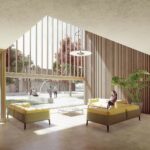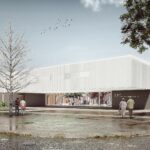
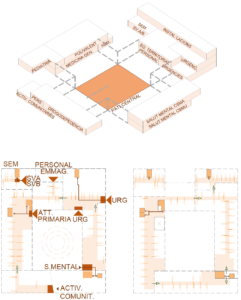
The new Primary Care Centre (CAP) in Santa Coloma de Farners, located in an expanding area, stands out for its compact and functional design. A central courtyard optimizes natural light and ventilation, ensuring a healthy and efficient environment for both users and healthcare staff.
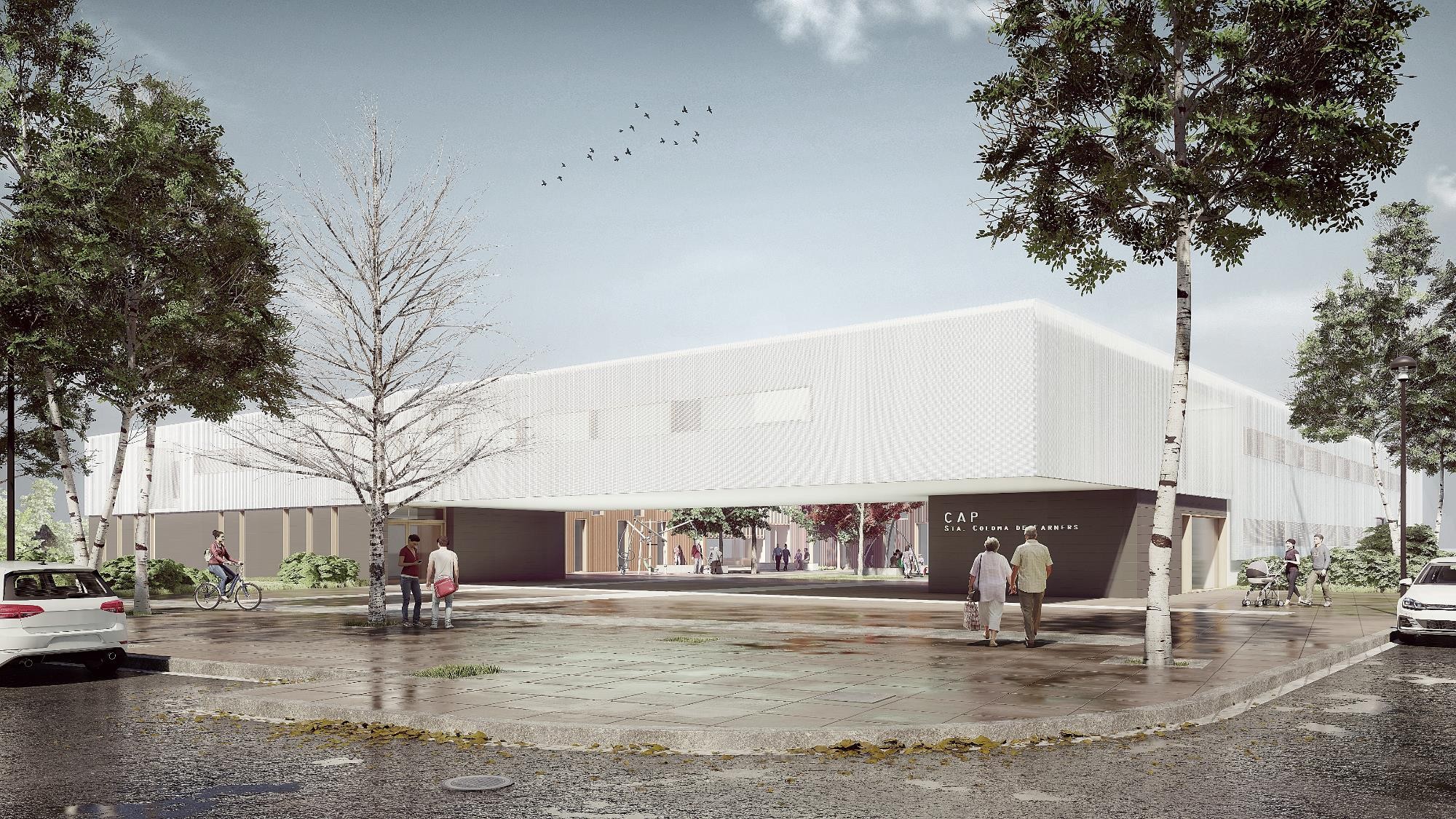
Context & Integration// The new Santa Coloma de Farners Healthcare Center (CAP) is located in the southern district of the city, within an area undergoing rapid growth and urban transformation. Facing通 northeast toward the main street, the current peripheral surroundings feature a mixed-use fabric of residential, industrial, and agricultural zones. The future consolidation of this urban artery will transform the thoroughfare into a dynamic, community-focused storefront, establishing the facility as an architectural landmark and a clear visual reference point.
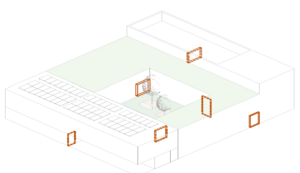
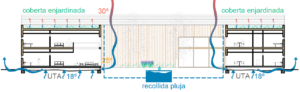
Architectural Proposal// The project proposes a compact volume that leverages a favorable and permeable north-south orientation, creating internal “lungs” that efficiently manage natural ventilation and daylighting across all zones. Circulation pathways are strictly segregated: a fluid central axis structures movement and connection cores, ensuring intuitive wayfinding for the users.
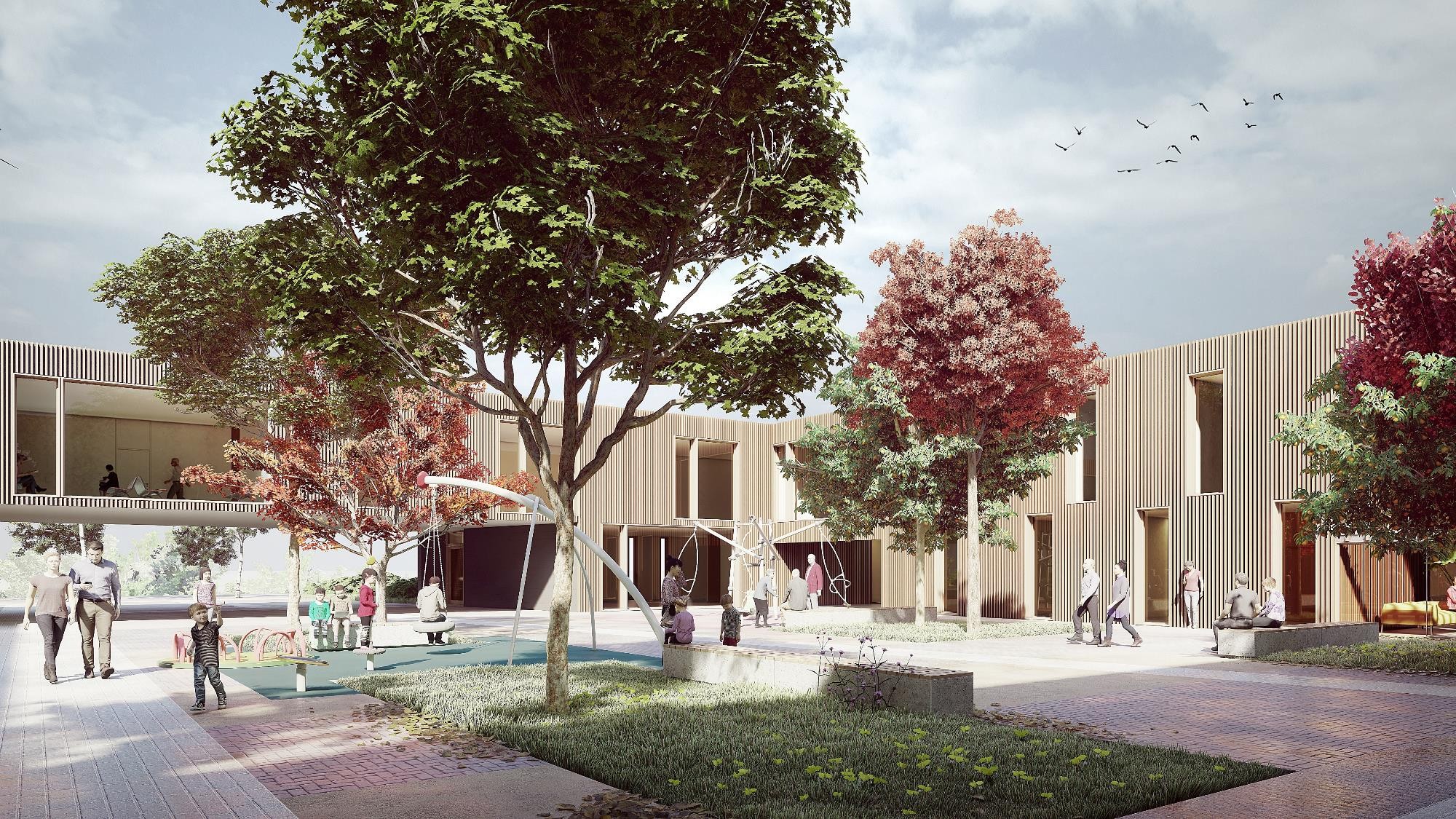
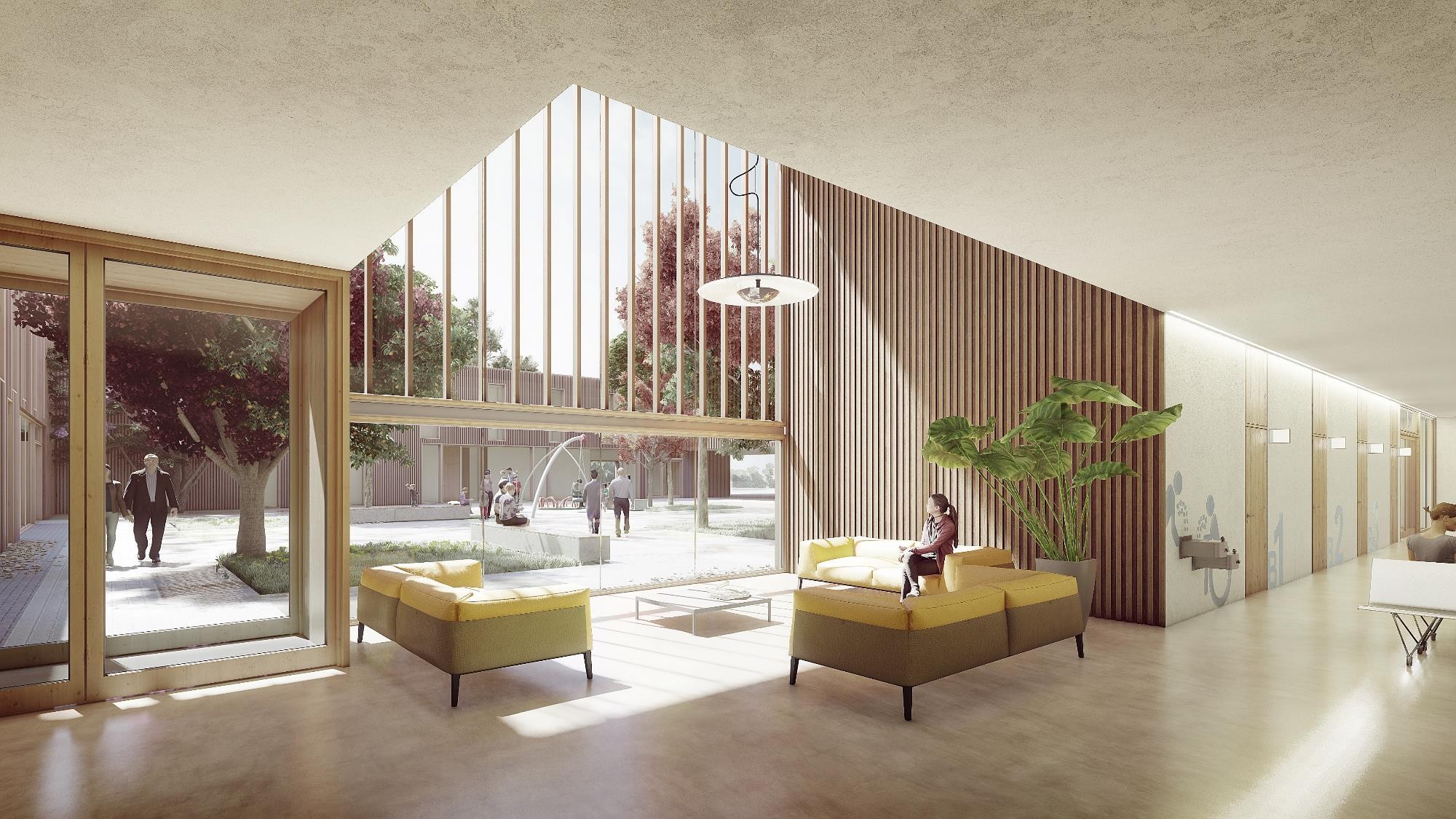
The interior spaces are designed with a pronounced human scale. The contrast between the interior and exterior reinforces the courtyard’s role as a social, organizational, and primary access hub. This courtyard is conceived as a universally accessible space dedicated to wellness, tailored to host therapeutic fitness activities for both adults and children.
Structurally, the building is composed of cross-laminated timber (CLT) modules, utilizing perimeter columns, facade girders, and timber-framed floor slabs that provide exceptional thermal and acoustic insulation.
Sustainability// Centralizing the production systems optimizes facility management operations while ensuring zero disruption to building users. Choosing prefabricated mass timber construction reduces CO₂ emissions by 51% compared to standard building methods.
The proposal maximizes sustainability throughout both the construction phase and the operational lifecycle of the finished facility, drastically minimizing subsequent maintenance costs. Furthermore, a graywater and rainwater harvesting system is integrated into both the courtyard and the roof for reuse in landscape irrigation and toilet flushing.